

“This is without doubt the most impressive and complex prehistoric monument in the area” Byron Machin.
Reading Byron Machin’s book on stone circles led me to Arbor Low, on my first visit since 2002, where a snowstorm didn’t stop me appreciating what this place has to offer.
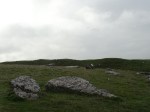
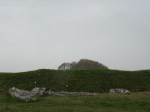
What the stones were put here for were originally and whether they stood or lay is hotly debated, but we know they were quarried from a nearby limestone payment and have thus been exposed for thousands of years even before their planting my Neolithic peoples in the 3rd or 2nd millennium BC, and that there were once many more stones before the stripping of the site by local farmers.
The ritual uses of the site can only be guessed at, but Machin offers a tantalising glimpse; “it appears that most of the stones had their weathered sides facing inwards and their smooth cut sides facing out. The reasons for this are unknown”.
The first excavation was led by Thomas Bateman in 1848; he also excavated (1,2) Gib Hill, a nearby burial mound closely tied in with Arbor Low. By this time the stones closely resembled what is here now, though we don’t know what its prior state was; Samuel Pegge said in 1783 that the stones were “formerly erect, now flat” though this is not known for sure.
Very early on the site received statutory protection, and has been in state care since 1884, now a Grade II scheduled monument looked after by English Heritage. A further excavation in 1901, led by Harold St George Gray, revealed male human remains here, the man ceremonially buried by those who had built the henge originally.
This is one of a great chain, next leading on to the Bull Ring and Nine Ladies, and I look forward to connecting it.

 BrownhillsBob's #365daysofbiking