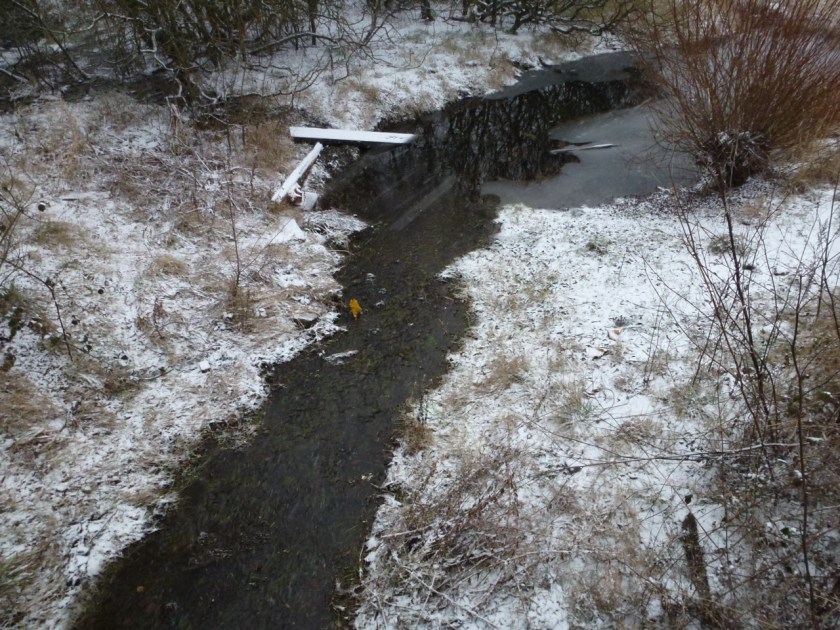
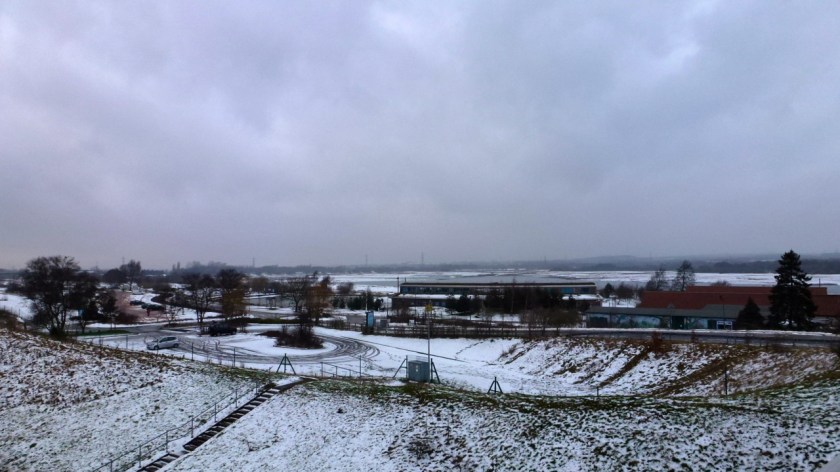
February 5th – I popped to Chasewater, but the day was horrible. The snow was melting heavily, I was loaded with about 20 kilos of shopping and the day was grey and foul. Crossing back over the M6 Toll bridge on Pool Road, I noticed that Chasewater still looked quite snowy. I could also see that, beyond the innovation centre, the reservoir was beginning to refill at long last.

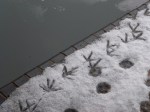
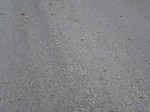
February 5th – I feel sorry for the waterfowl during this cold snap, really, which is probably a bit daft. As I took a gentle spin down the canal today, I noticed lots of forlorn looking ducks, canada geese, coots and moorhens loafing around disconsolately on the frozen canal, which itself was covered in a messy layer of slush. I watched as birds struggled to land, skidding frantically along the ice. They are, to coin a phrase, like ducks out of water. I did notice something though, today. Moorhens don’t have webbed feet. I find that a bit surprising, but as these footprints show, they haven’t got the best feet for swimming. There must be an evolutionary reason for this. Wonder what it is?

February 4th – I noticed as I passed through Chasewater that Jeffrey’s Swag, the north-eastern body of Chasewater bordering the railway causeway, had now refilled. Lowered considerably last year to construct a new spillway between it and Chasewater itself, it has now refilled to such a level that water is flowing from the Swag into Chasewater. This is really positive news and means that Chasewater is now being effectively fed by local streams that run into the Swag, so hopefully it will refill a tad quicker. It’s also good news for the frogs and toads that spawn in the creek between the two come spring.

February 4th – As usual when it starts snowing, I’m off on the bike like a shot. Since it had been a whole year since I last rode in snow, I took in a lazy loop of Brownhills to get my skills back. On the old cement works bridge, overlooking the council depot that used to be the Edward Rose factory, the gritting crews were in overdrive. I’d been passed by several grit wagons in the High Street, and there seemed to be a constant chain of lorries coming to be refilled. Later in the day, Walsall’s roads were far better than those of Staffordshire, yet still I saw folk complaining. I think there needs to be more public awareness over what road salt can and can’t actually do

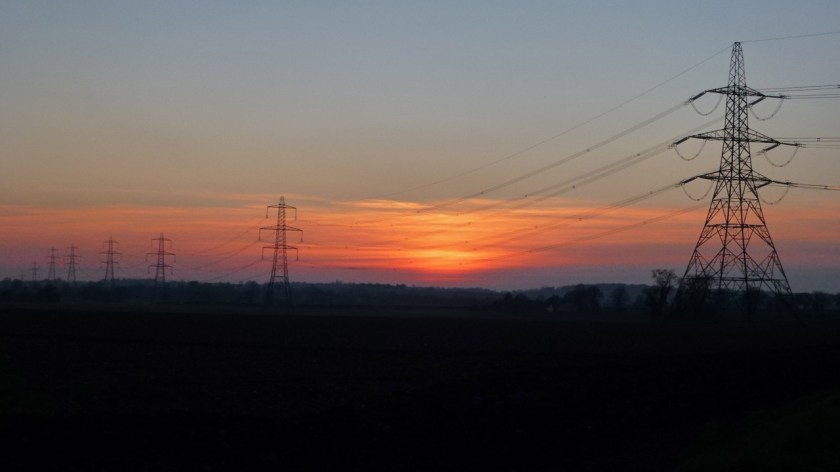
February 3rd – Cycling home from Shenstone the sunset was beautiful. Looking over the fields towards Stonnall and Little Aston I loved the drama and march of the pylons against the sky. Five to the mile, to me they’re beautiful and a wonderfully minimalist design. Today, they hummed and crackled in the frosty air. Electricity is the closest thing to magic humans possess. I’m transfixed by it.

February 3rd – On my way home on a perfect, bright winter’s afternoon. Tyseley Station in Birmingham is shabby and down at heel, but I like the fading industrialisation of the suburb, which is still very active and busy. Stood at the end of the platform, I noticed Birmingham’s waste incinerator running at full tilt. Opened nearly two decades ago, it was operated by Birmingham City Council for years, but now seems to be owned by Veolia, who’ve euphemistically branded it an ‘Energy Recovery Facility’. This plant incinerates household and industrial non-recyclable waste, 24 hours a day and generates energy in the process. Not an ideal solution, but better than landfill. 

February 3rd – It was a nice day today. First time I had to travel far for work this year – a meeting in Telford in the morning, and then I had to zip back to Tyseley to see someone mid-afternoon. It was very cold, with a heavy frost. As I dashed to the station at Shenstone, I was running late and couldn’t stop to photograph the gorgeous dawn. I’d already stopped to free up a frozen gear cable… Back from Telford at 1:30pm, I changed trains at Smethwick Galton Bridge. The view of the Birmingham Mainline from here is delightful, and it’s a long way up. I found myself fighting the urge to leave the station and cycle the canals of Brum instead.

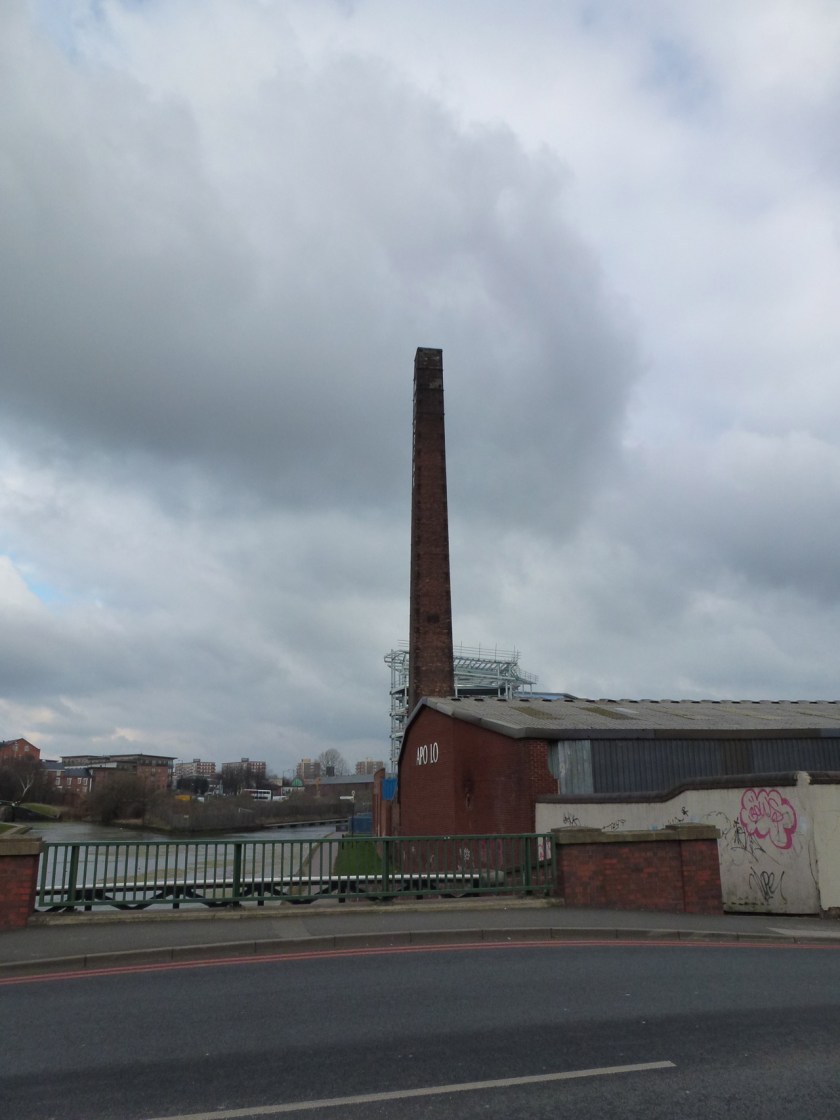
February 2nd – I’ve been gradually aware that the Town Wharf area of Walsall – formerly the industrial area around Marsh, Station, Charles and Bridgeman Streets, is gradually being gentrified. This is welcomed by many, but I’m apprehensive. There’s much history – and employment – in these backstreets, and I’m concerned at the loss of both heritage and trading space. Buildings like the former BOAC works may not be beautiful, but they’re architecturally and historically important, and currently empty, they seem to be quivering before the arsonist’s municipal zippo.

This chimney is a case in point – already in the shadow of the steelwork skeleton of yet another block of thrown-up apartments, it surely cannot be long before this major part of the Walsall skyline is itself carried to dust. This is a huge local landmark. There has to be a better way, surely.
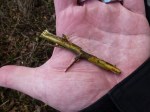
February 2nd – If you’re a cyclist, Green Lane between The Black Cock pub, Walsall Wood and Shelfied School is best avoided, at least until the next heavy rains. Today, as I went to work, the hedges were being flailed. This happens every few years, either in the autumn or winter. Cutting the roadside hedges back is essential, and must be done when birds aren’t nesting, but it showers the road with debris, in this case, Hawthorn clippings. These short bits of twig bear sharp, tough thorns whose specialist skill is puncturing bicycle tyres – particularly cheap, thin ones. I’d say that in rural areas, 90% of my punctures have been caused by Hawthorn spikes. I don’t blame the farmer, the job has to be done. But until rains come and float the debris away, the route is best avoided.

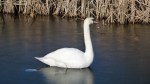
February 1st – This swan had me concerned for a bit. Sat on the frozen canal near james Bridge in Darlaston, as if he were trapped (I’m assuming it’s a he, how do you sex a swan?) I watched him for a while, fearing a stuck bird. As I started to whistle, he got to his feet, leaving small, melted imprints in the frozen canal surface. 
Birds seem able to be in contact with ice like this for indefinite periods, without their feet freezing because they have a very interesting feature in their blood circulation systems. At the top of their legs, the small amount of blood that flows to the legs and feet flows through a sort of ‘heat exchanger’ which removes heat from the outgoing blood and transfers it to the blood flowing back. Together with few nerves actually in the limbs, birds like these can stand for hours on ice with no ill effects and little energy consumption. All achieved through the magic of nature’s engineering hand, evolution. It surely is a wonder.