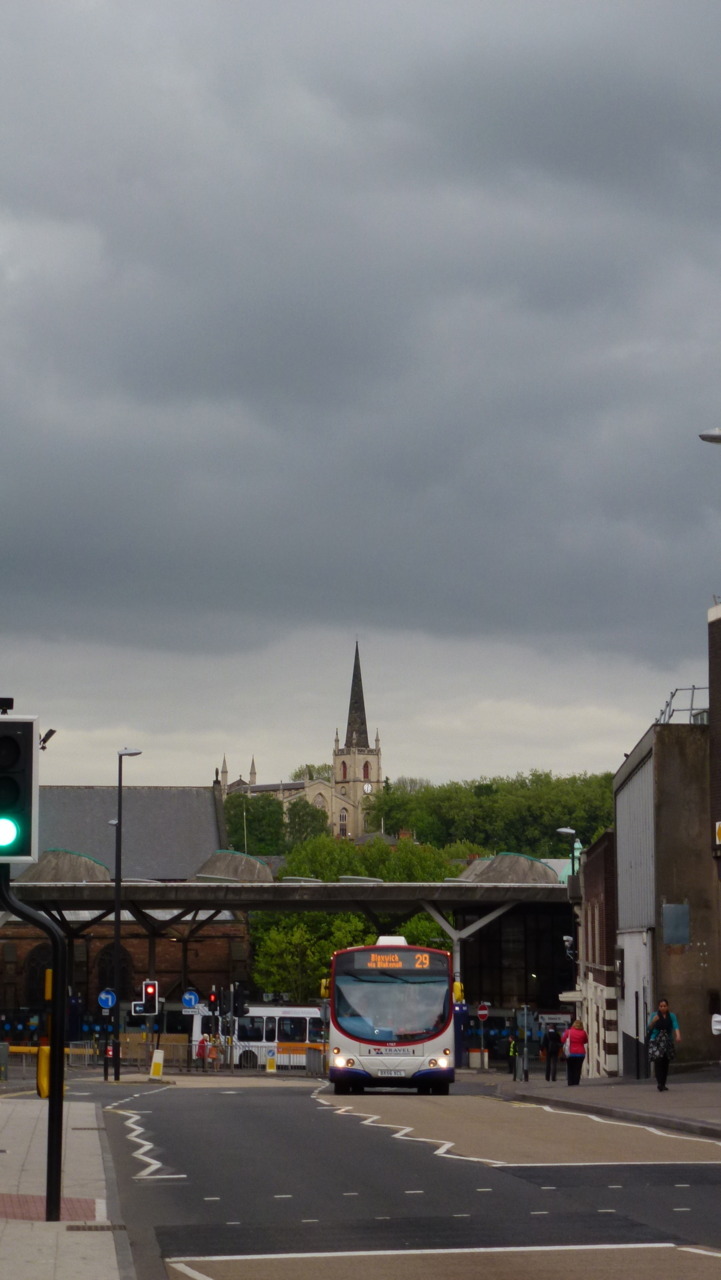
May 10th – A trip to Telford saw me return via Walsall. As the afternoon progressed, the skies darkened. It looked distinctly grim ove St. Matthews, but at least the wind was behind me. Yet again, the storm brewing never seemed to arrive. Two days I managed to avoid serious rain – somehow I know this can’t continue…

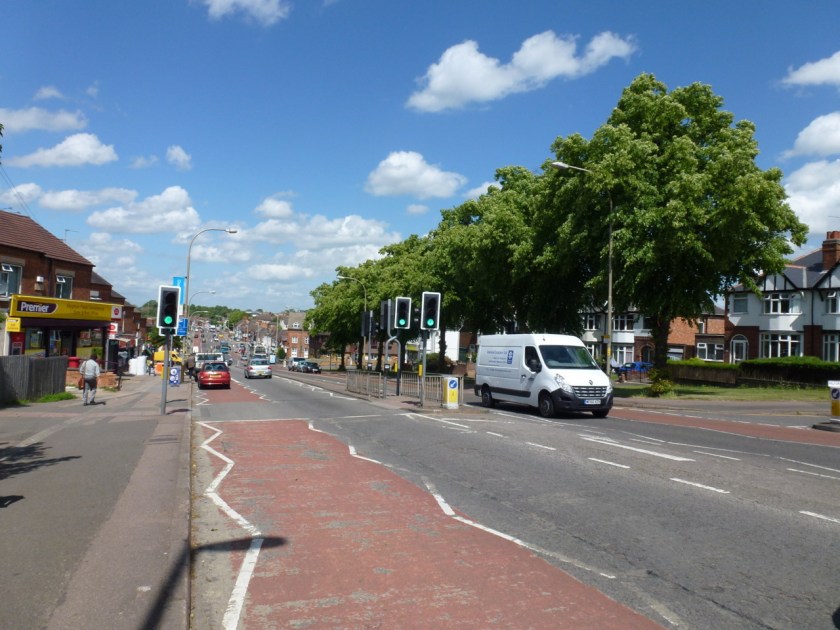
May 9th – Having said how much more I liked Leicester’s roads, here’s a moment I forgot about yesterday; taking the lane, cruising to the lights… next thing I know there’s some daft girl bearing in on me, all the time, phone clamped to her ear. 

Nothing unusual, but I did give her a few sharp words…

May 9th – Following a post on the Lichfield Lore blog (of which more later on The Brownhills Blog), today on my way home I visited the gazebo folly on Borrowcop Hill, Lichfield. A fascinating thing, to be sure, with good views – I was hoping to watch the impeding storm arrive. Sadly, it never came, but some nice landscape shots in the meantime.

May 8th – a late afternoon escape and another grim wind. I took the easy option and went looking for deer on the common – I’ll find the buggers if it kills me, not had a sniff for weeks. Sadly, there were too many dogs about and too many kids making too much noise. I investigated the old Slough Arm canal branch that used to run parallel to the old rail line and take the coal from the pits on the common, and noted the bridge was still in decent condition. A trip up round the tracks on the common ensued; Marklew’s Pond – named after the farmer and tommy shop proprietor who lived nearby – was looking gorgeous. The woods are dotted with yellow and orange poppies, too. On the north common it was quiet, and buzzards were mobbed overhead by crows. Not a bad couple of hours out and about, all in all.

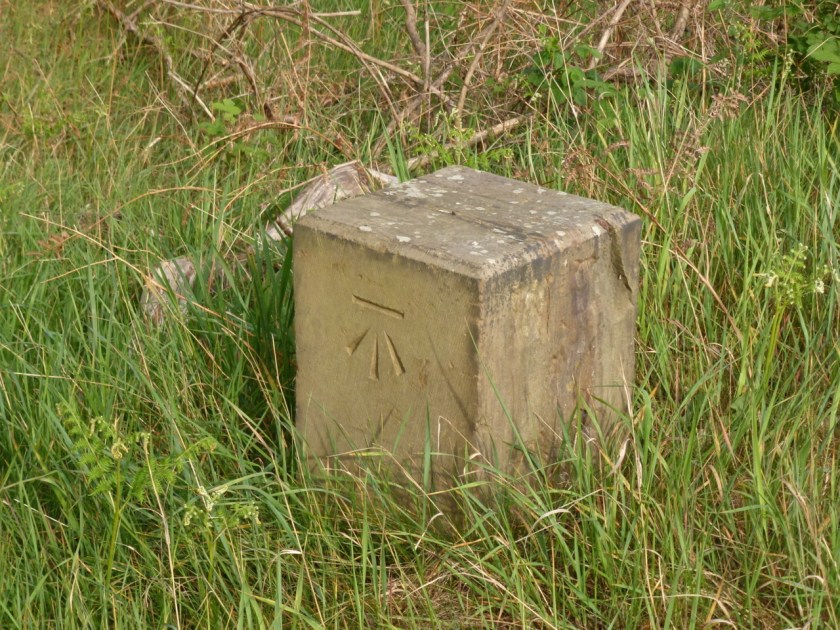
May 7th – The odd symbol on this markerstone will be familiar to many who study old buildings, but it’s purpose is not widely understood. It’s a surveyor’s benchmark, used by Ordnance Survey mapmakers. The horizontal bar at the top of the mark indicates a known, measured height above mean sea level, which the surveyor will know and can then use to reference other measurements. Benchmarks can exist anywhere, but are easily spotted on churches, bridge abutments and stone gateposts. Sometimes, as in this case by the A51 near Whittington Golf Course, a stone is placed for the purpose. These are a secondary reference to trig points. It is actually an offence to remove or obscure one.

In the days of new technology such as global positioning and satellite imagery, benchmarks are not as commonly used as they once were, but every surveyor that works for the OS is still taught to carve them. They are a tangible, visible footprint of the gorgeous heritage of British map-making that the Ordnance Survey represents.
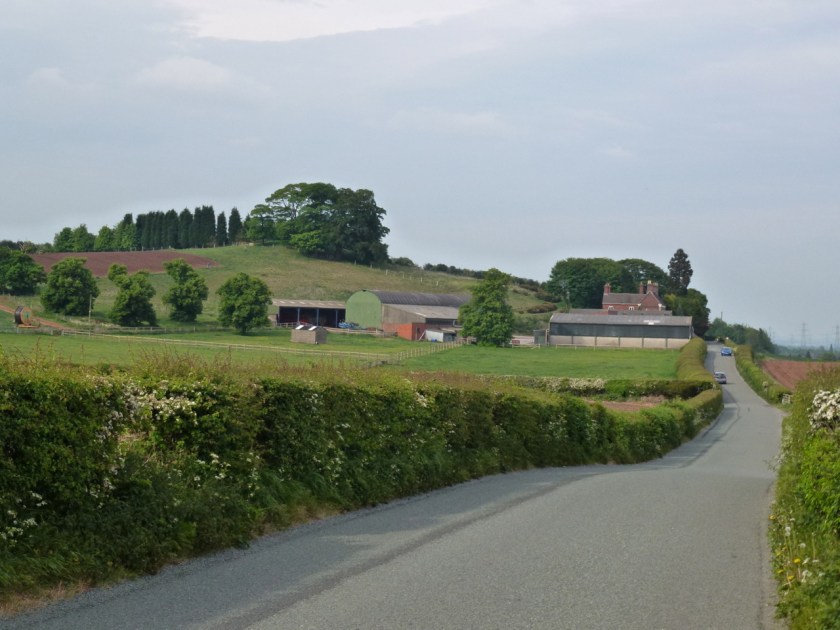
May 7th – I don’t know much about Knowle Hill, near Lichfield. Perhaps this is one for the Lichfield Lore blog, but I suspect it to be some kind of tumulus. Standing on the ridge at the side of the railway, the farm at it’s foot overlooks flat plains to the southeast.

This odd outcrop is a familiar sight to anyone who regularly catches trains on the Cross City Line to or from Lichfield, which passes nearby.

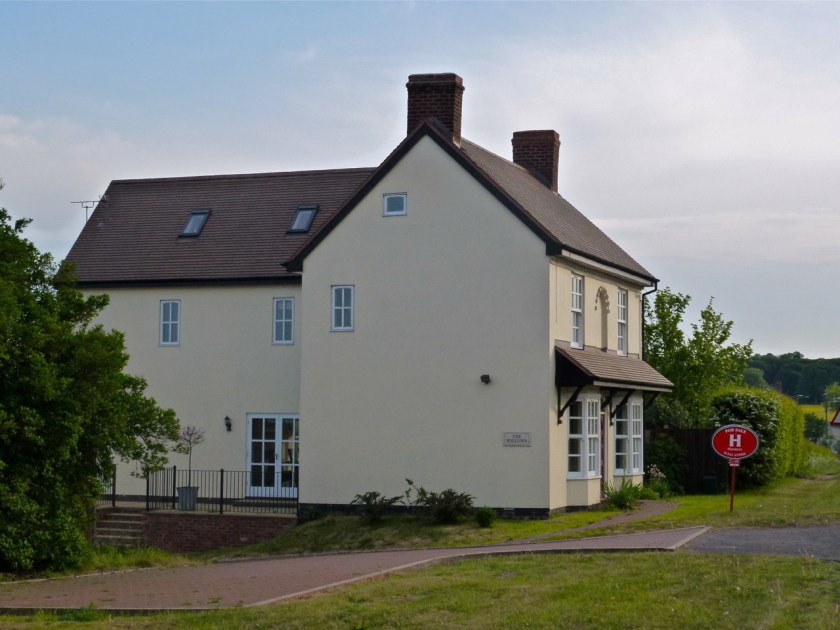
May 6th – conversely, this handsome house has recently been beautifully renovated. Standing at the other end of Springhill, at the very crest itself, The Willows has a surprising and proud history.

This sensitively restored building was once The Red, White and Blue pub, and latterly a plant nursery. It’s a bit sad that the current name doesn’t hint at the extensive history of a lovely building.