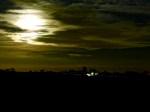
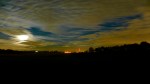
December 21st – For now of course, the night is still perched upon my journeys. I came back from Chasewater along the canal in the dark, hoping to have another fiddle with long exposures – but the absence of moonlight and a wind that shook the camera made my attempts useless. Heading to Catshill Junction and Clayhanger Common, I passed under Anchor Bridge.

Barely noticeable to the non-locals who pass over it every day in their cars, it’s an interesting structure, the abutments and brickwork still bear witness to an older, narrower structure. I noted this as my light caught the brickwork. The wonderful local historian Gerald Reece had pointed this out to me in an email last year, and I’d meant to record it. Spinning on to Catshill junction, I noted also the road alignment rejoining the canal contour.

It’s rare to see a bridge so well accommodated into its surrounding landscape.

December 21st – From here, it’s going to be OK. Everything will work out, and the battle of the last few months has finally been won.

From 5:11pm this evening, the darkness has been overcome, and every day from now on the daylight will lengthen in a sinusoidal patten until midsummer.

Today was the solstice, and from this point forward, imperceptibly at first, the days will lengthen and open out. There will still be dark, cold days to come, but the madness of the closing-in days has passed. My depression that deepens with the clock change in October will now lift. 

From here, Christmas, then a new year. A couple of cold dark months, then spring. The budding, the flowering, the warmth. The season’s mechanism continues, slowly, inexorably, and I am in it’s thrall.

Every year, I feel this so much more keenly. I need to feel it, to feel the good days. But oh, the blessed absence of light…

Chasewater was choppy, and grey. The fine sunset I’d hoped to catch didn’t come. But it didn’t matter. Darkness must now retreat. Begone.

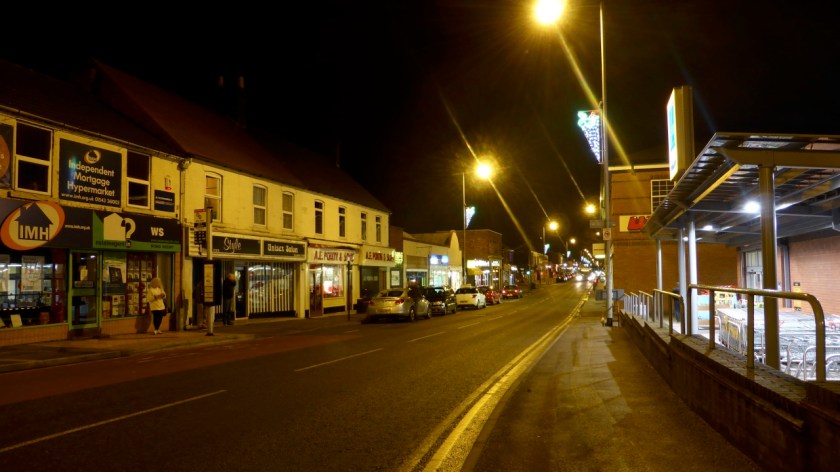
December 20th – As I looped back down the High Street, I thought how Christmassy it looked, but in the photo I took, it doesn’t seem like that at all, in fact it looks quite deserted. I find that a bit sad, really , as the atmosphere at the time was bustling. 

Sometimes I wonder if the camera sees the same things I do…

December 20th – I’d been out most of the day, Christmas shopping and mooching around Birmingham. I had places to be in the evening, and only managed to fit in a short ride in the early evening, which was just as well really, as the wind was horrid and it was threatening rain after what had been a fairly good, but chilly day. 

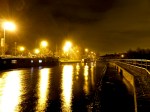
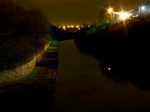
I took a ride up the canal from Coopers Bridge to Silver Street, and did a bit more experimentation with long exposure. The shot of the apartments by Coopers Bridge, even at 30 seconds, was too dark and grainy, there just wasn’t enough light for the camera to capture. However, near the overflow opposite Tesco the effect was quite good at 15 seconds. I love the shine it appears to give the water.

Think I’m fretting my head around it…

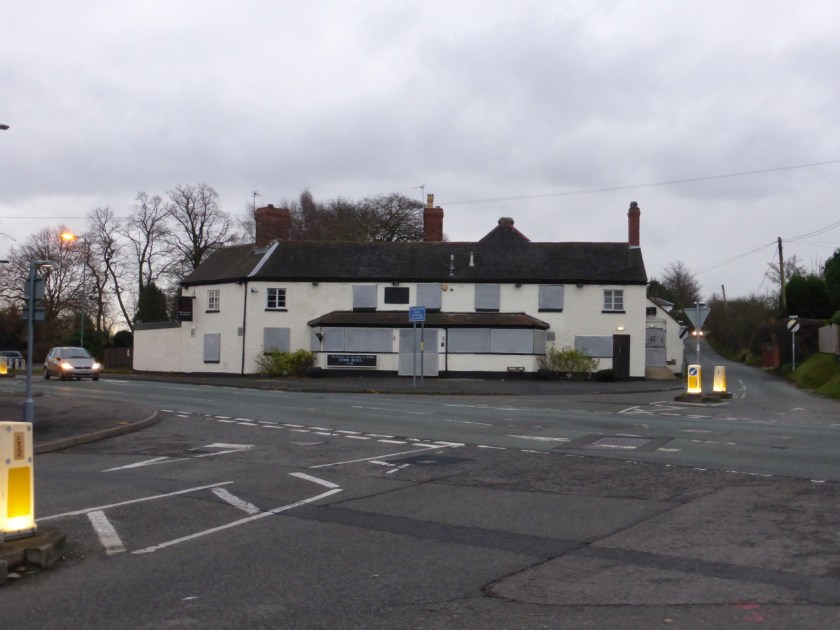
December 19th – I see the Italian restaurant the the former Shoulder of Mutton had brome on the outskirts of Lichfield has closed. I noted this with some surprise, as I thought this was a popular, decent place to eat. I seem to recall the signs outside proclaiming awards for quality. It always smelled delicious when I passed, too.

Sadly, now it’s just another empty, boarded up pub. Hope someone can rescue it. Tragic.

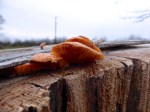
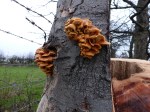
December 19th – I headed out mid afternoon on the annual pre-Christmas pilgrimage to Packington Moor farm shop near Whittington. On the way, I spun down Barracks Lane, and the bright colour of some fungus on a tree stump snagged my eye. I stopped to take a look.

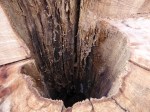
A big old tree – I think an Ash – has been cut down here in recent weeks, leaving a hollowed out bole to rot away. The cavity in the stump itself contains an odd, purple mildew, and although clearly only weeks since being cut, the fungus is working to recycle the wood, and growing in slimy, glossy bright orange clumps. I’ve no idea what they are, but they’re beautiful.

Nature reclaims most things, and is wonderful and mysterious in her processes.

As an aside, it’s clear that this tree was suffering a dreadful disease from the hollow core. To the untrained eye, there appear to have been no signs on the outside of the malady within. How do arborists know this stuff?

December 18th – I passed through Chesterfield, the sleepy little hamlet midway between Shenstone and Wall. There isn’t a single ugly house here, they are all gorgeous, and I’m sure there’s history here; after all, the workhouse was just 50 yards around the corner for years. 

It’s nice to see that after a period of being empty, someone has bought – and invested no little time or money – in the old Grange Farmhouse. It’s been sad to see it languishing empty for so long, and this really is a lovely, quiet spot, even on dull, overcast days like this.

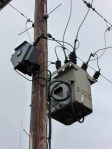
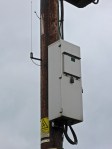
December 18th – Geekout time again. I nipped in to Shenstone in the morning to beat the storm and pick up a Christmas present. On my way, the wind blew me down Bullmoor Lane to Chesterfield, near Wall. On the bend near Raikes, there’s been an electricity pole for years that’s fascinated me. It has a really complicated arrangement of equipment mounted upon it, and it’s effectively in the middle of nowhere. I’ve always been interested in it’s purpose, so I resolved to find out.

After a fair bit of googling, it’s an ‘automatic recloser’, and a really high-tech piece of equipment with a simple purpose; it’s an 11,000V breaker, performing the same kind of job as the ones you get in a modern domestic fusebox.

It consists of the unit that switches on and off the supply – the big box at the top, which breaks the three phase supply voltage present on the lines above, and an electronic control unit called an ADVC, which detects when there’s a fault, such as overcurrent in the load. A small transformer sits high up to supply the ADVC.

The ADVC reads the signals in the line, like voltage and current, and should it detect a problem, it disconnects or ‘opens’ the recloser, breaking the supply. Since most faults with overhead lines like this clear themselves quickly (they may be weather, vegetation or vermin related, for instance), the ADVC monitors the disconnected line and automatically recloses – reconnecting the supply – automatically.

The system is monitored by complex electronics with a computerised controller, and can communicate by radio telemetry, hence the antenna; it even has batteries so it can keep working if it’s own supply is interrupted.

I’ve been meaning to find that out for years… you can read more here.

This project takes me to some strange places, sometimes…
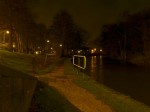
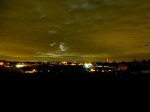
December 17th – I went out in darkness, and found myself in a refreshingly cold night, with a huge, beautiful, partially cloud obscured moon. I rode up the canal intending to visit Chasewater, but spent ages instead experimenting more with long exposure photography.

I’m not a photographer, I never learned any technical stuff. What I know I learned by trial and error, and finding this camera offered me a couple of really long exposures, I’ve been trying them out. 

The landscape over Home Farm at Sandhills, Ogley Junction and Warrenhouse yielded some fairly interesting results, but I think I need more practice…