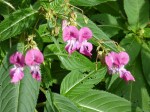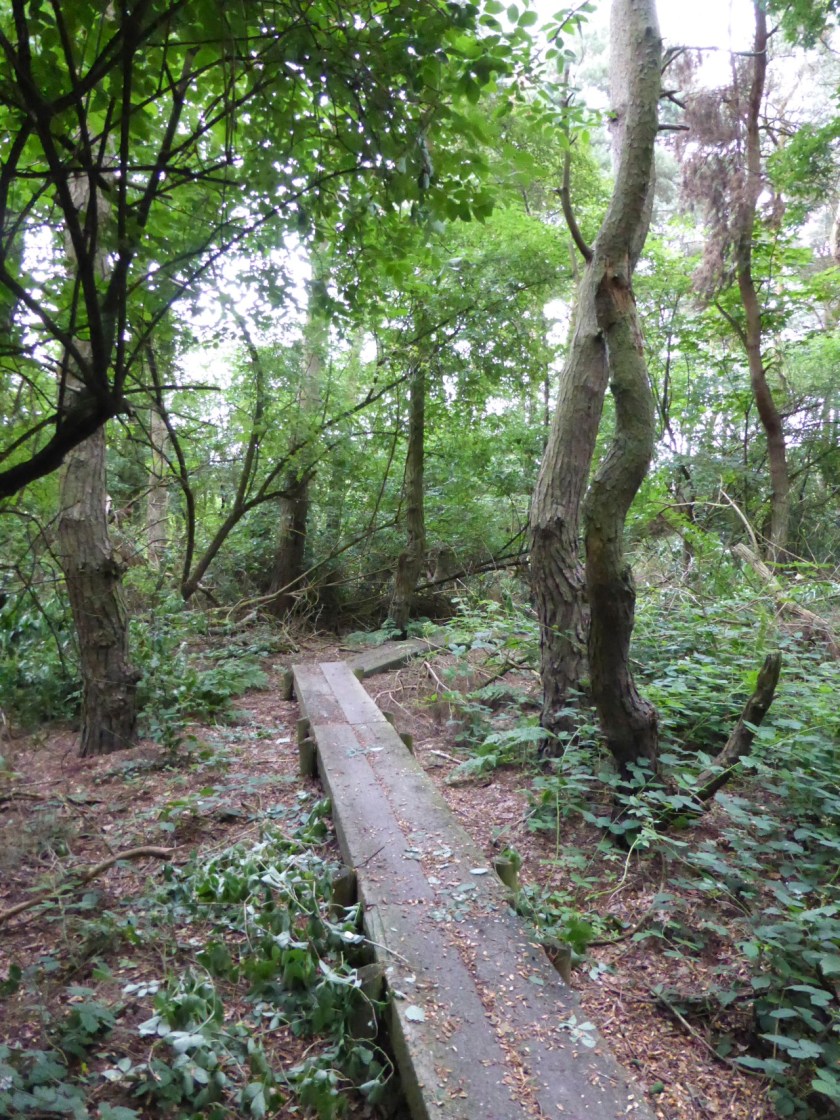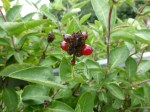
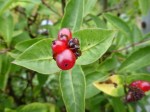
August 13th – Honeysuckle berries are unpleasant, and in most varieties of the plant, slightly toxic to humans. The berries of the most common hedgerow species I see are crimson and sticky, and beloved of birds and bugs. If you can catch them before they’re devoured, they’re beautiful, like jewels, almost. These are growing near the cycleway in Pelsall, where it crosses Mill Road. Note the airborne grime stuck to the surface of the fruit – this is why foraged stuff should always, always be washed.

But don’t forage these, they’ll make you ill…

August 13th – Returning from Darlaston, I took to the canal. From pretty much Great Bridge to Gostote, the footpath alongside the Walsall and Wyrley and Esiington Canals is a good as any in Walsall. Well surfaced with a self-healing, stone-blown aggregate, the path is fast, smooth and fine on any tires. If only the towpaths through Pelsall or Aldridge were this good.

Which makes the plan to upgrade the ones here all the more bizarre. Can the council not do the worst ones, rather than fudge about with the best we’ve got? Has anyone who made this daft decision ever ridden a bike anywhere, let alone here?

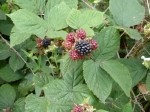
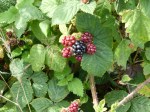
August 12th – The dewberries are always earlier than the blackberries, but many folk don’t know there’s a difference. Dewberies are hairier, and consist of fewer, larger globes than their sweeter, finer counterparts. It seems to have been a good year for the bramble fruits this year, and hedgerows are spattered red and black with ripening fruits. A positive bounty for birds, squirrels and pie-makers alike. 

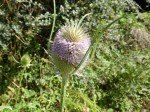
August 12th – The teasel, or dipsacus – is a great plant. Alien-looking, spiky, provider of food for finches and small birds, it grows in meadows, scrubs and hedgerows. Once used for teasing out cloth (hence the name), it’s now spread as a wildflower. These examples have matured beautifully on the wild embankment at South Wigston station, and were, unusually, the only colour there today to speak of, yet by the look of the rosebushes, we’re due an excellent crop of hips in all their red-orange glory.

August 11th – It was hard going – I had planned a ride from the Chase, across Staffordshire to Tutbury and back, with the wind behind me. But the wind kept changing direction, and never found my back. Instead, I headed up the canal to Hixon, then through Newton and along the southern periphery of Blithfield Reservoir. The views and countryside were great, but I just didn’t have it in me today. It was a hard 40 miles.

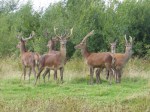
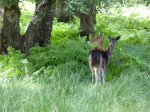
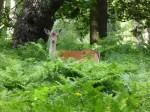
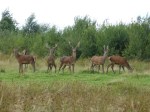
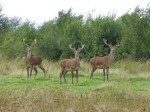
August 11th – I’d planned a long ride, but my energy levels – and a grim, persistent wind – didn’t allow it. My speeds were poor, and there were too may distractions, like the deer I spotted along the way. I spotted the first group – 6 or so red deer, including some impressive stags – on Cuckoo Bank, just off the Cannock Road north of Chasewater. They showed well, until something spooked them and they disappeared back into the thicket. 

Further on, at Penkridge Bank on Cannock Chase, a few skittish hinds were loafing in the bracken. I had thought the red colouring meant the one was juvenile, but this is not apparently the case, and it’s just a different marking.

It’s always good to see the deer, even on a ride when the wind never really gets behind you.

August 10th – Himalayan Balsam is a pain. Lovely to look at, its highly aromatic, metallic-smelling flowers line wetlands, riverbanks and marshes at this time of year. Growing to a couple of meters, it chokes native plants and is considered an invasive species. Sadly, it’s so prolific – this clump was on the banks of the Trent at Shugborough – I don’t think we’ll ever be rid of it.

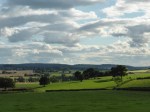
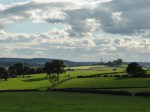
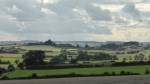
August 10th – The harvest was underway everywhere I looked – out at Hammerwich, Stonnall, The slopes of Longon and the plains of Staffordshire. Everywhere I looked, there were plumes of grain dust rising in the distant fields like palls of smoke. At Home Farm, Sandhills, baling of the straw was ongoing. The parsnips in the field behind still look lush, and the oilseed rape is still not ripe, but the wheat, plump and healthy, is now stubble. And so the cycle continues.

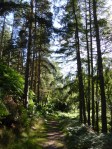
August 9th – Some months ago there was a brouhaha locally about plans to manage this section of Brownhills Common by removing the conifers, which are not natural here and are damaging the biodiversity of the heath.

Many locals didn’t see what the problem was. Here its is, this afternoon, in a nutshell.

Here we have open heather heath, host to a myriad of insects, small mammals, and passing deer. The heather, grasses and small, deciduous saplings are being choked by fast-growing spruce. 

What chance does that oak sapling stand against the larger conifer shading it? If left unchecked, how diverse will this spot be in five years?

This is why management is necessary. Because if we’re not careful, the heath here will be lost, together with all the species it contains.