November 7th – I’m really getting into Acocks Green in Birmingham. I love the suburban, Metroland architecture, broad tree-lined streets and air of urban dignity. What’s really interesting me, particularly now I’ve spotted Hay Hall, is that there are clearly buildings of an earlier period dotted throughout the district. Some are quite well hidden, but this suggests a long history. This is fascinating and I must read up.

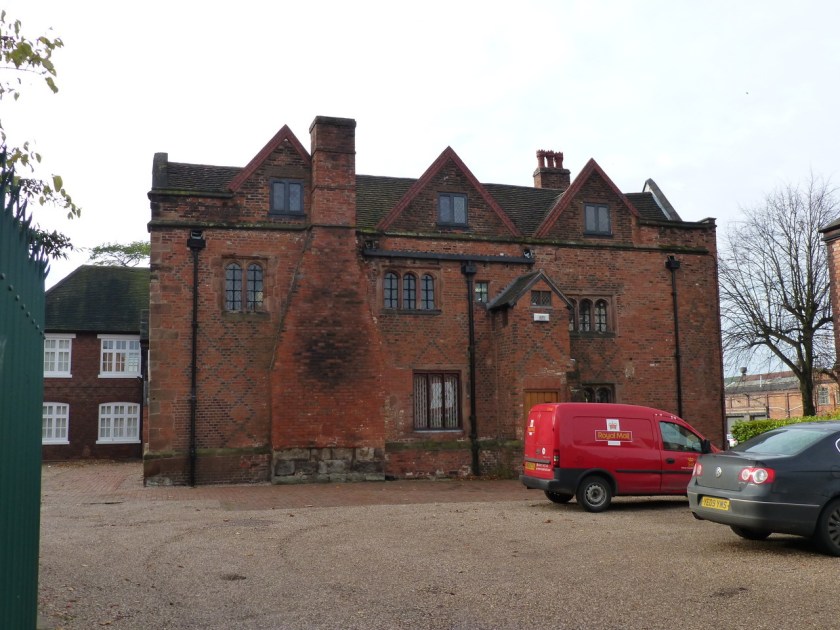
November 6th – I came upon this remarkable building yesterday, completely by accident. Taking a wrong turn in the industrial backstreets of Tyseley, Birmingham, I found Hay Hall,  one of the few remnants of Medieval architecture in the city. It’s got excellent chimney pots, too. Wikipedia has this to say:

A moated house or manor was first founded at the site in about 1260 by the De La Haye family. Hay Hall passed on to the Este family in 1423, when the heiress Marian De La Haye, married Thomas Este. They are commemorated in St. Edburgha’s Church atYardleyby a wall sculpture depicting them. The Este family owned and occupied Hay Hall until the late seventeenth century after which the property changed hands frequently. In 1917, when thePatented Butted Tube Company purchased Hay Hall and a surrounding 13 acres of land. The estate was developed into new tube works and factories but fortunately Hay Hall was saved from demolition.

The last person to actually reside at Hay Hall was apparently a Mrs Shelley who was employed as a housekeeper by the then rebranded Tube Investments Company, and was known to be living in the Hall up until 1939. In 1948 the building was fully restored and is currently in use as private offices for the Reynolds Tube Company Limited

I’m not sure if Reynolds still own it – the sign outside says ‘Air Link’, but it’s very hard to convey just how industrial the area around it is. Utterly incongruous, and rather lovely.


November 5th – On a cold morning in Tyseley, the euphemistically named ‘Energy Recovery Facility’ – or in plain English, refuse incinerator – can be seen operating at full tilt. People think that’s smoke emanating from the flue, but it’s not, the plume is steam condensing in the cold air. This facility has twin furnaces, and generates enough electricity to power the local area. Burning refuse is a 24 hour operation, and feeding the voracious appetite of the incinerators are a constant flow of lorries, which give the whole district a characteristic smell. Unsavoury, but necessary.

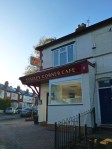
November 5th – The cafe is an essential part of any industrial area. Serving the needs of workers for butties, breakfasts and baps, these temples to unhealthy food and strong tea take many forms. This corner Cafe on the Tyseley/Acocks Green border is a recently refurbished gem, and a real classic of the art. Sat right on a corner, replete with frosted glass so your boss can’t see you skiving, I bet it does a great fry. Just right to keep the inner warmth going on a frosty, raw morning.

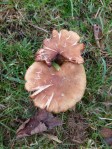
November 4th – With all the rotten tree stumps left in Chasewater’s dam after the felling operation as part of the restoration, there’s now an impressive crop of assorted fungi in evidence. The rusula and glistening ink caps pictured here are amongst several species evidently thriving there. I haven’t seen much fungi about this year, it doesn’t seem to have been a very good season. 

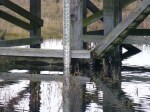
November 4th – I was at Chasewater for the Vintage Event at the railway, but took in a loop of the rapidly refilling lake when I left. I noted that the water level had now reached 5.4 on the scale, whereas on October 19th, it was at 6.5. Since the scale is graduated in decimetres, that tells us the waterline has risen 11cm. That’s 110m in 16 days, making the height of the water now around 148.71m AOD. There’s now about a metre to go until Chasewater is full – however, there’s and awful lot of surface area to cover in that short height gain. At dusk, the gull roost was massive, and with little sunset, the night came on in shades of blue.

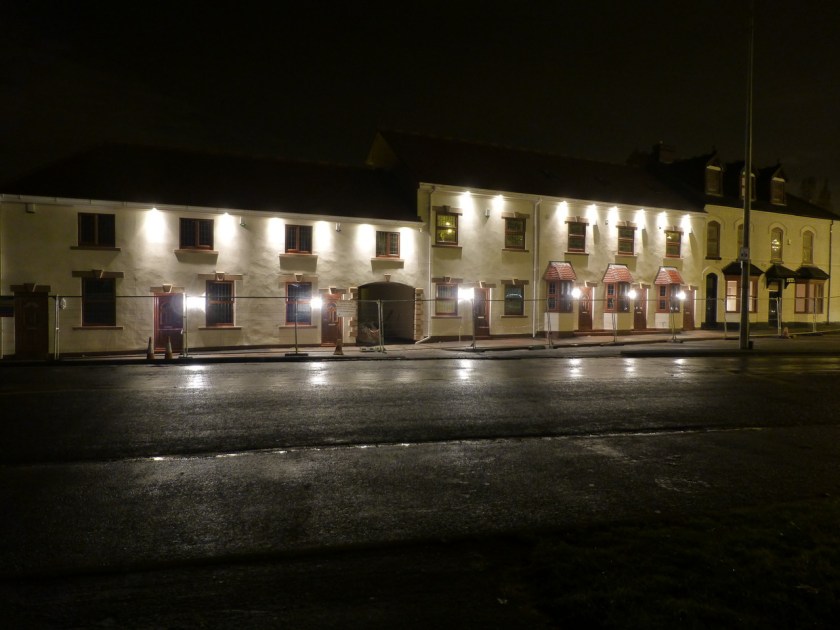
November 3rd – On my return from Lichfield, I passed the old Muckley Corner, where there former pub and hotel has been converted back into homes. It’s taken a while, but the building is looking splendid now, particularly at night when it’s beautifully lit.

It can’t be far off finished by now. It’s good to see the old place preserved, and returned to   the kind of arrangement the terrace would have had before the pub expanded.