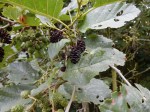
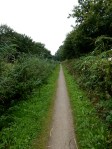
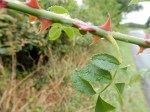
September 5th – Ah, Autumn. Or is it? I guess we’re on the cusp, really. It’s cold; it was very chilly out today, and the hedgerows and copses of Hammerwich, Wall and Stonnall were full of large, juicy blackberries and other fruits. The elderberries and sloes are blackening up. There’s hints of brown and yellow in the leaves. The light is soft.

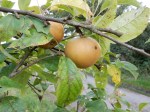
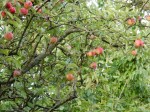
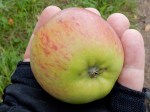
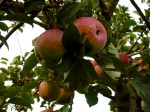
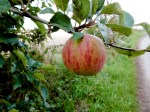
In a spot I know in the backlanes, apples hang off the branches of wild trees. Pippins and russets have done well this year – sweet and crunchy, when I took a look, they were falling to the ground and being eaten by wasps.

Good to see them.

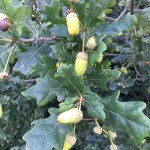
September 4th – And then, there are the oaks I was concerned were lost. All the galls and nasties seem to have appeared long before the acorn crop I thought would not appear – there is now a stunning crop of tiny acorns growing well all along the canal at Clayhanger.

It’s good to see, and when they start to fall, I’ll gather them and spread the acorn love.

Never lose faith.

September 4th – Apologies for the poor phone photos, I forgot the camera…

I’m still musing on the oaks, and their various blights and parasites. I asserted a few weeks ago that the oak seemed to suffer disproportionally with these afflictions, but I was forgetting the various leaf-miners, bugs and aphids that affect other species.

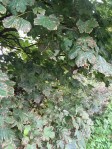
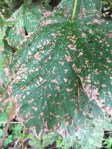
This sycamore in Pleck, Walsall for instance is suffering form various things, including leaf miners. I have no idea why, but only this tree out of several neighbours is affected.

I really ought to read up on this stuff.

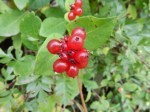
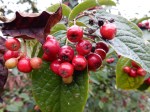
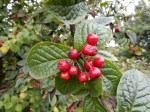
September 3rd – I took to the canal on the way home, and observed that red appears to be the colour of choice for the season – a whole host of red berries, from honeysuckle, to ripening blackberries, to haws and hips are all doing well. I did wonder, however, what the very glossy red berries were – the ones with the very leathery leaves. There’s about twice the size of a pea, and look like haws but are too large, glossy and red. Any ideas?

I’m also wondering about the hop-like fruit of the broad leaved tree, centre. Something is telling me white birch, but I’m not sure.

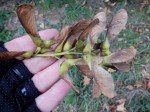
Looks like there will be a good crop of helicopter seeds from the sycamores this year, too.

Any help welcome, thanks!

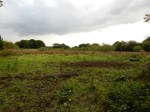
September 2nd – As I squelched past Jockey Meadows, I stopped to look for my mates the coos. I noted they were on the far side of the meadow as I rode past on my way to work, but they were too far away to make a good photo. On my return, they’d gone, which I was sad about.

However, this female pheasant seemed to be enjoying the opportunity for browsing presented by the freshly turned meadow. Off that she seems to have lost her tail-feathers. Didn’t seem to bother her, though.

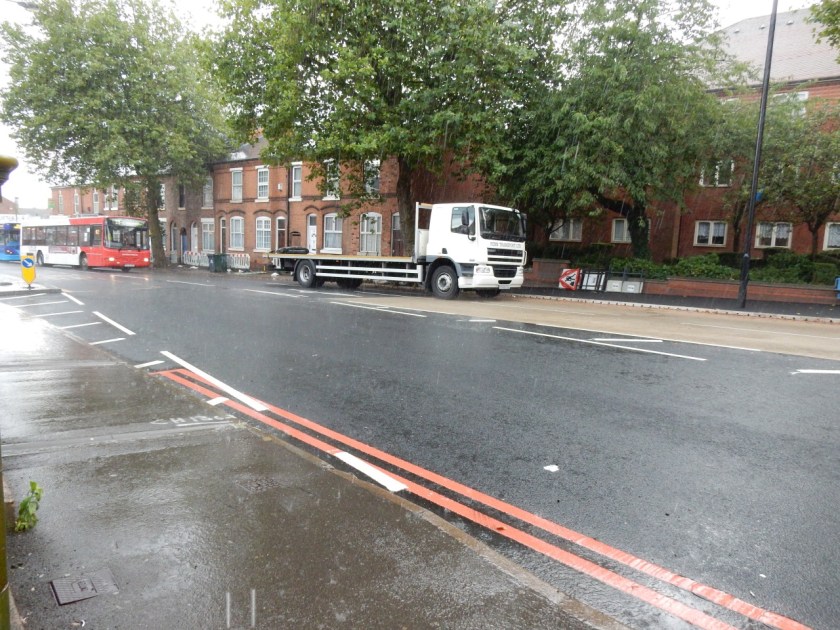
September 2nd – Like most people, I’m holding out for an Indian summer, but as I made my way home on Wednesday, it seemed the chance was slim. Caught by two very localised, heavy downpours, I was soaked by the second after having escaped the first by stating it out in an archway in Pleck.

It’s gone cold, too. Summer, come back!

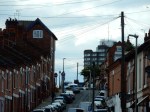
September 1st – Today, for the first time in ages, I had to go to Leicester for a work appointment. I forgot how wonderfully vibrant the city is, and how gorgeously eclectic the architecture is.

Brutal in places, it’s mostly Victorian faux-gothic, elaborate terraces or just plain bonkers. The church spires coexist with minarets, tower blocks and statement systembuilds. The streets hum with chaotic, frenetic activity.

I love where I live with all my heart, but there will always be a soft spot in there for this city, too. I could live here.

August 31st – I rode out via Canwell and Middleton to Middleton Hall for a cup of tea and cake, all the while in steady rain. I nipped down to Bodymoor Heath, onto the canal and up to Fazeley Junction. Back along the old A5 to Weeford, then home via Shenstone.
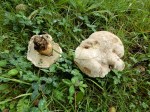
It was warm enough, and there wasn’t much in the way of wind. The roads were quiet and the riding fast; but it was very, very grey and very, very wet. The countryside dripped silently little droplets of grey summer sadness.

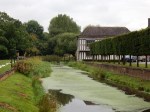
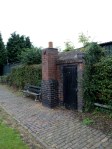
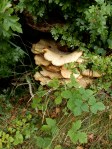
As ever on grey days, there was fun and beauty to be found; the architecture of the canals – not just the bold redbrick house, but the small lock-keeper’s hut with the chimney for a stove (how cosy must that have been in winter?); the Kingsbury lock flight and greenery of the canalside reed bed. Fungus is growing well in the damp, and those polypores were huge. 

Middleton Hall was as stunning as ever.

I just loved the hound tied up outside the cafe. He had an endearing way of looking at you with his head to one side. He was muddy and wet and had clearly been having lots of fun.

The red and orange spiny, furry growth on the rose stem that looks like a ball of thread? That’s a robins pincushion or Diplolepis rosea – a gall formed, like the oak galls by a wasp. 

I asked a few weeks ago why only the oak is bothered by wasp galls; it’s not only the oak, but mostly. Lime trees, conifers and roses suffer too. Here, a wasp lays 60 or so eggs in a tiny, developing leaf bud, surrounded in a chemical which causes the plant to mutate and grow this furry aberration, which is internally quite solid with cavities for the larva to hatch and feed.

Nature is quite horrific in it’s fascination sometimes. Find out more about this curious parasite here.