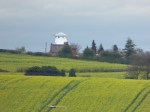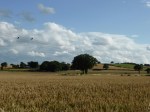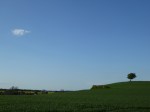
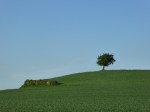
May 14th – Grove Hill, near Stonnall, remains a muse to local photographers and historians alike. The hill topped with a lone tree is well known as a landmark to people passing on the Chester Road.

Myth and legend has it that a noble man is buried here, hence the tree, although the reason for its placement is probably more esoteric. Like the groinal hedge to its side, the tree is probably preventing soil erosion.

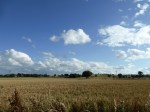
This year, the hill appears to have a crop of fine-looking wheat growing lush and green all around.

It’s a lovely spot.

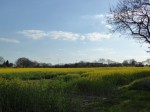
15th April – I noted when passing this evening that the field of oilseed rape at Grange Farm, on the Walsall Wood – Shelfield border was nearly fully in flower. The scent doesn’t seem to have risen yet, but it is beautiful. I love this stuff; such a striking sight in the countryside.

Even quite late this field was alive with bugs, bees and butterflies. Which has to be a good thing…

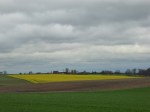
April 6th – Still not feeling too great, and with similarly dismal weather, I took a spin out around Brownhills late afternoon. I noted that despite the grey and  blustery weather it was quite warm, and the oilseed rape was coming on in leaps and bounds. At Sandhills looking towards Springhill, the crop was nearly in flower, and the fields towards Hammerwich weren’t too far behind.

They’re going to be gorgeous this year when the sun shines.

This must be the signal that winter was over. I told you that buying new snow tyres would stall a bad winter – and so they did.

April 1st – This day last year, I was cycling past 4ft drifts of snow in Bardy Lane, Upper Longdon, and the weather was wet and cold indeed. Today was very warm and mostly sunny, and at Grange Farm at High Heath, the early oilseed rape is just about to come out in a riot of scent and colour.

I love this crop; vivid yellow, smelling like Emmental cheese, it sets the countryside alight with vibrant yellow. Frequently and unfairly blamed for hay fever, the sticky pollen of this plant is way too heavy and course to be wind-borne. A member of the brassica family, it’s closely related to mustard and cabbage, and will provide a boon for bees and bugs as it blooms.

And as it does, I feel the season advancing a little further…

October 9th – There must be a good return on parsnips. I watched this mystery crop grow at Home Farm, Sandhills, from polythene covered strip mounds to lush, verdant foliage, from which readers identified the then mysterious crop. Harvesting has been ongoing for a week or two now – not everyday, but I imagine as often as demand occurs. Workers appear to sit in the shed-like trailer picking the root veg by hand, and tossing them onto a conveyor. Debris in one spot shows the crop was large and in good condition.

Don’t think I’ve ever seen parsnips grown in large quantities before. It’s certainly labour intensive to pick them. 

September 3rd – In recent weeks I’ve mentioned the cereal harvest quite a lot, but there are other crops in the fields, too. Potatoes, the parsnips at Home Farm in Sandhills, sugar beet, sprouts and other vegetables are nearing readiness, too. Here near Shenstone, a field of what I think is either kale or cabbage looks lush in the afternoon sun, and the air smells distinctly.

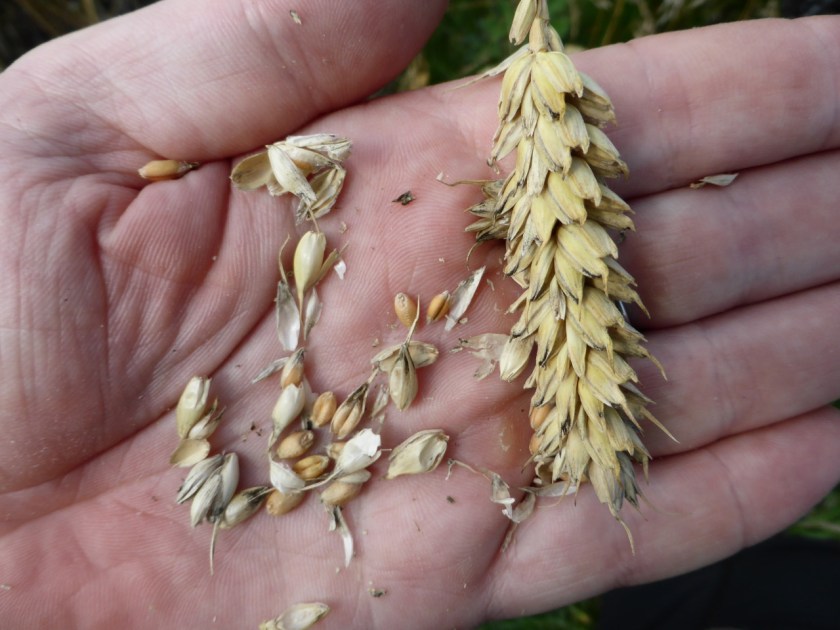
August 10th – The harvest was underway everywhere I looked – out at Hammerwich, Stonnall, The slopes of Longon and the plains of Staffordshire. Everywhere I looked, there were plumes of grain dust rising in the distant fields like palls of smoke. At Home Farm, Sandhills, baling of the straw was ongoing. The parsnips in the field behind still look lush, and the oilseed rape is still not ripe, but the wheat, plump and healthy, is now stubble. And so the cycle continues.

August 1st – Passing Grove Hill near Stonnall in the late afternoon sun, I noted that it was surrounded by a fine crop of oilseed rape. Where this had been a sea of vivid yellow in spring, it was now going a soft, golden colour. 

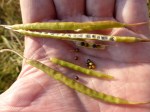
The plant is harvested by special equipment, which flays the pod from the tiny, tiny seeds which are black when ripe. These then go for crushing to extract the oil, both for biofuel and cooking.

There’s gold in those tiny, spherical seeds.

July 30th – The ripening is noticeable everywhere. Returning from Shenstone, the fields of wheat and oilseed rape were losing their last vestiges of green; not yet ready to harvest, but well on the way. The golden colour is welcome and is like late summer’s coat; the countryside is replete in golds, beige and dark, dark green.

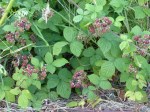
Also doing well, the bramble fruits – dewberry and blackberry – are turning red, and the parsnips growing at Sandhills look in fine fettle.

Doesn’t look like it was such a bad season, after all.