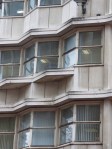
April 15th – I had a late meeting in Birmingham, and the weather was grey and wet. Unusually, though, this didn’t dampen my enthusiasm for the city, which never looks good on a grey day. Finishing my task, I went for a mooch around the city centre and spotted this brutalist gem hiding in plain sight in New Street. 

Architecturally, it seems a mix of brutalism and a kind of stilted, controlled art deco. I have a feeling it’s more modern than it’s appearance belies.

Does anyone know anything about it or who the architect was? It’s quietly stunning.

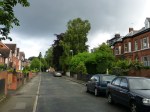
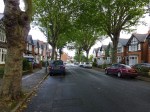
March 4th – I came through Acocks Green today, a place I haven’t visited for a while. I love the sleepy, suburban Metroland feel to the backstreets, the Art-Deco townhouse terraces mingling with much older cottages from a more bucolic history. On the corner verge, a roadside flowerbed, planted with polyanthus and miniature daffodils.

I’m sure there’s an aspidistra in one of these front rooms. I hope they keep flying it.

July 11th – Acocks Green. I’ve discovered that taking the train to here, rather than Tyseley, rewards me with a nicer ride to my destination. Tyseley is very, very industrial, yet bordering it is a perfect, interwar Metroland of Victorian and Art Deco townhouses, on wooded, somnambulant streets. There is great, but modest architecture in these backways, and little traffic. The sun came through this morning, and lit the whole thing up – it felt like I was in an episode of Mr. Ben, or possibly ‘Keep the Aspidistra Flying’ – I couldn’t make my mind up which was more applicable. A lovely place. I think I’m in love.

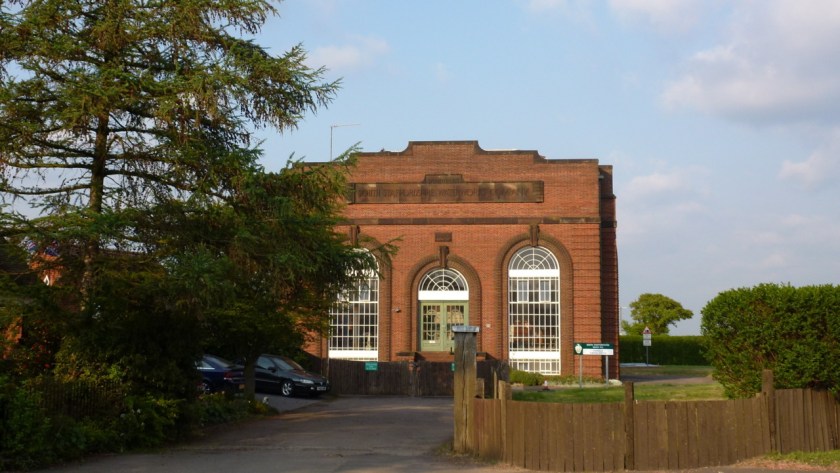
April 28th – The Sandhills Pumping Station – built by the private concern of The South Staffordshire Waterworks Company in 1935 – still pumps fresh water to this day from two 400 foot deep boreholes drilled into the bunter pebble beds under Springhill. This station – and others like it dotted throughout our area – are handsome period pieces of civic architecture that speak of a better, more socially aware time, when the supply of basic services like clean water was seen as a noble activity and not a purely profit driven enterprise.