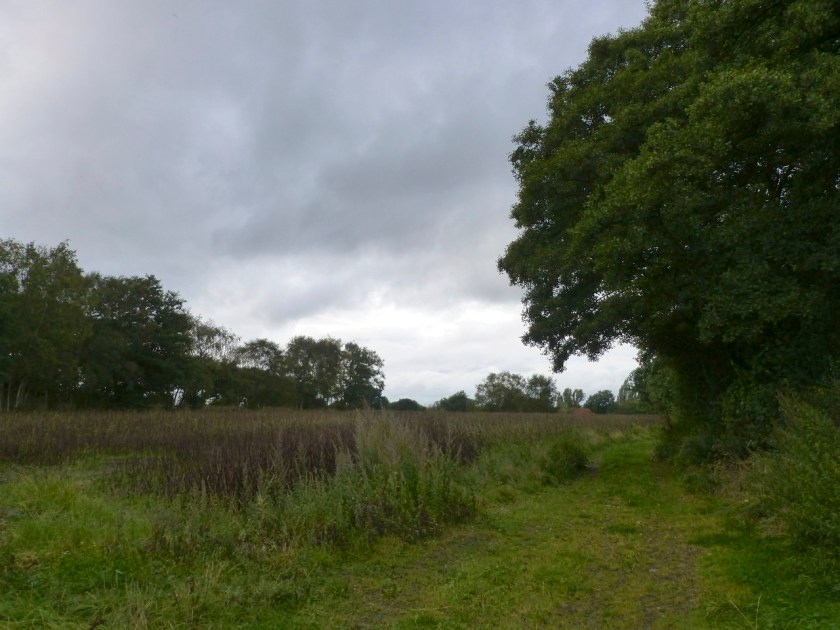
June 14th – I took a spin over to Hopwas Hays Wood via Wall. It was a little too muddy, to be honest, and the skies threatened the whole time I was out. But it was a nice ride for all that.

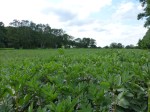
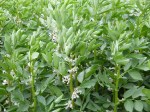
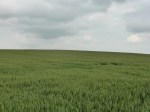
Crossing Harehurst Hill from Claypit Lane on the bridleway to the old Watling Street, when I looked south, all I could see before me was a healthy, lush crop of beans. Northwards, a similarly decent crop of wheat. 

Looks like a decent season for the farmers if the weather holds.
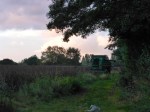
October 3rd – The mystery of the bean field is solved. As I cycled past this evening, the farmer was harvesting the crop of beans I considered last week to be lost. I’d been musing on exactly how they were harvested for a while, and it seems the technique is identical to how much local maize is harvested: the whole plant is mown off at about six inches above ground, then chopped into rough chunks by the machinery, where presumably, it’s loaded into a trailer. I’d assume the beans a therefore used as fodder.

That’s a very big machine. Impressive stuff, and a mystery no more.

September 25th – The mystery of the bean field continues. The commute home was grey and made grim by late trains, but at least it was dry. Coming back along green Lane to Walsall Wood, I noted that the fields of beans here – unlike the ones in Lynn, near Stonnall, hadn’t been harvested. They’re just rotting in the fields. Whether that’s the plan, and it’s just a crop rotation technique, or whether the lousy summer ruined the crop, I have no idea, but I’m hoping someone can explain…

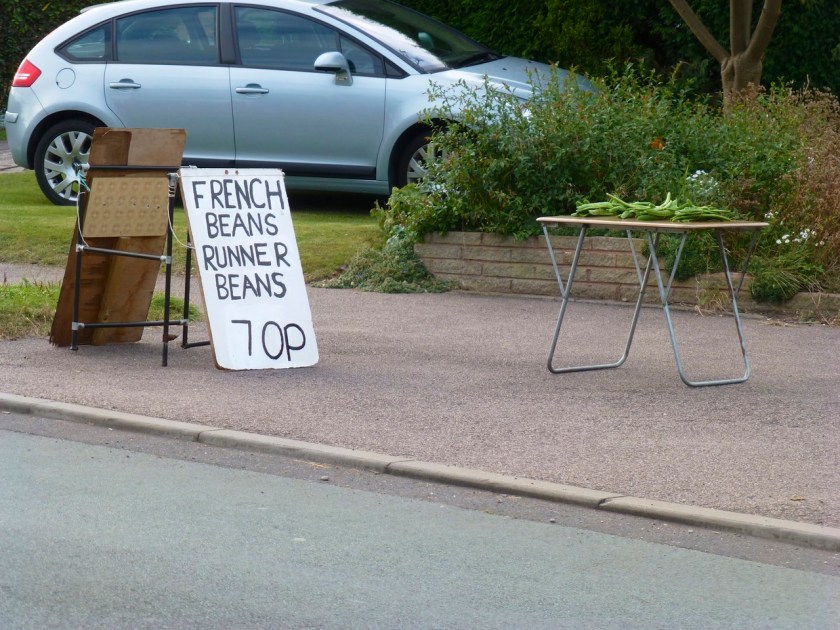
September 17th – This is a summer tradition that’s been hit by the weather. All through the growing season (and into autumn, usually), throughout rural Britain the traveller will see trestle tables of surplus fruit or veg, with an honesty box for payment. I’ve seen very few this year, which is sad, as they’re a lovely tradition. I’ve purchased everything from these roadside stalls, from cucumbers to windfallen cooking apples, from tomatoes to plums. With the weather badly affecting the growing this year, the only stall I’ve seen has been this one of runner beans, in Main Street, Stonnall. Here’s to a better year in 2013.

September 5th – The Beans that have fascinated me in the field in Lynn, near Shenstone, are just being harvested. They are as dry as old bones, both plant and pod, and something has cropped the whole plant at about six inches from ground level. There’s no residue left other than stubble. I didn’t see it happen, and so far, just the perimeter ofthe field has been harvested, so I’m none the wiser…

August 13th – The proliferation of beans planted as a crop on local farms this year is intriguing me. I’m interested in how they’re harvested, what they’re used for and why, for instance, this field at Lynn, near Stonnall, is being allowed to die and blacken. I know that growing legumes is a valid and effective crop rotation technique to nitrogenate the soil, but letting the crop die is surely a waste, unless they’re used black. An interesting thing, for sure…

August 6th – Back in Walsall Wood, near Jockey Meadows, the crop of beans I noticed a month or so ago have grown tall in the wet summer. There seems to be a decent crop of what appear to be broad beans, but the crop is sadly afflicted by blackfly and some kind of leaf blight.

I guess these will be for animal fodder, although they seemed tender and sweet in the unripe pod I cracked open.

June 18th – I noticed cycling back home that the field between the sewage works and Goblin Wood in Walsall Wood seems to be host to a crop of broad beans, or at least, beans of some variety. Last year this field grew quinoa, and I guess growing a legume will re-nitrate the soil for good crop rotation. The crop looks healthy, despite being a little ravaged at the southern edge due to the weather. An interesting and unusual sight.