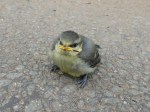
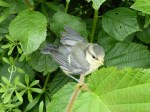
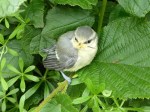
May 31st – He was in the middle of a busy lane at Shenstone Woodend, just sitting there. I spotted him by chance, and just swerved to miss him. I screeched to a halt and thought what to do.

He could fly short distances, but was clearly exhausted, and I couldn’t get him out of the road for love nor money. I know you’re not supposed to touch fledging chicks, but he was going to get squished under the wheels of the many vehicles that come this way.

I gently picked him up, and popped in in the hedge right next to where I found him. I hope he survived.

Anyone know what he is? I think he’s a tit of some sort.

Edit: Thanks to Fatuoussunbeams – he’s a blue tit. Thought he was, but after my recent dire attempts at botany I’m hedging my bets! Cheers…

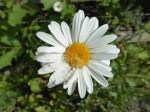
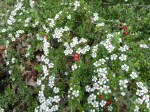
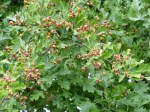
May 19th – In Telford for the day, and what a day it was. Bright, warm and sunny, the flowers and greenery have come on here apace. I noticed my first ox eye daisies of the year, replete with spiders, and cotoneaster in flower, still with some berries from last year. I’ve never seen that before – the fruit is beloved by blackbirds and other songbirds, but the shrub is so prolific here, and the crop so abundant last year that I just don’t think there were enough birds to eat it all.

It makes an attractive display, for sure…

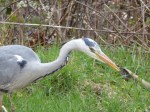
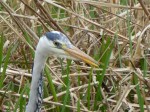
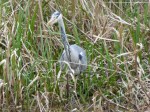
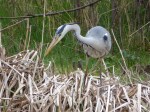
April 4th – Riding a bike is a cyclic antidepressant, and riding one once a day keeps the black dog at bay. I was sad, really sad, but something on the way home cheered me right up. A young heron, fishing by Clayhanger Bridge on the canal. I can’t ever recall seeing one here before, but I love these comical, dishevelled fishers. He was hungry, and young enough not to be skittish. He tolerated me taking photos for ages. He made me remember what I was doing, and what I was about. 

I adore herons. Such complex, fascinating birds.

It’s taken me all weekend to pluck up the balls to write this sequence.

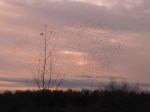
December 7th – The distraction was a murmuration of Starlings. They were hypnotic, and none of my images were properly in focus or did it justice. 

I’ve heard there have been such murmurations here for a couple of weeks. What happens is starlings flock together in large, mesmeric formations. These started as two groups, and merged atop the electricity pylon by Jeffrey’s Swag. Up there, they rested a while, then gradually took flight in a tight pack, swirling like a maelstrom. For 25 minutes or so they circled the Swag, taking sharp spirals, about turns, each time they came close the sound of their wingbeats disturbed the quiet. Eventually, they spotted a place they liked and descended into the poolside scrub to roost.

I’ve only ever seen this a few times in my life, and never so close. The noise, the Moire visuals as they banked, the sheer bird count were all astounding, as was the manner of their disappearance into the roost.

Glad I was out to see that.

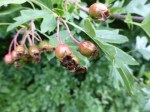
October 1st – One of the relatively unsung heroes of the hedgerow is Hawthorn, or May. It’s dark red fruit – haws – are maturing well now. Full of goodness, they stay in good condition on the branches and provide sustenance for the birds in the darkest depths of winter, when softer, more palatable fruits like blackberries have long gone Just like they will with garden Cotoneasters, blackbirds will defend a laden bush at all costs against other birds, and haws are bitter enough to only be eaten out of desperation.

Hawthorn is the mainstay of most rural hedging, and populates a lot of woodland. It really is the stalwart of the great British hedgerow.

September 28th – Conservationists and birders in particular keep banging on about helium balloons, balloon releases and Chinese lanterns. These are serious issues, and here’s why. At Chasewater, balloons have escaped from somewhere, and been blown into this scrub at the side of the lake, well out of reach. They will gradually deflate, and the remaining material will either be blown off and drop in the lake, or hang there waiting to be collected by birds. Birds will choke on balloon remnants, as will fish. Being synthetic, they won’t biodegrade, and will continue to foul the ecology for years if uncollected. I see lots trapped in this way in country hedgerows and on urban commons and greenspaces.

Balloon releases are sponsored littering. Nothing more, nothing less.

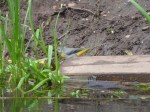
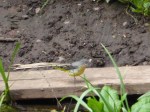
September 18th – This grey wagtail and several others have been busy along the canal at Catshill, Brownhills, all summer. Before this year, I’d never seen one in Brownhills, and I’m pleased to note their appearance. A small, yellow and grey bird, it has an erratic, pulsing flight that’s fascinating. All the time he’s on the ground, he’s bobbin up and down in the characteristic way that wagtails do.

A lovely, joyous addition to the local wildlife. Sorry for the grainy pics, but the bird was quite a way off.

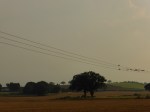
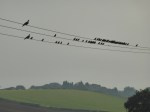
August 27th – Is it late summer or early autumn? My dilemma over the seasons continues. I guess we’re in the interregnum now. Cycling back through the lanes of Stonnall this evening, It was hazy and warm, with a light, barely perceptible mist the sun had been unable to burn off. The fields looked gorgeous, and I was fascinated by the impromptu parliament on the overhead lines.

Who cares what season it is? It’s beautiful.

August 20th – another fruit that’s set to be in abundance this autumn are haws, the berries of the hawthorn. Bright red, bitter and woody, they’re not toxic and can make decent jams and wines; but to me, their primary purpose is to provide sustenance for the birds, who flock for their goodness in winter. At the moment, these copious tiny berries are orange-green, and these fine examples were spotted in the hedgerow at Green Lane.

Enough sun and they’ll be pillar-box red, another fine sight and indicator of the passing year.