#365daysofbiking A total bore

Thursday February 18th 2021 – Haring around Chasewater dam on a working from home exercise ride – for once in the daylight – I nearly came a cropper.

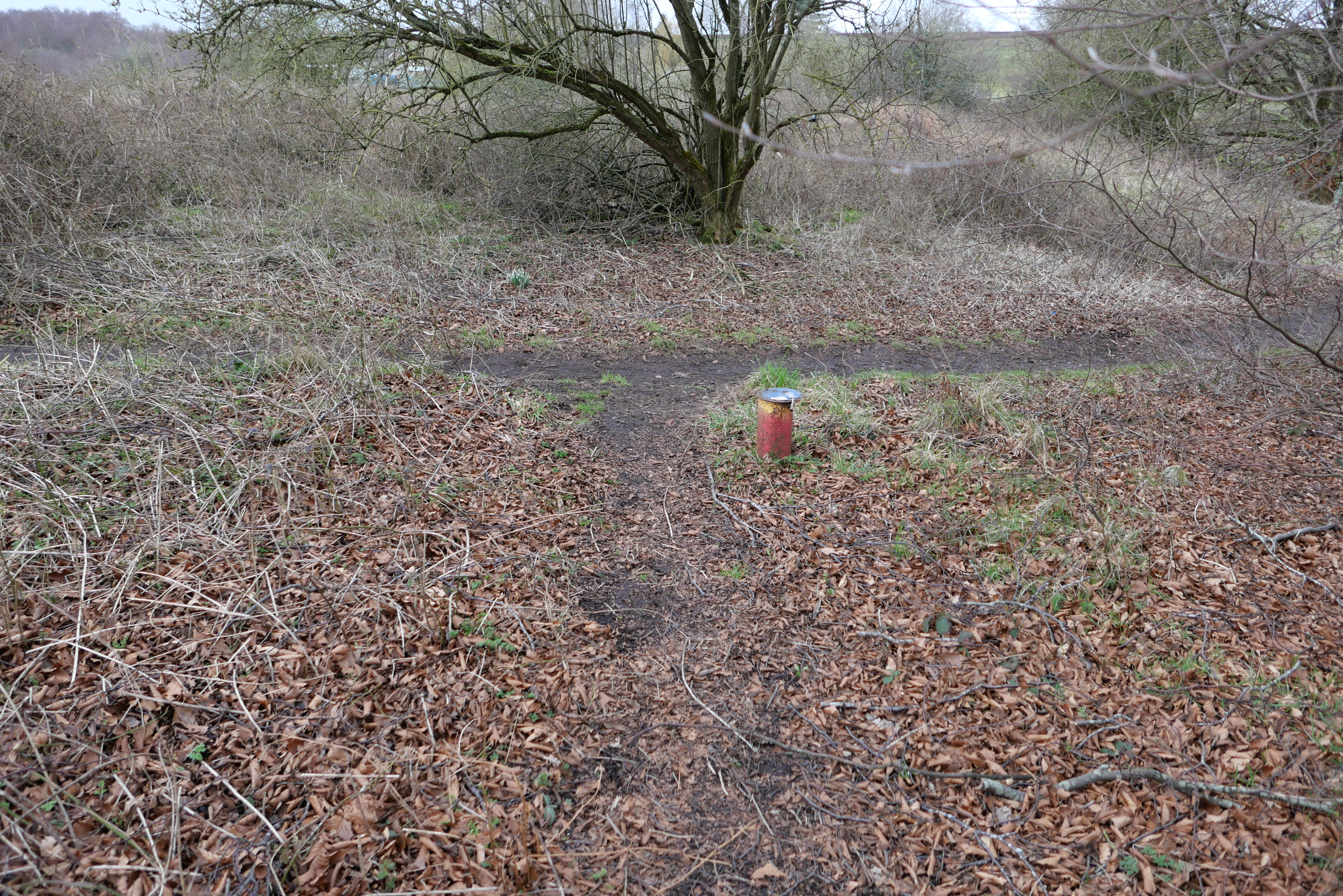
I was a shade off catching my pedal on this protruding piece of steel pipe.

It has a close fitting cap and is padlocked shut.

This erstwhile cyclist and walker boobytrap is not some idle lump of former mining equipment stuck in the ground, or a piece of scrap the local tatters have missed – but a monitoring well for the land around.

Ground engineers monitor the area around Chasewater Dam for groundwater pollution and signs that the dam may be leaking. To do that they have a number of these bores, drilled and sleeved, which are dipped and monitored regularly for changes in water level and the chemical composition of the water within.

These are a familiar sight around Chasewater, but also many of the public open spaces in the area that require ground monitoring – like Brownhills Common, Shire Oak Nature Reserve and Clayhanger Common.

So mind your step and watch out when cycling off road: They are quite sturdy and not very forgiving…

from Tumblr https://ift.tt/2Nma7lr
via IFTTT

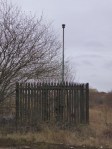
February 27th – I had to pop into Aldridge on my way home and had ridden up Coppice Lane; not far from the gas turbine and leechate plant, another sign of a dirty underground secret from the past. This square compound on wind and mud-blasted wasteland, just off the rear entrance to the Ibstock Brick plant, is a breather for the mines underneath the area that were used as a dumping receptacle for millions of gallons of industrial toxic waste a couple of decades ago.

Inside this well-locked square palisade fence, a bulkhead is fitted to a borehole that goes hundreds of feet underground and allows gasses to vent to the atmosphere from the sludge within. The breather itself is from a tall pipe, well above human head height, up where the wind can quickly disperse anything nasty.

It’s sobering, and a bit chilling; and indicator that beneath this area there is an unknown quantity still requiring monitoring and care. But the ground it is in is surrounded in clay and favourable, and as time passes, the content should settle.

There are several of these installations in the local area – finding them is an interesting, if slightly unnerving challenge.

December 7th – it was a beautiful afternoon with a very unpleasant wind, but the sun and commons of Brownhills were a joy to behold. The heaths and scrub glowed beautifully, as did the canal embankments.

These days it’s hard to imagine these beautiful places have a harsh, lingering industrial legacy.

Looking for deer near the site of the lost Coombe House, at Coppice Side, I spotted this monitoring well, a int of a none-too-pleasant past; this is the edge of a former landfill and boreholes like this are regularly unlocked and ‘dipped’ to monitor contamination. The EX symbol warns of an explosive gas hazard – methane, mostly, from rotting refuse buried underground.

This is a problematic site and will require monitoring for many years to come. 

I looked up from it to see the backside of a young hind disappearing into the the copse…

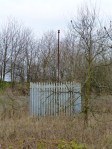
February 23rd – Evidence of subterranean systems of an altogether more sinister nature can be found dotted around the borderlands of Walsall Wood, Shelfield and Aldridge. These odd enclosures – one in the fall towards the marl pit by the Brickyard Road canal bridge at Stubbers Green, and the other, on scrub near the end of Dumblederry Lane in Aldridge, are grim reminders of what lies beneath. They are access boreholes to the mine workings beneath, filled with millions and millions of gallons of toxic waste, dumped there after the mines closed. The dumping, over the course of a couple of decades, was freeform and barely regulated. The current operators of the site from which this dump is accessed manage it carefully. The boreholes, of which there are a number, are fenced and secured for obvious reasons. The one at Dumblederry lane has a breather valve fitted, to vent gas safely into the atmosphere.