January 25th – There’s been a bit of a running debate lately amongst friends and family about just how much one should clean a bike in winter. I must admit, I’m from the ‘Only clean when the crud is ~25% of the total weight of the bike’ school, but others differ.

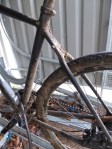
Visiting a client this afternoon, I checked out the bikes parked in their bike rack. This clearly well-used semi-hybrid has a fairly clean, well-lubed chain, but oh – the caked mud on that front mech is crossing a line.

That thing really needs some mudguards – all the mud from the back wheel that isn’t doing a skunk-strip on the rider’s jacket is being dumped on the chain and front mech.

February 27th – A lot of the history of Brownhills, Walsall Wood and Aldridge is about what lies beneath. Coal, clay, industrial effluent and landfill have shaped particularly the borderlands between Walsall Wood and Aldridge. Where brick marls were abundant, soon voids in the ground where they had been extracted were too. Into these holes, we tipped refuse in huge quantities, as the remaining clay made a good seal against the contaminant waste.

In the early days, the landfill and waste disposal industry was unregulated, haphazard, and somewhat akin to the Wild West. Waste was put anywhere, and unmonitored. These days, it’s a tightly monitored industry that has to look after its dirty secrets. 

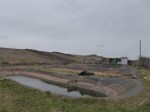
At the Vigo Utopia landfill site just off Coppice Lane, gas turbine engines run 24 hours a day, driving electricity generators from the gasses harvested from the decomposing rubbish. This produces significant amounts of power from 2 generator sets in converted shipping containers, employing gas that would once have been merely vented to the atmosphere. 

Nearby, a series of bunds and pools lined with thick rubber gather water and liquid pumped from deep within the mound. This poisonous soup is called ‘leechate’, and is allowed to settle out before being disposed of as hazardous effluent. Again, years ago, such concerns were not addressed and sites were allowed to pollute groundwater uncontrolled.

This is ugly, scarred landscape; but we are looking after it much better than we used to.
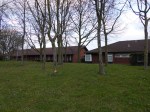
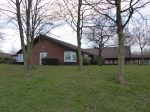
March 18th – Empty for months now, the former Rushall Mews care home for the elderly was built and operated throughout most of it’s life by the local authority, Walsall Council. It was a well loved, modern facility built in the 1980s, and was a fine thing indeed. Sadly, it has been a victim of the cold wind blowing through local government, and it has been closed, like most such council provision.

Councillors and ‘change managers’ waffle on with weasel words and forked tongues about ‘increasing choice’ and other such worn-out cliches, but the closure of lifelines like this and other units like Narrow Lane in Pleck and Short Street in Brownhills, coupled with the loss of daycentres, is purely a money saving exercise. Like the rest, this good quality building – still more than fit for purpose – will be bulldozed for private housing.

The service users and the cost of their care didn’t create the problems, but most don’t vote, so they’re an easy target. Meanwhile, the politicians and money men who did cause the problem walk away unscathed.

It took decades to get facilities like this for our aged and vulnerable. It has taken but a few short years to wipe them out. The social care system is hard to assemble, but tragically easy to take apart.

I pass this empty place often, and the site of it fills me with sadness.

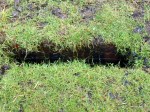
January 26th – Beware, canal towpath walkers and cyclists. As pointed out by Warren Parry on Facebook a week or so ago, the brickwork on the embankment edge of the Wyrley and Essington Canal between Catshill Junction and the Silver Street Bridge in Brownhills is falling away.

A considerable cavity is opening between the towpath and the edging brickwork, large and deep enough to take a bike wheel or foot. I guess it’s caused by a combination of the weather and general erosion.

I shall contact the Canal & River Trust tomorrow to report the problem. In the meantime, watch where you’re going!

October 21st – Time for a techy bit. Disc brakes are my favourite kind of bicycle brake – resilient, reliable and good in the wet, they need care if they’re to maintain performance. The brakes on the current commuting bike are hydraulic, and very powerful; they eat brake pads, especially in wet weather. In the wet, the grit from roadwash and grindings from the pads and disc combine to make an abrasive paste that makes the brakes noisy in use and causes wear to all braking surfaces. After a wet ride, wherever possible, I flush the discs in clean water to clear any residue off. If this is ignored, larger particles become embedded in the pads and score the disc surface, impeding performance and causing high-pitched noise.

I’ve also noticed with these appreciable wear on the discs. These were changed 3,000 miles ago and I can feel now feel quite a step between the surface and unworn part of the disc.

If your bike has disc brakes, look after them, and they’ll be there when you need them. It’s especially important in weather like this.