April 19th – I still wasn’t feeling great, and added to which I was having trouble with the computer, so I slid out on a changeable, but mostly sunny afternoon for a scoot over to Chasewater, Lichfield, Wall, Chesterfield and back home. It cheered me up no end – the oilseed rape was just coming into flower, and it was one of those high-contrast days that make for dramatics skies and nice photos.

I love how the tulip looks like it’s got a tiny, tarantula-type creature inside. 

Christmas Eve – Down into Lichfield on a last minute errand, it was a gorgeous day – bright, clear and getting colder. It actually felt like Christmas. Lichfield wasn’t as busy as I expected, and I easily got the things done I needed to, although against a bitter wind the ride back was harder than it should have been. The lanes and fields around Wall looked wonderful, and the bright emerald green of winter crops in the fields was a nice surprise. From Aldershawe, the Old Lady of the Vale looked beautiful, too.

I was quite taken with the Dutch roadster parked up in town; it looked new, but the the owner was clearly intending to haul a load with it. A nice looking bike.

September 21st – A horrid, horrid day. Laden with a cold, the sun was out but I was in. Feeling cranky, miserable and ill, I battled technology and social media at home, and finally left for a restorative ride at 5pm. 

The air was still poor, but it caught the sun beautifully. Looking from Hammerwich over the fields to Brownhills, I was fascinated by the glow of the Lichfield Road as it rose to cross the Anglesey Branch. Riding over to Wall and back through the lanes around Chesterfield, the villages and old building looked beautiful, as did the odd flower of the evergreen, growing in the hedgerows at Wall.

It may have been a terrible, terrible day, but the golden hour was just what I needed.

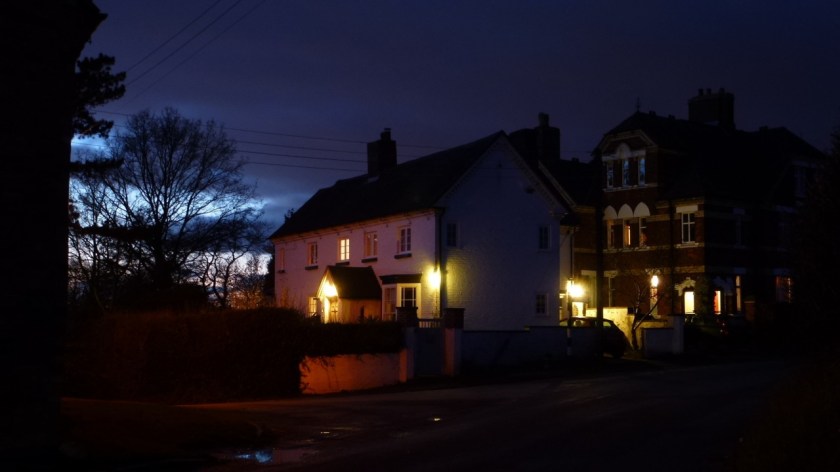
January 19th – On the way back, I passed Chesterfield Lodge on Raikes Lane. It always looks so peaceful and welcoming at night, but on Victorian maps, this was marked as a workhouse. Whether it was this actual building or a predecessor, I never quite worked out. I’m still hoping Kate Cardigan of Lichfield Lore might weave some of her investigative magic here and find out the truth one day.

It’s an absolutely gorgeous house, that’s for sure.

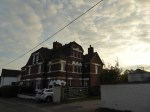
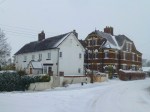
December 18th – I passed through Chesterfield, the sleepy little hamlet midway between Shenstone and Wall. There isn’t a single ugly house here, they are all gorgeous, and I’m sure there’s history here; after all, the workhouse was just 50 yards around the corner for years. 

It’s nice to see that after a period of being empty, someone has bought – and invested no little time or money – in the old Grange Farmhouse. It’s been sad to see it languishing empty for so long, and this really is a lovely, quiet spot, even on dull, overcast days like this.

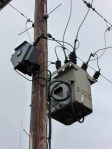
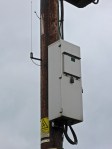
December 18th – Geekout time again. I nipped in to Shenstone in the morning to beat the storm and pick up a Christmas present. On my way, the wind blew me down Bullmoor Lane to Chesterfield, near Wall. On the bend near Raikes, there’s been an electricity pole for years that’s fascinated me. It has a really complicated arrangement of equipment mounted upon it, and it’s effectively in the middle of nowhere. I’ve always been interested in it’s purpose, so I resolved to find out.

After a fair bit of googling, it’s an ‘automatic recloser’, and a really high-tech piece of equipment with a simple purpose; it’s an 11,000V breaker, performing the same kind of job as the ones you get in a modern domestic fusebox.

It consists of the unit that switches on and off the supply – the big box at the top, which breaks the three phase supply voltage present on the lines above, and an electronic control unit called an ADVC, which detects when there’s a fault, such as overcurrent in the load. A small transformer sits high up to supply the ADVC.

The ADVC reads the signals in the line, like voltage and current, and should it detect a problem, it disconnects or ‘opens’ the recloser, breaking the supply. Since most faults with overhead lines like this clear themselves quickly (they may be weather, vegetation or vermin related, for instance), the ADVC monitors the disconnected line and automatically recloses – reconnecting the supply – automatically.

The system is monitored by complex electronics with a computerised controller, and can communicate by radio telemetry, hence the antenna; it even has batteries so it can keep working if it’s own supply is interrupted.

I’ve been meaning to find that out for years… you can read more here.

This project takes me to some strange places, sometimes…
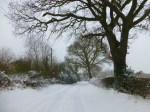
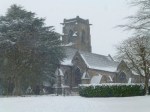
January 18th – Hey, some real snow. The heaviest snows I can recall since the 1980s came today. It didn’t really start snowing heavily until I left the house for work. A long slog into the wind, and a battle to get to Tyseley, but it was fun, nonetheless. When I got to my destination, two hours later, I found they were closing in less than an hour. Never mind, I picked up some stuff, and cycled back into Birmingham, weaving through the gridlocked traffic of Sparkbrook, Camp Hill and Digbeth. Catching a train back to Blake Street, I wrapped up warm and went for a ride around the backlanes to Footherley, Shenstone and Chesterfield. A great ride, in the most dramatic, stunning weather. You can’t beat riding in freshly fallen snow. Coupled with the sensory overload of sight, sound and touch, there’s nothing like it.

October 6th – A run out to Lichfield, and a return at sunset. Coming over Aldershawe at Wall, I noticed the column of steam generated by Rugeley Power Station indicating there was little wind. The sun sank lazily, silhouetting the Brownhills and Cannock Chase horizon. Humpries House was a visible landmark, as were Castlefort and the eastern slopes of Cannock Chase. An angry looking black cloud hung central for a while, but didn’t deliver on it’s threat. This was a dramatic, beautiful evening. But it was cold, and the shivers in my back told me winter wasn’t far away.

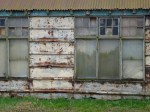
March 31st – this chicken shed/barn stands in Raikes Lane, Between Lynn, Shenstone and Chesterfield. I only noticed it recently. Over the road there’s a large, modern chicken farm, and I suspect this to be it’s antecedent. I think it’s one of the oldest such steel sheet structures I’ve ever seen, and wonder how old it actually is. The frame seems to be timber and girder, and I don’t think the roof is original. The bolts holding the sheeting on look very old, as do the window frames. A curiosity buried in the backlanes.

February 18th – I had a blast around Shenstone, Wall and Stonnall, and really blew the cobwebs away. Reaching the tiny hamlet of Chesterfield, I realised how nice it looked at sunset. The architecture here really is understated and gorgeous. It’s a shame that a couple of houses further up the village to wards Wall seem to be unoccupied…