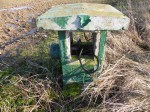
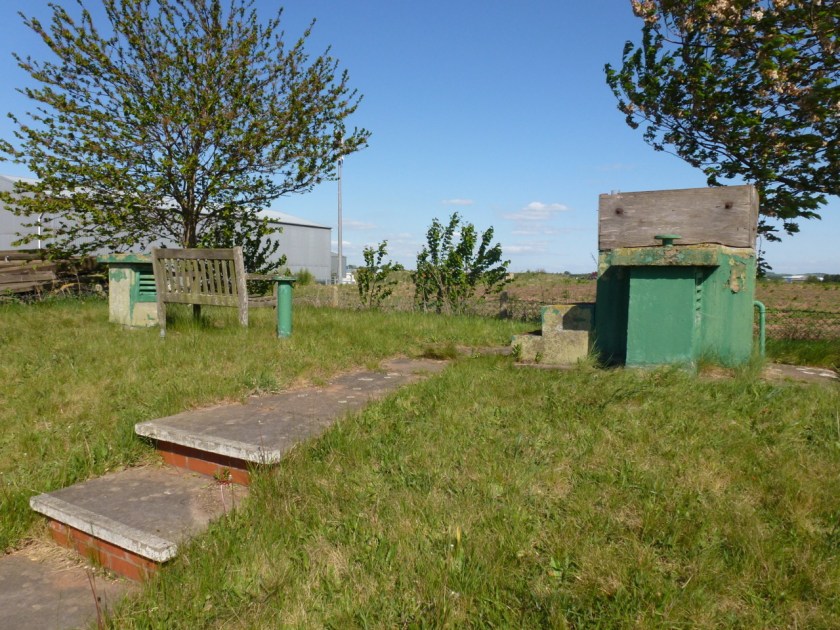
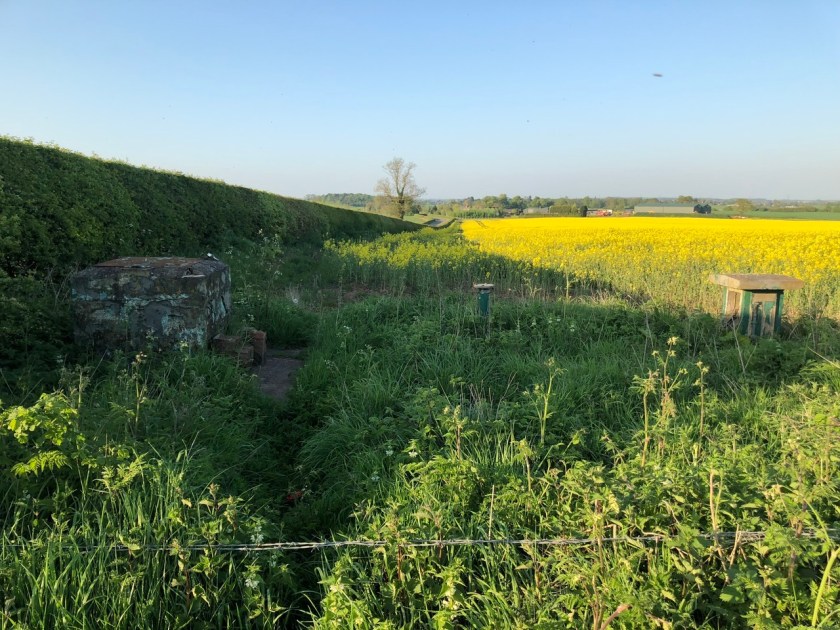
May 6th – Riding back through Haunton to Whittington via Elford, I passed the derelict Royal Observer Corps bunker post at the top of Willow Bottom Lane, just in the corner of the field.

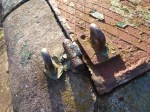
Someone has made a half-hearted attempt to lock it again: It won’t stay locked for long, it never does.

This underground nuclear bunker was intended to house 3 volunteers in the event of nuclear war; they would monitor damage after a blast, and report back on conditions if possible. Their monitoring was on a crude ‘If we survive’ basis, and this bit of Cold War history is obscure and grim.

Since being stood down in the early 90s, these posts – hundreds over the whole country – have been discovered, raided, trashed, demolished and sold; few survive intact and this one itself has been burned out.

But it remains, a grim memorial to a very paranoid time.

You can read more about ROC posts here.

April 18th – I took the train to Macclesfield, and rode back. If the cycling game is to be upped this year, challenging rides are required, and this one was at the very limits of my cycling ability.

On my way, I visited Sutton Common, the Cold War microwave transmission station in the same series as Cannock’s Pye Green. Meaning to visit for years, I climbed to the peak of the hill at 403m to see it, and was rewarded with stunning vies of Macclesfield, Manchester and The Wirral, as well as the Roaches and Dane Valley.

It was a great day, sunny, but again, so cold. Look out for ride videos coming soon on my main blog.

April 7th – Sad to see the decaying relics of a lost period of history I feel we shouldn’t let pass unrecorded. The old ROC post at Elford is in a sorry state. Open, vandalised, robbed. Once the pride of the volunteers who would man it in event of a nuclear conflict, it’s just now a lump of subterranean concrete and metal that nobody knows what to do with.

In similarly reduced circumstances but in better condition, the microwave relay tower at No Mans Heath is looking bare now. When I was younger, this unmarked, unacknowledged communications installation was bristling with horn antenna, dishes and drums; now it carries very little. A few telemetry and mobile data links, and that’s it. 

In terms of engineering complexity, the framework of the tower is hugely intricate, now to no purpose. I suppose, like the ROC post, eventually it will disappear; testament to times dangerous in a different way to our own.

May 9th – I popped into Birmingham to run a few errands and cycled in via Roman Road, Sutton Park, and then onto the North Birmingham Cycleway down past Witton Lakes. I returned via Plants Brook and Sutton, but more on that later.

I had business up at Constitution Hill, and on the way, I remembered these odd utility blockhouses marooned in the centre of the recently rebuilt St. Chad’s Circus. These substation-like buildings are the one solid remnant of the old subterranean subway complex; overlooked by the Catholic Cathedral, they are a chilling reminder of the cold war.

They are plant and ventilation installations for Anchor Exchange, a huge, sprawling, underground nuclear blast-proof telecommunications exchange beneath the streets of Birmingham. Mostly now abandoned, Anchor only exists as cable tunnels, having been rendered obsolete by the end of the communist threat and advent of the internet.

Anchor was built at the same time as Birmingham built the inner ring road, or ‘concrete collar’; the hated gyratory system that consisted of flyovers and tunnels called queensways. Birmingham City Council have spent 20 years now destroying the concrete collar, and putting traffic on the same level as the human city, but Anchor is still ever-present.

There were several entrance points to Anchor from these tunnels, and the complex was an open secret for decades. 

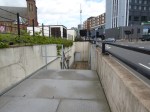
It’s telling that long after its usefulness ended, Anchor still requires maintenance and support; this closed stairwell with it’s original rails on the right and peculiar textured facing is one of the only pieces of evidence left on the surface, belying what lies beneath.

February 16th – As I passed from Elford to Harlaston, I stopped as I usually do, to check out the state of Harlaston ROC post. What I saw saddened me, as it continues to deteriorate.

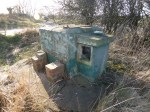
These odd green surface structures are the visible evidence of a small, 3-man nuclear fallout shelter. Intended to be staffed by a group of volunteers from the local Royal Observer Corps, they were a state secret. Should nuclear conflict have begun, the crew would man this subterranean bunker equipped with basic recording equipment, water and rations, and take measurements of radiation, weather, fallout, bomb damage and soforth. This information would be relayed – if possible – through telegraphy equipment installed within. Posts were sited all over the country, and worked in groups of 3. Others existed locally at Polesworth, Rugeley and Shenstone.

In essence, should the Cold War have begun, three people would have entered this hole in the ground, and if they didn’t perish, they would have carried out their orders whilst waiting to die of radiation sickness. It’s a sobering thought.

The posts – and the Royal Observer Corps – were stood down at the end of the Cold War in the early 1990s, and the posts mostly left to rot. Some were preserved by enthusiasts, some bought by cellphone companies – they make great basetation mounts – but the majority were abandoned, and later discovered in the internet age by urban explorers and cold war enthusiasts.

Sadly, the bunkers were left filled with all their equipment – bedding, instruments, lockers, chemical toilets and whatnot – and have mostly now be broken into, stripped and vandalised. Harlaston has been systematically destroyed. The current owner has repeatedly welded the access shaft shut, only to have it continually cut open. When I visited, there we signs of fresh cutting and the hatch was unlocked.

This is a crying shame. This is part of our collective history, destroyed and desecrated by animals with no sense of the historic and social significance.

High on a hill overlooking this northeast outpost of Staffordshire, good folk would have entered this once immaculate shelter to serve us in our time of greatest darkness. Today, it’s trashed.

Scum.
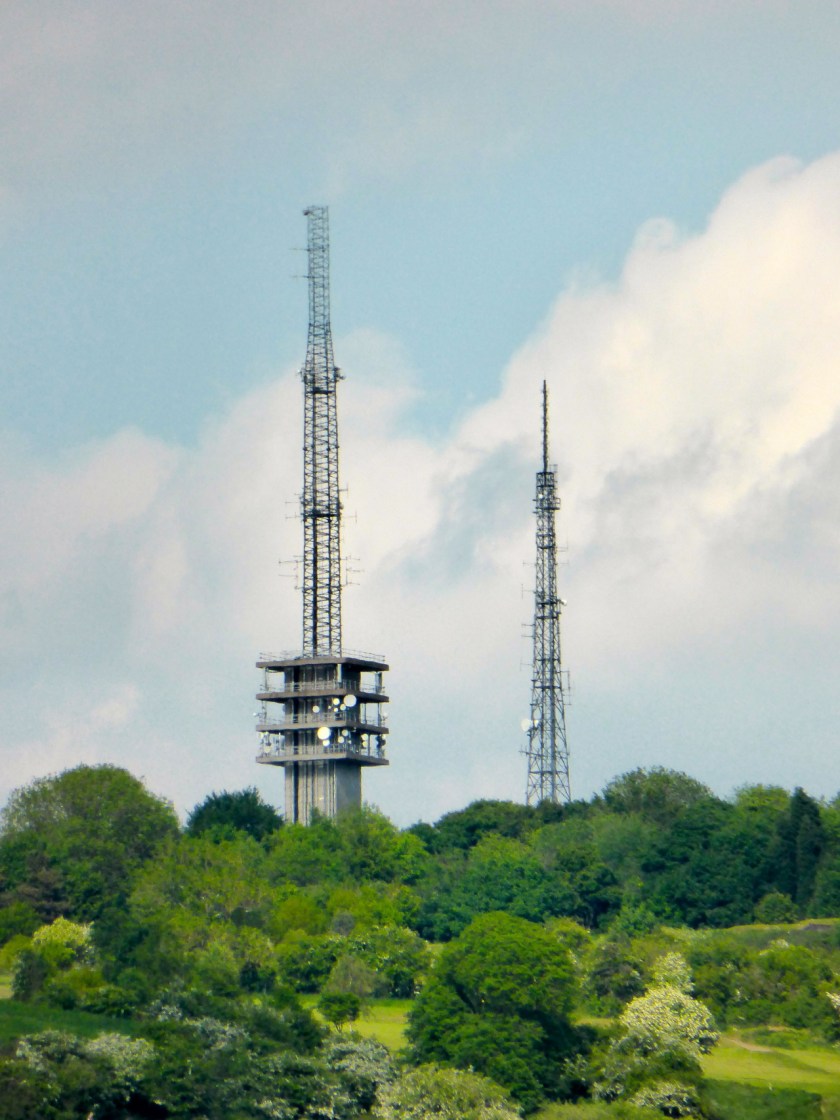
June 9th – Sad to note that like other towers in the backbone microwave network, Turner’s Hill mast in Rowley Regis is looking very bare now. The BT Tower in Birmingham now has next to no antenna on it, and No Man’s Heath and Pye Green are also looking sparse too. Turner’s Hill has only a few left, and like the others, are symbolic monuments to a past communications era, a lapsed cold war and the increasing ubiquity of the internet. I loved these installations, they fascinate and haunt me, but like so much cold war technology, their time has now gone.

May 2nd – Following on from yesterday’s pillbox, I thought I’d visit a military relic of an altogether different stripe today. Shenstone ROC post is a small, self contained nuclear bunker, designed to hold three operators during a nuclear strike. Their duty would have been to take measurements of radioactivity, blast pressure, weather and air conditions after an attack, record them and report back to central control if possible. The people who trained for this quasi-military role were volunteers, usually ex-servicemen. In a nuclear attack, these men would retreat into this hole, and effectively wait to die of either radiation sickness or starvation.

The British countryside is peppered with these little-known facilities, now derelict after the disbanding of The Royal Observer Corps at the end of the cold war – there are posts locally at Harlaston, Rugeley and Queslett. This one is sealed with a concrete block after fears that it would be occupied by anti-motorway protestors during the construction of the M6 toll.

For more information, bang the term ‘Subterranea Britannica ROC’ into google. A fascinating, very british history.