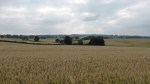
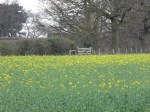
April 1st – This day last year, I was cycling past 4ft drifts of snow in Bardy Lane, Upper Longdon, and the weather was wet and cold indeed. Today was very warm and mostly sunny, and at Grange Farm at High Heath, the early oilseed rape is just about to come out in a riot of scent and colour.

I love this crop; vivid yellow, smelling like Emmental cheese, it sets the countryside alight with vibrant yellow. Frequently and unfairly blamed for hay fever, the sticky pollen of this plant is way too heavy and course to be wind-borne. A member of the brassica family, it’s closely related to mustard and cabbage, and will provide a boon for bees and bugs as it blooms.

And as it does, I feel the season advancing a little further…

October 9th – There must be a good return on parsnips. I watched this mystery crop grow at Home Farm, Sandhills, from polythene covered strip mounds to lush, verdant foliage, from which readers identified the then mysterious crop. Harvesting has been ongoing for a week or two now – not everyday, but I imagine as often as demand occurs. Workers appear to sit in the shed-like trailer picking the root veg by hand, and tossing them onto a conveyor. Debris in one spot shows the crop was large and in good condition.

Don’t think I’ve ever seen parsnips grown in large quantities before. It’s certainly labour intensive to pick them. 

September 20th – Meeting a good friend and respected local historian for morning tea in Lichfield, and time flew by. I took lunch in the city, did a little shopping and returned home through Wall on what seemed like an almost spring-like afternoon. The sun was warm on my back, the birds sang and freshly ploughed and planted fields were emald green with new growth. The peculiarly angular church looked lovely against the blue sky, and had I had more time, I’d have popped in for a look at the Roman remains.

A great day.

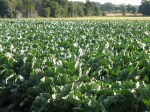
September 3rd – In recent weeks I’ve mentioned the cereal harvest quite a lot, but there are other crops in the fields, too. Potatoes, the parsnips at Home Farm in Sandhills, sugar beet, sprouts and other vegetables are nearing readiness, too. Here near Shenstone, a field of what I think is either kale or cabbage looks lush in the afternoon sun, and the air smells distinctly.

July 2nd – Today, summer faded to grey and the rain returned. I cycled home in steady rain, but it wasn’t unpleasant. Coming down Green Lane, Walsall Wood, I noticed what had been a lush field of beans last year had been left fallow this year. There is is immense pile of manure at one end of the field, and wonder if the growing of legumes and subsequent fallow period are part of a natural ground management system.

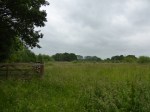
No such concern in the water meadow the other side of the road; untroubled by livestock other than deer, the grass there is lush, colourful and a couple of feet high now. It’s absolutely beautiful.

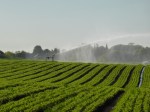
June 4th – Now, there’s a sign of summer – and a precious crop. At Lanes Farm on Sandhills, near Shire Oak, I see the sprinkler is already out. I can’t tell what’s growing here yet, but this is the crop that was shielded by polythene sheeting up until a couple of weeks ago. 

One thing’s for sure: it’s a delicate crop. It’ll be interesting to watch it grow.

May 24th – After a spin around Stonnall and Shenstone in a rather grim wind, the sunset was nice. Sweeping past hedgerows glowing with cow parsley, bluebells and fields full of oilseed rape, the sky set it all off beautifully. A lovely end to a day of awful weather.
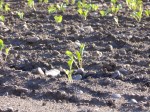
At Sandhills, the polythene covered field has had the plastic removed, and each sheet was nurturing four rows of seedlings beneath. I don’t know what they are, they look a bit like peas. It’ll be fun to watch and see what grows.

August 13th – The proliferation of beans planted as a crop on local farms this year is intriguing me. I’m interested in how they’re harvested, what they’re used for and why, for instance, this field at Lynn, near Stonnall, is being allowed to die and blacken. I know that growing legumes is a valid and effective crop rotation technique to nitrogenate the soil, but letting the crop die is surely a waste, unless they’re used black. An interesting thing, for sure…