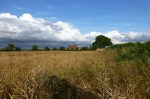
August 6th – Back in Walsall Wood, near Jockey Meadows, the crop of beans I noticed a month or so ago have grown tall in the wet summer. There seems to be a decent crop of what appear to be broad beans, but the crop is sadly afflicted by blackfly and some kind of leaf blight.

I guess these will be for animal fodder, although they seemed tender and sweet in the unripe pod I cracked open.

August 3rd – The wheat is ripening near Shenstone, soon, it will be harvested and on its way to the mill. As my seasonal markers go, this footpath through the fields from Hollyhill Lane is one of the best. Last year, it was through a field of oilseed rape. Wonder what’ll be next year?

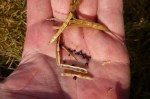
The grain itself looks healthy and fat – a consequence of the rain we’ve had. Biting the grains give a lovely, milky, glutinous taste. On this glorious evening, it was warm, and despite my end of week weariness, I couldn’t want to be anywhere finer than here, in south Staffordshire, in summertime.

August 1st – On the corner of Cartersfield Lane and the Lichfield Road, at the foot of Sandhills, a field of Rapeseed has been gently ripening for weeks. Just on the cusp of being ready for harvest, the field looks dead and valueless. However, these tiny black seeds, when crushed, contain the most useful oil. 

It’s hard to imagine that a few months ago this field was a fluorescent shade of yellow…

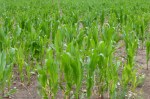
July 31st – Maize was a very popular crop hereabouts for a few years, now you don’t see too much of it. Usually grown for animal fodder, and harvested by machines that cut the whole plant into tiny chunks, planting seemed to suddenly cease about 3 years ago. I’m glad to see it back, although this crop on the Chester Road, near Stonnall seems a little lacking in something. Hopefully, with a bit more warm, dry weather, this harvest should recover.

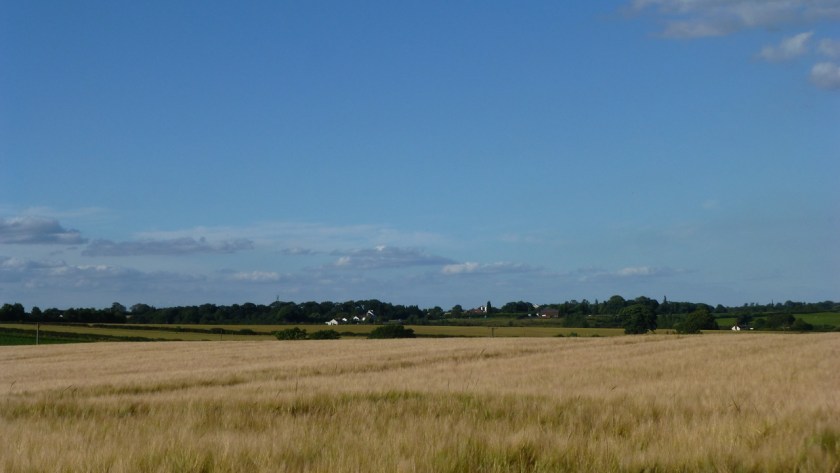
July 23rd – It’s really nice to have summer on her throne right now. I’ve waited so long for this. The countryside is drying out, and crops that were green and late a few days ago are turning golden in the hot sun. Here at Springhill, near Stonnall, this field of barley was rippling gently in the breeze. Soon, it’ll be time for another of the seasonal markers to tumble into place; it’ll be time to bring the harvest home. Let’s hope for a late scorcher, eh?

July 21st – A spin out to the Chase, then down on to the Canal through Rugeley and the Trent Valley. The journey out was hurried and rushed, but my descent was more relaxed and enjoyable. At Etchinghill, in Rugeley, I stopped to take a look at this field of rapeseed ripening in the warm sun. Although the pods and seeds have formed, they haven’t ripened yet. When ready, the plants are dead and yellow, and the seeds black. They are, however, already heavy in unsaturated oil. Used for a multitude of culinary purposes, rapeseed has a name-related image problem. Look for canola, or as Walkers Crisps term it, ‘Sunseed oil’. This plant is a brassica, and as such, the seed pods make it unusual.

July 2nd – despite the abysmal weather, the business of summer continues, somewhat surprisingly. The farmland around Stonnall is host to a variety of crops this year. Oilseed rape, potatoes, beans, barley, wheat are all growing – and ripening – well, despite the lack of sun. This fine crop of barley, maybe destined to make the malt for local breweries – is well on it’s way to harvest. Such uniformity.

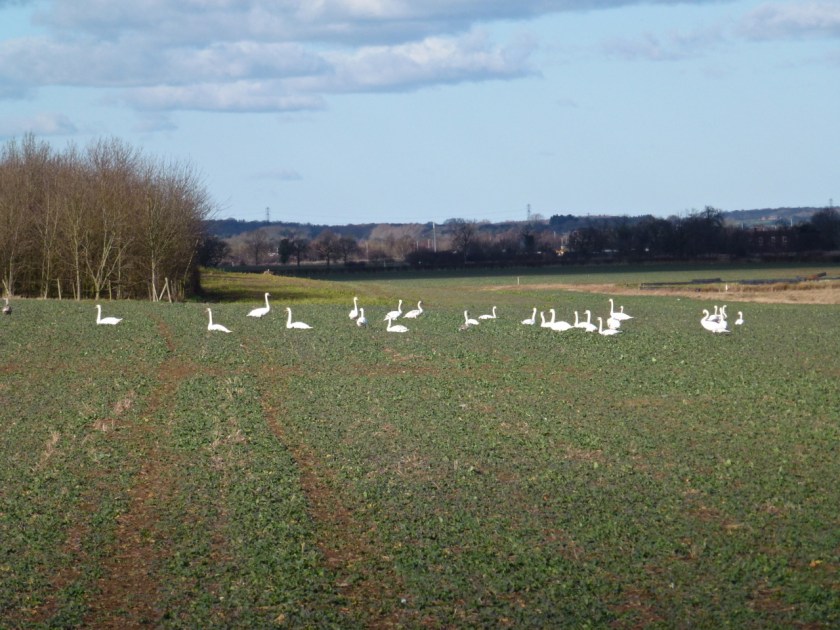
March 14th – A run up the Trent valley to Walton-on-Trent, then back via Barton and Alrewas. A gorgeous afternoon, chilly, but with a wonderful, golden mist. Here at Whitemore Haye, I noticed the swans had descended, and were loafing in the fields. I’ve mentioned it before, but these birds are the bane of farmers lives – beautiful as they are, they’ll decimate fields of young crops, and are breeding at an incredible rate. I pity the poor person who eventually moots the idea of a cull, but I can’t see the current population of birds being sustainable with clutches of 6 or more being the norm. 

February 19th – Here at Whitemoor Haye, near Alrewas, there’s an example of a hidden menace stalking Britain’s crops, but it’s rarely mentioned. Everyone loves swans, the graceful, beautiful white birds that populate rivers, canals and parks. However, they have a darker side. Aggressive and voracious of appetite, these large birds with no real natural enemy are multiplying in number at a huge rate. In spring, they gather in huge groups – this is just a tiny one – on fields of very young crops, then proceed to decimate them. Swans love the green shoots of fresh growth, and will gather on any flat field. Farmers will zigzag tape barriers over crops to prevent the hungry birds from landing, but success is limited. After all, you can’t be unkind to such gorgeous birds, can you?

October 3rd – a few months ago, this was a field of fluorescent yellow oilseed rape bloom – then a field of drying seedpods and vegetation. It was left for a week as stubble, then ploughed, tilled and planted. This field at Stonnall, just off Mill Lane, is now bursting with regimented lines of clean, green shoots. I have no idea what the crop is, probably winter barley or wheat, but the clean, bright green reminds me that even in autumn, the factory floor of the countryside is still in production. No time to waste. I look forward to watching this crop grow.