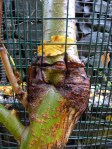
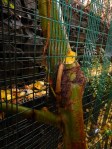
October 28th – One thing that does fascinate me on the cycle path in Telford is the way the trees and scrub have grown awkwardly through the fences. There are lots of instances like this – where the sapling crossed through the mesh, and the tree is so large now it’s consuming the fece by growing around and through it. 

I’d have thought the constriction would have killed the tree, but it seem,s to have done OK considering, proving just how adaptable nature really is.

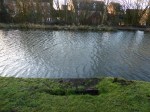
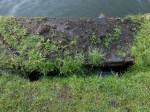
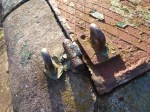
May 24th – Still feeling a bit ropey, and with dreadful weather, I didn’t get out until late afternoon when the sun decided to make an appearance. Sadly, the heavy rains have again blathered the towpath at Anchor Bridge. Where the water streams down the embankment, the shale footpath has washed from the side of the concrete drain cover again,leaving an 8-10 inch deep channel, 6 inches wide across nearly the full width of the towpath.

This is deep and large enough to wedge a bike wheel in, or lose a foot down – especially with inexperienced cyclists or kids. Take care. The rest of the path northwards to the bridge is also eroded badly and is quite hazardous.

Horridly enough, that’s a used syringe in cavity. I suspect it washed down with the storm water, possibly out of a drain. 

I shall contact the CRT on Tuesday.

February 22nd – Out early on an errand. I had to get some stuff from Screwfix, so I headed up to Walsall Wood on a fine, dry sunny spring morning. Taking to the canal, I noted that the embankment is now collapsing away near Clayhanger Bridge in addition to the area between Catshill Junction and the Pier Street Bridge. Clearly, the poor weather is taking a heavy toll, and the Canal and River Trust (which used to be British Waterways) have still yet to visibly attend to the previous problem I drew to their attention. 

In the meantime, watch out if you’re cycling or walking here – the holes that open up are narrow and deep. Take care.

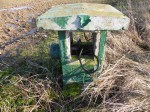
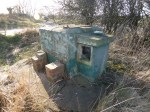
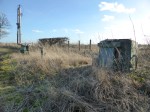
February 16th – As I passed from Elford to Harlaston, I stopped as I usually do, to check out the state of Harlaston ROC post. What I saw saddened me, as it continues to deteriorate.

These odd green surface structures are the visible evidence of a small, 3-man nuclear fallout shelter. Intended to be staffed by a group of volunteers from the local Royal Observer Corps, they were a state secret. Should nuclear conflict have begun, the crew would man this subterranean bunker equipped with basic recording equipment, water and rations, and take measurements of radiation, weather, fallout, bomb damage and soforth. This information would be relayed – if possible – through telegraphy equipment installed within. Posts were sited all over the country, and worked in groups of 3. Others existed locally at Polesworth, Rugeley and Shenstone.

In essence, should the Cold War have begun, three people would have entered this hole in the ground, and if they didn’t perish, they would have carried out their orders whilst waiting to die of radiation sickness. It’s a sobering thought.

The posts – and the Royal Observer Corps – were stood down at the end of the Cold War in the early 1990s, and the posts mostly left to rot. Some were preserved by enthusiasts, some bought by cellphone companies – they make great basetation mounts – but the majority were abandoned, and later discovered in the internet age by urban explorers and cold war enthusiasts.

Sadly, the bunkers were left filled with all their equipment – bedding, instruments, lockers, chemical toilets and whatnot – and have mostly now be broken into, stripped and vandalised. Harlaston has been systematically destroyed. The current owner has repeatedly welded the access shaft shut, only to have it continually cut open. When I visited, there we signs of fresh cutting and the hatch was unlocked.

This is a crying shame. This is part of our collective history, destroyed and desecrated by animals with no sense of the historic and social significance.

High on a hill overlooking this northeast outpost of Staffordshire, good folk would have entered this once immaculate shelter to serve us in our time of greatest darkness. Today, it’s trashed.

Scum.
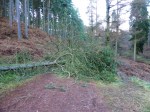
December 28th – Up on the Chase today for the first time in ages, and oh boy, it was good, but very, very muddy and the trails were treacherous. Be careful if you’re up there yourself; some quite popular tracks are blocked by fallen trees following the high winds. It could be very easy to plant into them if not paying attention.

Take care everyone.

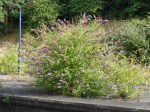
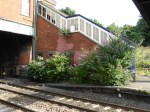
August 7th – There is a destructive force in our midst, reducing brickwork to rubble and invading any scrap of greenspace. Alien? Hardly. It’s buddleia  – an invasive shrub that infests the hinterlands, margins and rooftops of urban areas. Able to grow in the most precarious of situations, an accumulation of soot and grime in a brickwork fissure is all it takes to grow. Once taken hold, it’s very hard to eradicate, and the power of the roots to split apart man-made masonry cannot be overestimated.

This time of year, it’s in full, glorious purple flower. A joy to behold, unlike the damage it causes. 

August 2nd – The destructive power of storm water left it’s mark on Main Street, Stonnall. When we had the heavy rains, this storm drain blew it’s lid and ruptured the tarmac of the road. It’s been re-rolled flat now, but some remarkable damage was done in the downpours of the previous Saturday. Ultimately, I suspect, these drains will have to have their access chambers rebuilt due to the water damage.

It must have been a sight to see when it happened.

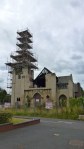
July 22nd – How to get rid of a listed building. These masons are carefully removing examples of significant stonework from the Mellish Road Methodist Church, which was sadly damaged during the operation to fill limestone caverns under the Butts area of North Walsall 22 years ago. Never well built, it suffered from cheap, ambitious building techniques, common to many such churches. Having taken the substantial compensation, the original owners sold the church on to developers, whose attempts to do anything with the site were roundly rebuffed by he planning committees for 20 years. Finally, after vandalism, decay and a visit from the municipal arsonists, the church is being demolished, clearing the way for the owners to build whatever they want.

Oddly, Walsall Council paints this as some kind of triumph, when in reality it’s a sickening, depressing example of how commercial interests outflank attempts at development control. But it’s more than that – a decade ago, an application was made to turn the church into a community centre, which was declined, too. Had that been approved, these men wouldn’t be taking apart this sad, decaying building now.