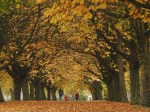
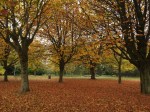
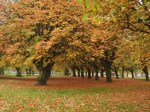

October 30th – The Parade, Brownhills, on a grey, overcast and misty Sunday afternoon.
Go on, tell me again that this place is ugly and has nothing to commend it. Just try.
October 30th – The Parade, Brownhills, on a grey, overcast and misty Sunday afternoon.
Go on, tell me again that this place is ugly and has nothing to commend it. Just try.

June 10th – Passing Goblins Wood (or Coppice Woods, for the hip modern kids out there), I noted how beautiful they looked. This mostly deciduous, well managed woodland is very old and suspect the only local remnant of the traditional English oak and holly copses that once dotted the area.
These woods, and the trees therein have seen many seasons, and every summer they look superb. Long may they remain (and they are protected by law now, too.)


October 16th – The patch of grass near Anchor Bridge in Brownhills is not something I ever pay much attention to, if I’m honest; it just exists, and it never occurred to me until recently how odd it is that it has never been built upon.
It remains unspoiled, mowed regularly by the council, and separates the canal from the Lindon Road. There are a good few deciduous trees here and in Autumn, they’re beautiful.
An odd little patch of beauty in an otherwise unremarkable urban landscape.
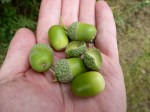

September 14th – It usually takes a while for me to become comfortable with the presence of autumn, and this year it seems worse than ever. One of my favourite things that cheers me about this cruel season is collecting seeds of the deciduous trees – acorns, sycamore helicopters, conkers, rowan berries, beech mast and so on – by the pocketful, which I then randomly scatter on the margins I find; the commons, heaths, verges as I cycle past. This kind of guerrilla seeding is something I believe in, and lots of my friends have joined in with the practice. I’m sure I’m responsible for lots of the oak saplings on Clayhanger and Brownhills Commons.
This year, there is a huge, healthy crop of fat acorns. Grab some and spread the love.
I like to help the trees, because well, the trees need support.


August 9th – Some months ago there was a brouhaha locally about plans to manage this section of Brownhills Common by removing the conifers, which are not natural here and are damaging the biodiversity of the heath.
Many locals didn’t see what the problem was. Here its is, this afternoon, in a nutshell.
Here we have open heather heath, host to a myriad of insects, small mammals, and passing deer. The heather, grasses and small, deciduous saplings are being choked by fast-growing spruce.
What chance does that oak sapling stand against the larger conifer shading it? If left unchecked, how diverse will this spot be in five years?
This is why management is necessary. Because if we’re not careful, the heath here will be lost, together with all the species it contains.
 BrownhillsBob's #365daysofbiking