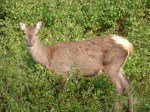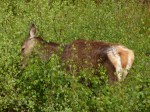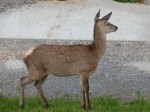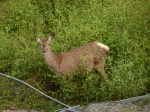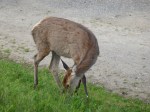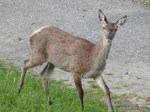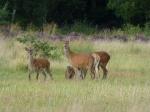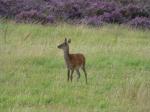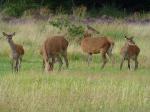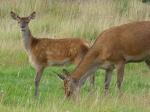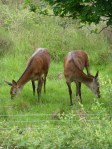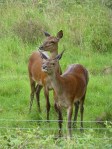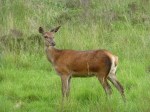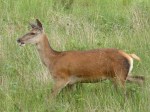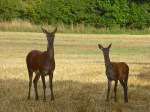
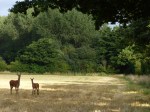
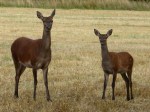
September 2nd – This was a pleasant surprise. Riding home along Green Lane in Shelfield, I glanced, as I always do, through the gate of the field opposite the Mob Lane junction. Loafing on the freshly-cut stubble on Jockey Meadows were two red deer. It appears to be a mother and child, and they seemed to be in fine condition. I’ve seen deer here before, but never at this time of year. There was no sign of a larger group, but they might have been in the scrub towards the stream.

A fine sight, and one I’m still shocked to see in Walsall Wood on a parcel of land surrounded by industry and housing.

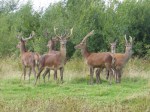
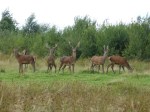
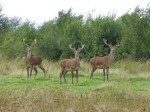
August 11th – I’d planned a long ride, but my energy levels – and a grim, persistent wind – didn’t allow it. My speeds were poor, and there were too may distractions, like the deer I spotted along the way. I spotted the first group – 6 or so red deer, including some impressive stags – on Cuckoo Bank, just off the Cannock Road north of Chasewater. They showed well, until something spooked them and they disappeared back into the thicket. 

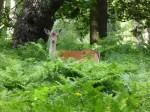
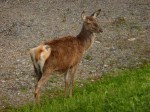
Further on, at Penkridge Bank on Cannock Chase, a few skittish hinds were loafing in the bracken. I had thought the red colouring meant the one was juvenile, but this is not apparently the case, and it’s just a different marking.
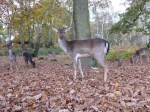
It’s always good to see the deer, even on a ride when the wind never really gets behind you.

May 19th – A busy day at Chasewater. Linda Mason had posted some pictures of deer on the dam that morning, and I was surprised when I passed by late afternoon that they were still tree. Not at all nervous of their occasional audience, they browsed the scrub, nibbling the shoots off the birch saplings and generally got on with things. 

If anyone had told me 20 years ago there would be red deer here, and they’d be this fearless I’d never have believed them. Beautiful.

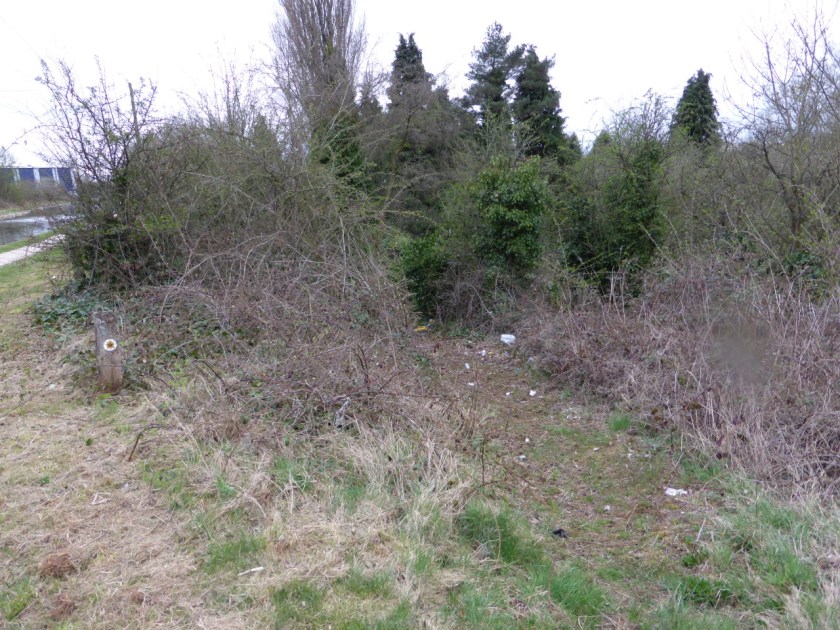
April 25th – Scooting home along the canal, I stopped to look at a well-worn, narrow path running down from Clayhanger Bridge, down on to the driveway of the big house. I think it’s a deer run.

A few times I’ve seen deer on Clayhanger Common around the overflow, whereupon they’ve escaped either under the bridge, or over the road and run down the embankment here. Looking at the marshy land behind the house and new pool, the vegetation there looks closely cropped. I think some of the deer are loafing there, safe from humans.

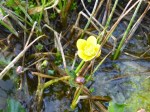
April 19th – I hadn’t wandered over Jockey Meadows for years – I must do it again. Leaving the bike in the hedge, I waded through the water meadow towards the deer. The land here is saturated, and appears very fertile. Globeflowers are in bloom, and frog, toad and newt spawn are evident in the shallow water (frog spawn is in clumps, toad in ribbons. Newt spawn is laid in small pockets on the stems of underwater plants or in the curls of leaves and fronds). There is a healthy greenness here. I can see why the deer love it. This is a Site of Special Scientific Interest, and I can see why.

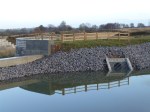
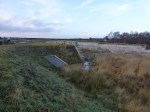
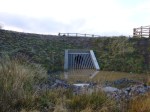
December 16th – I went back to Chasewater in the daylight to investigate how the water levels were behaving, and to seed what was going on with the balancing culverts between the main lake, Nine-Foot pool and the spillway. It seems the sluice that was open from the Nine Foot to the spillway has now been closed, and looking at the output side it seeks very well indeed. Water should now continue to rise until it reaches the top of the breakwater on the left. This means there’s about a metre to a metre and a half to go before the lake is full.

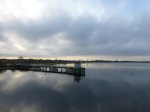
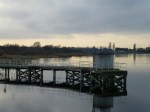
Last time I checked the level, it stood at 6cm from the top of the lower metre scale on the pier. That was on November 25th. Today, on December 16th – a mere 21 days later – it stood at just shy of 58cm on the upper metre scale. That’s an increase of 48cm or about 19 inches in 21 days. This is astonishing, and is largely due to the heavy rains on already saturated grounds, causing runoff to fill the reservoir. I don’t think anybody ever thought such a rate of fill was remotely possible.

I noticed while I was mooching around the Nine Foot that the red deer had been and had a look before me…

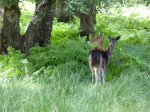
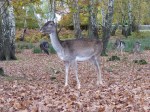
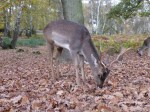
November 11th – An afternoon on Cannock Chase, with mixed results. It was chilly, but clear, and I was looking for badgers. I found the sett I was after, but approached with the wind the wrong side of me and they stayed resolutely hidden. No such shyness, however, from the Penkridge Bank fallow deer who were loafing in their usual spot. The handsome young stag – too young for the recent rutting, I suspect – was drawn by my offerings of carrot and flapjack. These animals are usually here, but usually very skittish. I think the recent chillier weather has drawn them a shade closer to humans. beautiful creatures. Shame the light was so bad.

August 26th – The same ride, and my deer magnet was clearly functioning well. Late afternoon, four red deer on the north heath of Chasewater, two adult hinds and their two young fawns. These are the first of this year’s youngsters I’ve seen and they look fit and heathy. For the time of year, their coats, too, were in surprisingly good condition. 
I still can’t quite believe these animals roam free here; they always leave me in awe. We’d never have imagined as kids that seeing such fine creatures in Brownhills would be remotely possible. 

June 17th – My deer magnet is clearly functioning well right now. These two delightful yearling hinds were grazing on the scrub adjacent to the railway track at Chasewater Heaths. Note that they’re still very young, and have the traces of their juvenile whit spots still present in their summer coats. They happily browsed the vegetation whilst keeping an eye on me, eventually wandering into the thicket nearby. A lovely sight, and one I still pinch myself in disbelief, every time I see it.

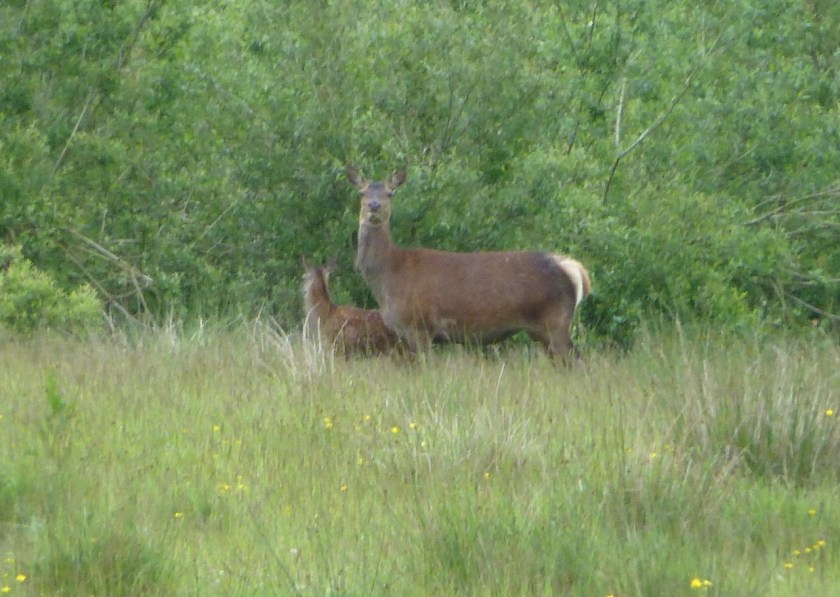
June 10th – Grainy, and very long range, this is a red deer hind and her young fawn. The females should at the moment be with young, or preparing to give birth, for which they tend to split from the main herd and search out protective cover. This lone mother was on cuckoo bank in just such conditions, and was very nervous and twitchy for her offspring. A wonderful, summertime sight, with births occurring up until mid-July.