#365daysofbiking Gearing up

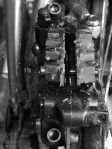
January 3rd – One of my bikes uses a Shimano Di2 hub gear – an Alfine 705. This is the original Di2 11 speed hub and has its own pros and cons, but on the whole it’s reliable and workmanlike, and apart from a somewhat fiddly oil change when the shifting gets lumpy, requires little in the way of mechanical attention during it’s lifetime.

Generally, the life I’ve found is about 15-25,000 miles. This hub has been through a lot, and more than 3 wheel builds, but I’m happy with the wheel it’s in now, which was why it was so annoying when it suffered a serious failure on Christmas Day. I lost about half the gears which just spun out when selected – 3,4,5, 9 and 11 I think. An oil change and filling with cleaning oil hadn’t helped at all. The hub was knackered.

There’s not much I don’t know about this system; I’ve been using it in different iterations for over a decade and I’ve got to know the tricks and fiddles and advanced maintenance procedures – both by reading manufacturer documentation and by trial and error. The internal mechanism of the hub is easy to remove and change for another – you remove the wheel, take off the changer mechanism, sprocket and disk brake. You then remove the non drive side cone and locknut, then unscrew the plastic retainer and oil seal on the drive side – I have the right tool for this but a strap wrench will do it fine too, but the key bit is it’s a left hand thread. Once it’s off, the whole gubbins will come out, the oil can be cleaned out and a new mechanism can be put back, or the old one repaired and refitted.

There was a snag. The 705 is no longer available, but there is a new version, the 7051. I didn’t want to rebuild the wheel. I scoured fleabay and the web for a 705. No dice. I found a brand new 7051 in Germany for about £250, which is a great price. I poured over Shimano drawings of the two hubs. I decided to risk ordering the 7051 and trying to swap the innards. If they didn’t fit I could always reassemble it and build a new wheel.

In time the hub arrived, and the good news is it fitted exactly the same. On the rare chance that anyone ever reads this wondering if it’s possible to swap the two, yes it is. I swapped the guts, but also the non drive side bearing and oil seal too – be careful popping that out as they’re easy to damage and if no longer flat, oil will leak from the cone.

The 7051 hub has an upgraded clutch, smother shifting and performs better changing under loading. I have to say, fitting it back was a dream, and it runs well. Once the factory stiffness had gone, changes are much smoother and there’s far less clatter when doing so.

The old hub mechanism I plan to dismantle to see what’s gone. Looks like I’ll be spending some time in the garage with the tools…

This post has been created on the off change anyone ever wonders the same thing: I would say this also applies to the non-Di2 cable variants too.

This journal is moving home. Please find out more by clicking here.

from Tumblr http://bit.ly/2LQizV0
via IFTTT

November 27th – Been a while since I discussed brakes here, but the glazing issue of the rear pads I had – I think I’ve cracked it. And built Frankenbrake as a result.

I, like many utility and commuter cyclists, like to ride a bike that’s essentially a tourer. I like the bars, the variety of positions, and I like that Shimano finally made hydraulic brakes for road and cyclocross bikes with the same bars.

The trouble with tourers for years has been that they’re mongrels. No one groupset (ie. drivetrain with brakes and controls) is wholly suitable. Tourers carry load, don’t mind a heavier bike as it’s sturdy and stable. They like a wide gear range – preferably a triple front ring. And solid wheels with damn good brakes. 

So a good tourer may have utlegra, SLX, XT and 105 series parts all working together.

Brake options have traditionally been anything you want as long as it’s canti, but since road discs and suitable frames appeared – first cable, then hydraulic – our braking options have improved. 

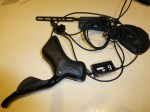
My rear brake – A Shimano R785 lever with a BR785 calliper – has been eating pads. They appear to glaze, loose all friction, and no matter how well cleaned, filed or surface ground, never regain bite. Pads are not cheap. I thought I’d cracked it using Uberbike pads – but the last two sets have gone really quickly.

The last set went a week after fitting, and without the same happening on the front, I decided to solve the issue. I’ve been using a primitive parking brake on trains – I use a rubber loop to keep the back brake on to stop the bike rolling about. It turns out that the brakes aren’t designed for continual operation like that, and the vibration from rocking was weeping fluid out of the piston seals, on to the back of the pad plate, and dropping the odd drip of fluid onto the rotors.

I’ll stop using the band. But that left me with a possibly faulty rear calliper, which has never been quite as snappy as I’d like. And Shimano are transferring to flat mount – a format incompatible with my frame – for their 785 replacements.

I knew the 785 was a variant of the XT mountain bike, 2 piston brake with slight design changes in shape. Reading about, I found people who’d put Shimano 4 piston callipers on XT levers for mountain bike use, so I figured a 4 piston Saint calliper should therefore work with a 785 road lever, as the same oil volume was being moved as the XT model, if you see what I mean. They all use the same hoses and fluid, a light mineral oil.

So I ordered a saint calliper, got the bleed kit out, and got oily. The result is that the Saint calliper works really well, has a much bigger pad friction area, and is nice and firm, yet progressive. It’s a bit more fiddly to set up as the piston stroke isn’t as large, but it’s working well with patience.

To any home mechanic who’s thinking about this, it’s an excellent upgrade – but as with any brake fluid operation, remove pads and keep well away from the disc as you will spill oil everywhere.

Meanwhile, a slow handclap for Halfords. When on the off chance I called in for a bottle of Shimano mineral oil brake fluid, the twit behind the counter said ‘Use Dot 4 – it’s all the same stuff.’ – it so isn’t. Dot 4 is Glycol, not oil, and will swell and perish Shimano seals and cause premature failure. Urrrghh.

Now, let’s see how well these pads last…

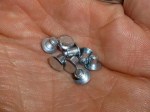
February 20th – Talking about making a bike your own, bike fettling experiments continue, and the maintenance jobs stack up. First off is replacement studs for the winter tyres. The metal inserts do come out, particularly if you skid, they tend to tear from their sockets. One thing the manufacturers – Schwalbe – pride themselves on, is that if you give them a call (They’re only in Telford), they’ll send you a large bag full of the carbide  rivet-like spikes in the post by return. With the air out of the tyre and warm water, it’s easy to pop in the replacements with pliers. I try to do this towards the end of the season every year.

On the higher tech side, I’m experimenting with some swanky mechanised gearing kit, but it’s been a bit of a challenge to get working, as the components all need updating to get them functioning together. Having got everything talking to everything else now, the mechanical experimentation can begin.

Fun times.