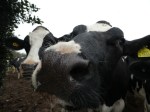
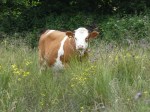
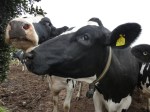
October 25th – Passing New Barns Farm at Footherley, I stopped to greet some cows waiting at the gate to go off for milking.

I love these huge,, but gently nosey animals. I noticed they were all wearing radio tags so the milking equipment could trace their statistic and wellbeing. Farming’s come a long way technologically in the last decade or so.

Always nice to say hello to the coos.

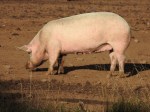
October 23rd – The pigs of Packington Moor are always entertaining. Their fields move around the area, from Little Hay to Hopwas as due to their impact on the ground they need to be relocated regularly. Free range, they dwell in pig arcs and huts in good sized pens, and seem happy – their bacon is certainly amongst the best locally.

I was amused to note the pigs – right now up on the Moor and near Hopwas Hays Wood – tolerating crows perching on their backs, pecking mites and bugs that would otherwise irritate them. I watched that for ages.

Nice to see well kept, apparently happy, content livestock in the fields.

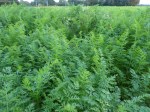
October 11th – Coming back from Shenstone, I remembered the field of carrots I’d spotted earlier in the year. I checked out the crop, and saw the lush green foliage was still apparently in rude health.

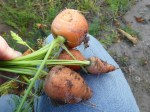
Unable to resist a look at the product of the season, I uprooted a few and found them to be a curious short but fat strain of carrot, but they looked healthy and tasty, with a lovely colour.

It’s not often you see carrots growing around here; last time was at the top of Lazy Hill a couple of years ago.

October 4th – Winching myself up Shire Oak Hill at Sandhills at sunset, I noticed the potatoes in the fields that stretched to the canal had been stripped of their foliage ready for harvest. I love that view of Ogley Hay and St. James from here, and it looked beautiful and autumnal. 

Elsewhere, harvested fields have already been ploughed, harrowed and replanted, with spring-like carpets of green sprouting winter crops, with almost springlike colour.

Whatever time of year, the farming continues.

September 12th – A little local mystery solved, perhaps. This autumn, the Canada geese population have been very active indeed over Brownhills in the early morning and in the hour or so before sunset. Groups travelling en masse from one place to another, honking joyfully as they pass.

I love the noise they make and it always makes me smile. And there’s been a massive increase this year.

Returning home from work at dusk past Jockey Meadows where the crops had been harvested a week or so ago, I noted a huge flock of the birds, ground feeding on the spilled grain in the stubble. The birds were busily browsing, getting a good feed.

There must have been in excess of 500 birds.

My grandad used to call this otherwise lost seed ‘gleanings’ and traditionally, it was collected and used to feed fancy birds like guineafowl, who were therefore known as ‘gleanies’.

I assume the geese have been doing this for a few weeks as local cereal crops have been harvested – possibly an extra stop off on their normal journeys between daytime waters and night time roosting spots.
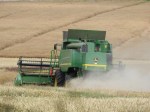
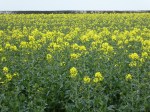
July 31st – Rain is predicted for next week, so Home Farm at Sandhills were taking no chances, and when I passed by on the canal, the oilseed rape was being harvested.

The combine didn’t come close enough for me to work out how it was working, but it blew out a constant stream of chopped plant matter presumably with the oily black seeds threshed out. The machine really was shifting and the whole thing dramatic and impressive, throwing up clouds of dust as it worked.

I’ve often wondered how producing such tiny seeds for oil can be viable, but it clearly is. It seems a long time since these fields were glowing yellow with the bloom of it…

July 26th – The harvest started a few days before the weather broke yesterday, bringing it to a juddering halt – I note some bales in fields now, but mostly the combine harvester hasn’t been around much yet.

This field of wheat at Sandhills looks mostly ready now, but look closely at those plump ears and there’s still a fair way to go yet.

Hopefully, the current damp spell will pass quickly and the harvest can continue before mould sets in.

July 12th – Meanwhile, at Jockey Meadows, the coos are getting stuck in, browsing the scrub and spreading the cowpat love. I’m fascinated in their behaviour; they tend to operate in a loose group, and move to different parts of the pasture at different times of day. It’s almost as if they know they have a job to do, and are carefully, conscientiously doing it.

I love these gentle, charming beasts.

April 3rd – Up near Wall, the old cricket pitch was ploughed up a few years ago now by the farmer who owned it, leaving the portakabin pavilion – which must have cost a few bob to install – marooned. 

It’s so sad to see the cricket pitch gone; many a Sunday or Saturday afternoon as a young man I’d pass here with a game in full swing and sit and watch with maybe a beer on the go.

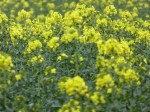
Remarkably, the in and out field are now supporting a healthy, blooming crop of oilseed rape, which seems a wee bit early for me – but it is beautiful.

Three years ago this weekend I found a car still abandoned in deep snow not half a mile from here. How the seasons in this country vary.