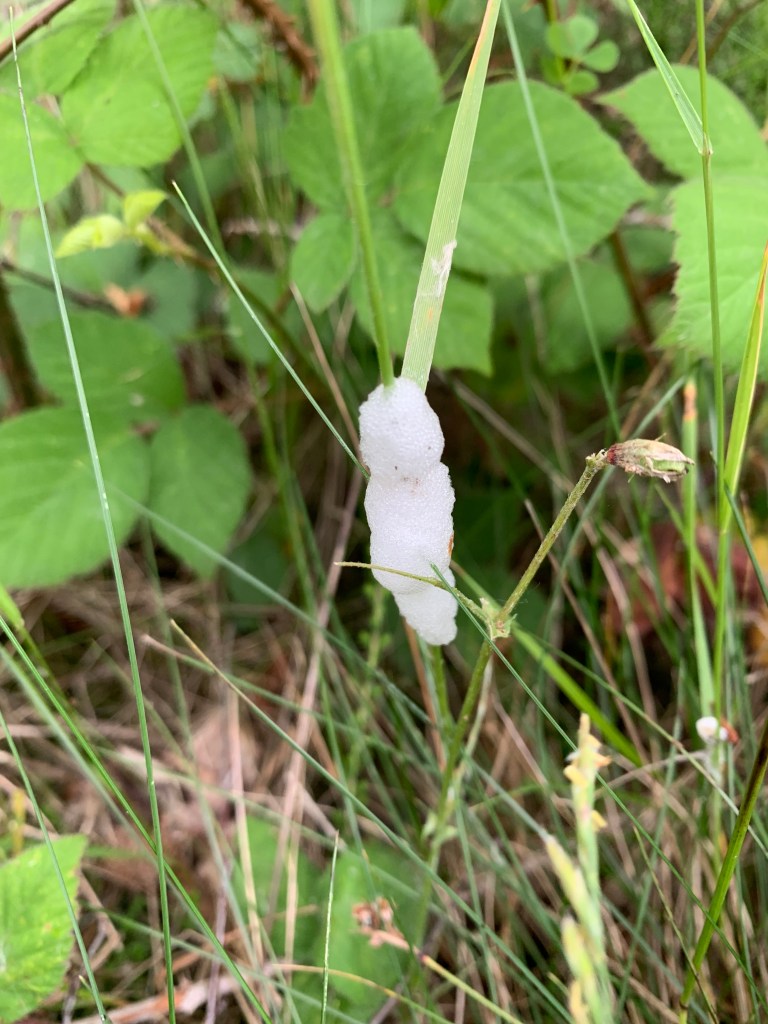
June 27th – Clayhanger Common and lots of areas of grassland now are dotted with white frothy blobs of slime on leaves and grass stalks. As kids we called this somewhat unattractive phenomena ‘cuckoo spit’ although in reality it’s nothing to do with cuckoos.
The goo is actually the protective coating on the nymph of the froghopper bug, which is noted for its prodigious jumping ability. The adults lay their eggs in late summer, which overwinter in plant stalks. As the nymphs hatch, they produce a bitter, foamy liquid as a byproduct of sucking plant sap, which then surrounds them and protects them from harm until they become fully grown.
The creatures do no harm to their host plants, but can carry a plant disease called Xylella Fastidiosa which although not in the UK yet, is expected to make it here soon.
This journal is moving home. Find out more by clicking here.
from Tumblr https://ift.tt/2FPZ1ya
via IFTTT


 BrownhillsBob's #365daysofbiking