#365daysofbiking Testing times

Sunday December 20th 2020 – As usual at Christmas, a few people have asked me to look over bikes before they gift them. On a wet, miserable Sunday I set about my charges with gentle precision.

A particularly fiddly job involved a bike in otherwise great condition on which the previous owner had badly threaded the chain through the rear derailleur: This had worn the side plate out and caused it to distort. A new plate was about a tenner, but no chance before Christmas. I removed the old one, cleaned it up and straightened it, sanded it smooth and sprayed it black.

It wasn’t perfect, but the new owner wouldn’t spot it until the one I ordered arrived from eBay after Christmas.

A bleak test ride up the canal with an adjustment stop on Silver Street Bridge proved the repair, but did necessitate another cleaning session…

from Tumblr https://ift.tt/3n78IuK
via IFTTT
#365daysofbiking Ring of no confidence

Thursday, October 15th 2020 – An interesting one here for the Bob Big Book of Mechanical Failures.

A bike I look after has an 11 speed rear sprocket cassette – Shimano CS M7000 XTR. Like all hyperglide Shimano cassettes 11 speed and below, it fits on the free hub splined body by sliding on to an asymmetrical groove pattern to ensure all components are correctly aligned synchronously for smooth gear changes. The whole lot is held on by a fine threaded, normally tightening lockring, driven with a special tool.

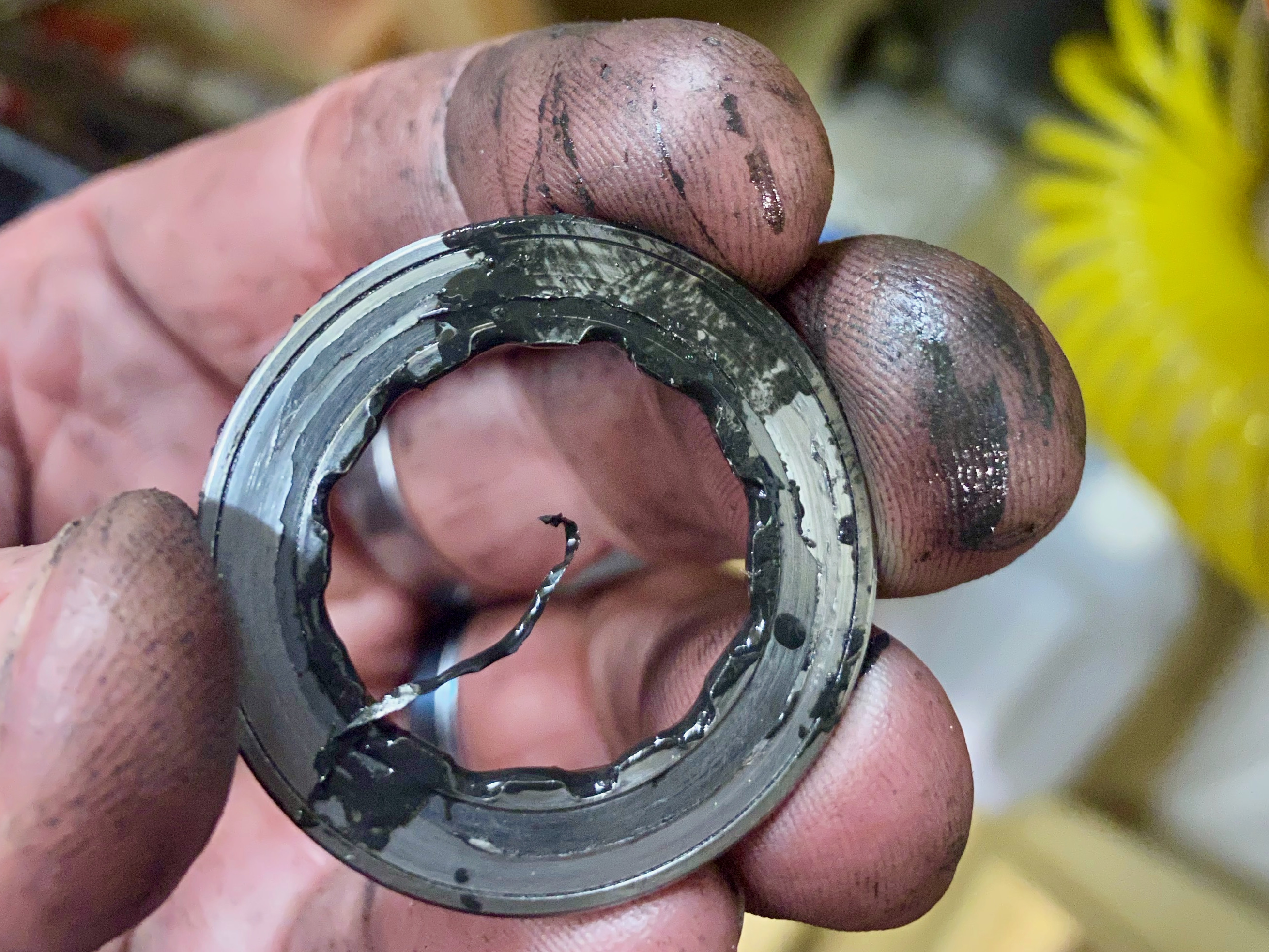
Unlike lower range cassettes, which are generally 2 or 3 piece, this arrangement turns out to be discrete sprockets for all but the largest three, and appropriate spacers which you stack on the free hub before applying the lockring. The lockring should actually tighten by precession and has grooves and a crinkle washer to stop it coming loose.

So why did this factory assembled cassette locking undo itself, allowing the ring and smallest few sprockets to tumble off the free hub and grind against the inside of the frame? I think personally because it wasn’t tightened enough in the factory.

The ring looked bad at first, until I realised that the silver ribbon was not swarf but the remnants of a foil table on the ring.

Cleaned and popped back together, all worked well. But in all my years, I’ve never seen that happen before.

Check your bikes folks. This could have been nasty.

from Tumblr https://ift.tt/2HgKTSi
via IFTTT

#365daysofbiking Too low for comfort

Monday, September 21st 2020 – The fascination with other people’s bikes continues, as does the bafflement with some modern bike technical fashions.

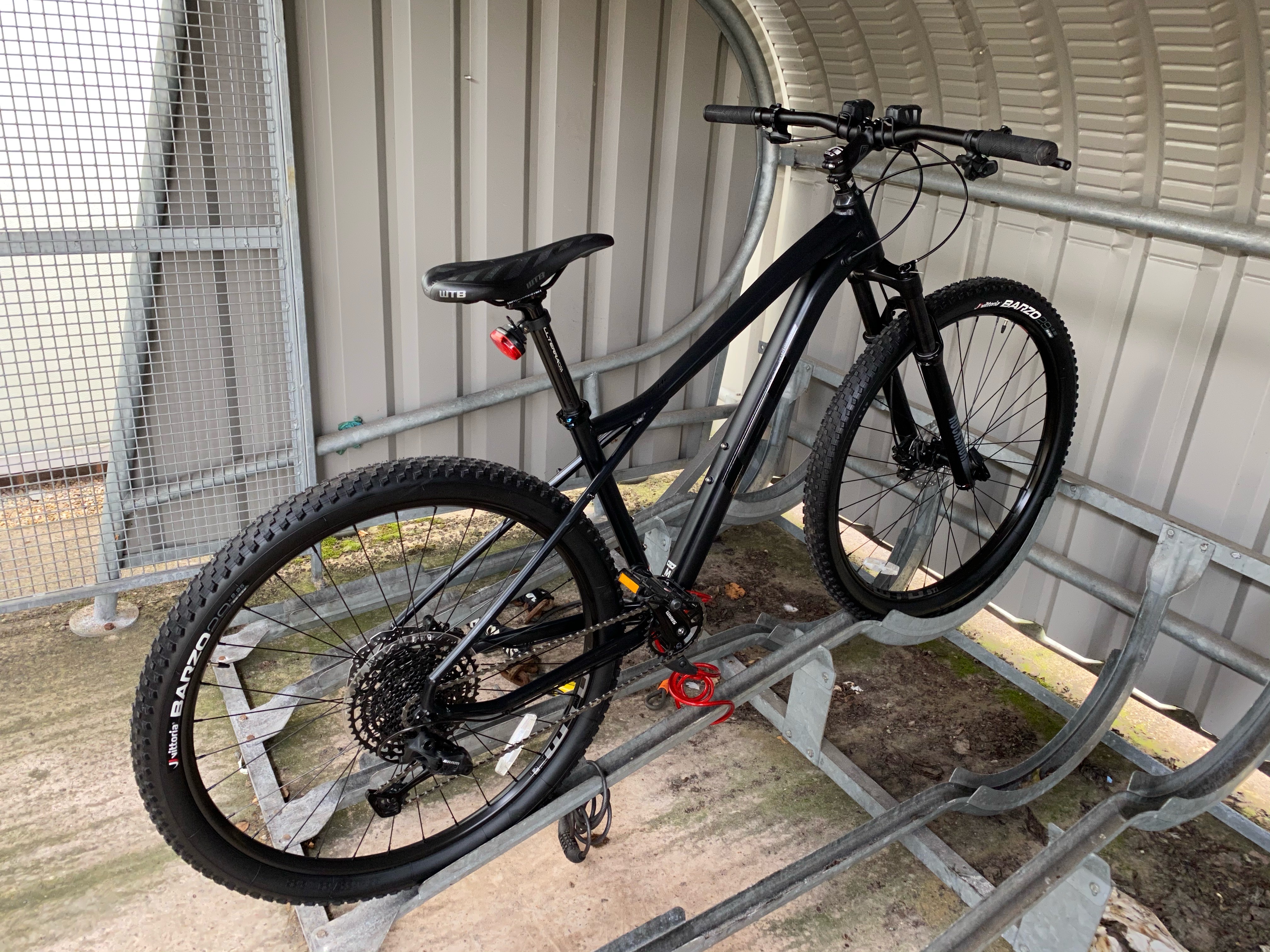
In a familiar customer bike shed, a new bike I think might be a Marin is locked with a Poundland cheese string bike lock (but thankfully this shed has a very securely locked door). It’s a nice, fairly high-end equipped bike, with SRAM (that’s Sachs for the oldies) gears. It’s what I would class a ‘forest bike’ – it’s not really a full MTB but not a hybrid. It would be at home on Cannock Chase’s midway trails or rough canal towpaths.

The bike has remarkable gearing arrangement, that’s sadly fashionable – a single front ring, which is tiny and an eyewateringly wide rear sprocket range.

I note it’s been left in the lowest of gears.

Why?

The gearing is utterly rubbish for road use.

I was talking to a pal about this the other day. I’m tying to build a decent derailleur setup at the moment, but there’s no longer the crossover between road and MTB gear sets where you can get a massive range for excellent touring use by mixing and matching. It’s either this stupidity, which necessitates a huge rear mech just waiting to get smashed off by a stump, or the low range and boredom of road group sets.

I know it’s fashion, like the frankly ludicrous fat bike fad, and we’ll swing back to doubles and triples when the spinning kids want to go a bit faster than15mph downhill. But I wish it would pass.

It comes to something when a basic hub gear offers 25% wider range than most mountain group sets.

Rant over. For now.

from Tumblr https://ift.tt/2ZYwJeY
via IFTTT

November 21st – In a familiar bike shed at a client’s premises, a neat illustration that the common or garden bicycle, whilst being a marvel of engineering in many ways, is still riddled with design conflicts and the whiff of mechanical compromise.

Here, a well-used and muddy mountain bike, not a cheap one by any stretch. The lack of mud and water shielding means and mud and detritus carried on the back tyre ends up not just as a skunk-stripe on the rider’s back, but also on the front gear mechanism and transmission.

In areas of hard grit like the Peak District, this continual spray works like grinding paste, gradually eating your wearing surfaces.

All for the want of some shielding.

Still, if you were a designer today, and proposed the derailleur system of gears – relying on forcing a flimsy roller chain between gears using side play as a conformal drag factor – you’d be laughed out of industry.

Except there’s nothing much better.