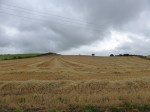
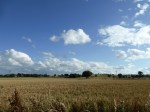
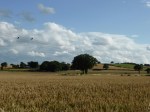
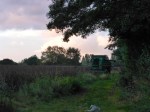
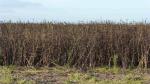
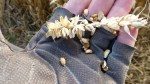
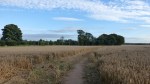
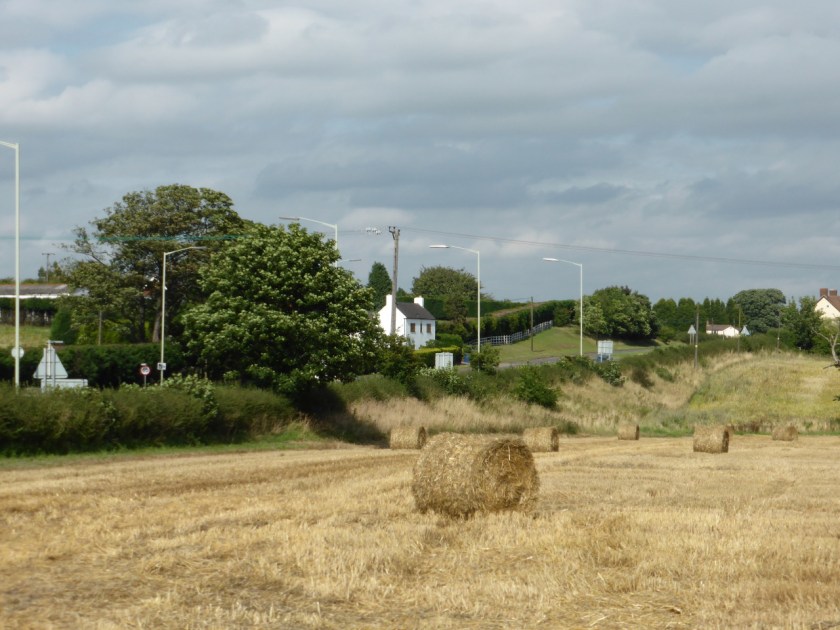
August 30th – Cycling down the bridleway from Wall Lane to the Birmingham Road at Harehust Hill, near Wall, I noticed the remnants of the wheat harvest. This spilled grain is natural, and happens at every harvest time. Trailers lurch and spill, grain falls from machinery in transit and the wind blows it into gutters and potholes. This is what my grandfather called ‘Gleanings’, and spoke of the old right the poor had to collect it for their own use. He also called the noisy, shrieking guineafowl that were often kept as yard birds in the area ‘gleanies’, as they were often fed on the gleanings.

It’s quite rare to see guineafowl these days.
August 21st – To my surprise, the cereal harvest – thanks to largely dry weather – is almost over around Stonnall and Lichfield. Most of the oilseed rape seems to have been cut, too, and fields are now turning back, first to stubble and bales, then bare earth ready for replanting. I don’t think I’ve known a recent year when the process has been done and dusted so quickly. Last year in this field at Springhill, rapeseed was grown, this year, wheat. Wonder what the next crop will be?

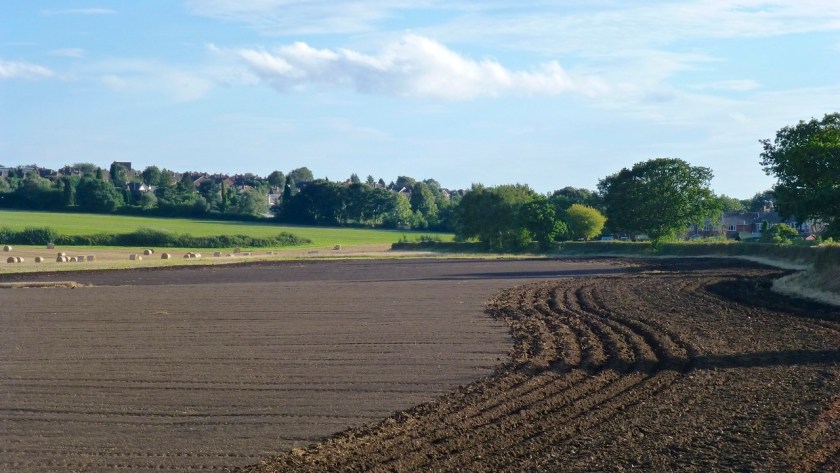
August 14th – Once a crop is harvested – in this case, wheat – there’s no time to hang around. The straw has been baled, and the ground is prepared for the next cycle of planting.

As I passed this field at Stonnall, I noted that it’s been subject to some process – many harrowing or scarifying – that has broken the stubble, but without ploughing. I’ve not seen this before, and am intrigued. Sadly, I was  running short of time and couldn’t hang around to see the machinery performing the operation come back over the hill.

Anyone any ideas?

August 10th – The harvest was underway everywhere I looked – out at Hammerwich, Stonnall, The slopes of Longon and the plains of Staffordshire. Everywhere I looked, there were plumes of grain dust rising in the distant fields like palls of smoke. At Home Farm, Sandhills, baling of the straw was ongoing. The parsnips in the field behind still look lush, and the oilseed rape is still not ripe, but the wheat, plump and healthy, is now stubble. And so the cycle continues.

August 5th – It seems the harvest had started just before the rains came over the weekend. These fields near Stonnall were still full of wheat on Thursday, and are now no more than neat rows of cut straw, with crows looking for food in the gleanings. I noticed other fields had been cut at Springhill and Summerhill too. 

And so the season ticks on. It doesn’t seem long since there were deep snowdrifts here..

July 30th – The ripening is noticeable everywhere. Returning from Shenstone, the fields of wheat and oilseed rape were losing their last vestiges of green; not yet ready to harvest, but well on the way. The golden colour is welcome and is like late summer’s coat; the countryside is replete in golds, beige and dark, dark green.

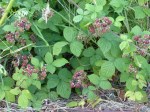
Also doing well, the bramble fruits – dewberry and blackberry – are turning red, and the parsnips growing at Sandhills look in fine fettle.

Doesn’t look like it was such a bad season, after all.

October 3rd – The mystery of the bean field is solved. As I cycled past this evening, the farmer was harvesting the crop of beans I considered last week to be lost. I’d been musing on exactly how they were harvested for a while, and it seems the technique is identical to how much local maize is harvested: the whole plant is mown off at about six inches above ground, then chopped into rough chunks by the machinery, where presumably, it’s loaded into a trailer. I’d assume the beans a therefore used as fodder.

That’s a very big machine. Impressive stuff, and a mystery no more.

September 5th – The Beans that have fascinated me in the field in Lynn, near Shenstone, are just being harvested. They are as dry as old bones, both plant and pod, and something has cropped the whole plant at about six inches from ground level. There’s no residue left other than stubble. I didn’t see it happen, and so far, just the perimeter ofthe field has been harvested, so I’m none the wiser…

September 4th – I know I keep banging on about the harvest, but this year really has been highly unusual. It’s now early September, and crops that should have been in barns a month ago are still languishing in the fields; many possibly ruined.

Ziksby replied to my recent post about the harvest around Stonnall and Shenstone mostly being over, by pointing out that it was still ongoing around Aldridge and northeast Walsall: indeed, I was over-optimistc and it was still ongoing around south Staffordshire today. I noted one particular crop of wheat, still stood in the field between the railway and Hollyhill lane at Shenstone, that seems to be ruined. The grain is blackening, shrivelled and small. 

Despite this, the recent good weather has prompted an agricultural machinery invasion, with harvesters working around the clock. A truly remarkable season.

September 1st – At home farm, I smelt the fresh earth before I saw it; I’d now that scent anywhere. The farmer has wasted now time, and ploughing and harrowing was in full swing. Presumably, there’s another crop to go in here now – maybe potatoes or a vegetable of some sort. The golden hues of late summer will soon all be fresh and brown like this, part of time’s passage. Lovely, but sad at the same time.