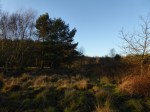
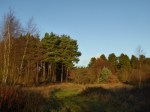
December 7th – it was a beautiful afternoon with a very unpleasant wind, but the sun and commons of Brownhills were a joy to behold. The heaths and scrub glowed beautifully, as did the canal embankments.

These days it’s hard to imagine these beautiful places have a harsh, lingering industrial legacy.

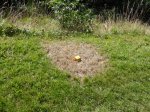
Looking for deer near the site of the lost Coombe House, at Coppice Side, I spotted this monitoring well, a int of a none-too-pleasant past; this is the edge of a former landfill and boreholes like this are regularly unlocked and ‘dipped’ to monitor contamination. The EX symbol warns of an explosive gas hazard – methane, mostly, from rotting refuse buried underground.

This is a problematic site and will require monitoring for many years to come. 

I looked up from it to see the backside of a young hind disappearing into the the copse…
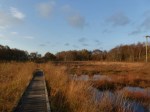
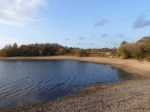
November 10th – A lunchtime at Chasewater on a beautiful late autumn day – the sun was warm on my back and the riding easy but boggy after the last two days of rains. The north heath was as gorgeous as ever, and the level does seem to be rising now the valves are closed and the creek is flowing well.

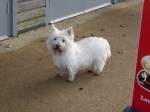
The Westie waiting outside the cafe was a dear little thing.

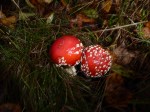
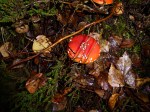
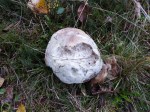
October 21st – I was lamenting a couple of days ago that the fungus had been poor this year – it hasn’t up on the canal bank near Wharf Lane; I never noticed before, but in a short space, tucked in with the heather and gorse are lots of toadstools.

Mostly, fly agaric, I passed these spotty red wonders a couple of days ago and never noticed.

I’d love to know what the shiny brown one is…
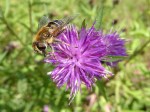
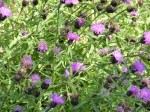
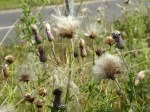
August 3rd – Chasewater itself was gorgeous. From the honeybees busy on the knapweed, which looks so very like thistles, to the thistles themselves, which are now doing the seeding thing. Amphibious bistory dabbles the western edge of the lake, and the north heath looked gorgeous.

We’re so lucky to have this nearby.

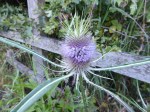
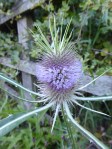
July 27th – On Clayhanger Common, there is a thriving population of teasels. A spiky, spiny, purple, prehistoric-looking plant, our ancestors used the dried seed heads to tease wool and fabric. 

Some of these plants – once a very rare sight in these parts – are six feet tall now and in rude health. A fine symbol of the biodiversity and health of the common here – which only 35 years ago was a polluted, barren and filthy refuse tip.

June 12th – This one is for Fresh Rosemary, as I know she likes the coos.

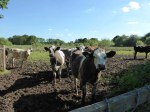
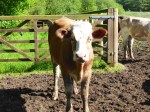
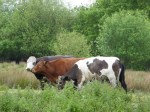
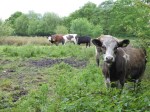
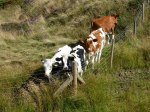
These particular coos – all lads – are currently being grazed on Jockey Meadows, just off Green Lane, between Walsall Wood and Shelfield. They have been brought here to churn up the meadow, eat the more aggressive species of plants, and to fertilise the land… naturally. One could say that it’s absolute bullshit.

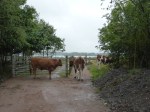
They’re certainly working well, and hopefully this will allow the less strong species of meadow fauna to thrive. As to the coos, they go home somewhere every night. When I pass in a morning, they’re all out grazing around the field; when I come back late afternoon, they always seem to be waiting by the gate for their lift home. Coos certainly seem to know what time it is.

They’re certainly going somewhere, as I passed by again at 10pm and they’d definitely gone. This begs the question of how my bovine brothers see this: is it like a job to them? ‘Hey Steve, that’s enough grazing. Time to knock off. Where the hell’s the herdsman?’

I’ve asked them. They’re not telling. Bloody inscrutable creatures, coos.

May 28th – A foul commute to and from work, characterised by constant drizzle, wet greasy roads and drivers not concentrating. Nearly wiped out on the way to work, a lady pulled out on me from a factory forecourt so closely her car snapped the reflector off my rear mudguard. Had I been slightly slower, she’d have clipped my wheel and I’d have been off. She didn’t even stop.

Returning on a no less intemperate journey home, I was cheered to see the cows still on Jockey Meadows; a fair-sized herd, there seem to be about 12 or 15, and they were looking wet and fatalistic as only cows can. 

I’m convinced they’re here to maintain the meadow and churn it up, whilst spreading the fertile love in the form of cowpats. They certainly seem to be having a good go. 

They were fascinated by me and my bike. I’m sure they’d all have come to the gate had I waited long enough.

September 17th – A spin around Chasewater in the rain. The park was pretty deserted just after lunch. I span round, the drizzle persistent but relatively warm. The cows on the north heath were trying to find shelter in the woods, and looked thoroughly cheesed off. Meanwhile, further down the heath to the north shore, workers were cutting the scrub and burning the waste, resulting in the lake being covered in a low layer of sweet-smelling smoke. 

As I returned down the causeway, I noticed the crews of kids in rowing boats, out from the Outdoor Education Centre.

Life doesn’t stop at Chasewater when the summer goes; it just gets a bit more challenging.

August 18th – Chasewater is great at the moment. I passed through in the early afternoon, on a warm but windy Sunday; the lake was busy, and people were out, taking the air, cycling, walking dogs, playing football or frisby with their kids. So nice to see it busy and beautiful again.

I see the herd of cattle has expanded – as well as the lads munching away on the north heath, we now have a bovine maintenance crew on the spillway heath, between the Nine-Foot, Anglesey Basin and the Toll Road boundary. Like cows do, they were exploring the field boundaries and watching passers by nosily. They’re a great asset to Chasewater and it’s good to see them.

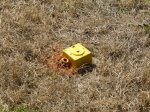
Meanwhile, on the embankment track between Jeffrey’s Swag and Slurry Pool, someone has been measuring. That’s a surveyor’s datum block (the stud is the datum) and presumably that’s some kind of measurement bore. Wonder what they’re looking at?

February 23rd – The cows on Chasewater’s north heath are a fixture now. Kept there to maintain the heathland, they do so by nibbling the fast growing voracious species, and allow the hardier, slower growers to come through, and their poo helps nourish the land. Earlier in the year there was just four, but there’s nine now, and they don’t seem to mind the people. 

They don’t take any nonsense, either; they’ll stand their ground against impudent dogs and anything else that distracts them from their preferred occupations – namely loafing, eating and snoozing.