#365daysofbiking Don’t stop me now


March 4th – The front brake was feeling funny again, it had some initial resistance – like a click – when applied. I’d had it before but couldn’t recall the cause.

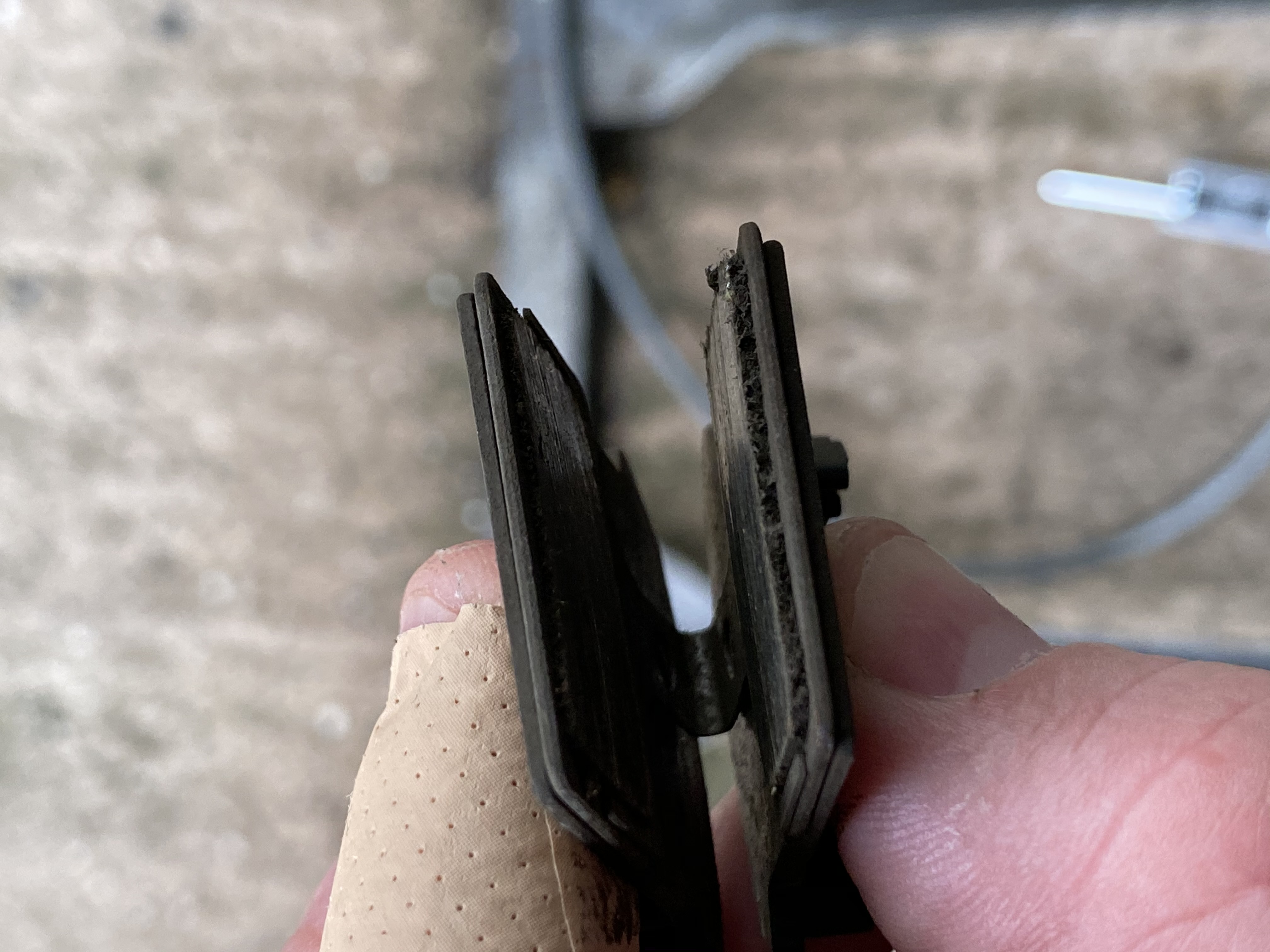
Turned out I discovered it riding to work when I lost braking power on the same brake. The pads were so worn, the return leaf spring was being pushed out of place by the disc surface.causing the click.

The pistons were opened back out with a wedge tool for the purpose and new pads dropped in. Braking harmony restored!

This journal is moving home. Find out more by clicking here

from Tumblr https://ift.tt/2xLeHld
via IFTTT

September 3rd – It’s been a while since I bored you with disc brake pads, so it’s your lucky day – or maybe not.

I favour a hydraulic disc brake on all my bikes, road or off-road. On road bikes, I think the Shimano 785 based callipers are the bees knees; combined with a decent disc and pads, they control my resplendent girth down the steepest of inclines and without snatching.

The only issue I have – and I’ve covered this before – is the mystery of what exactly happens to rear pads in particular when they overheat. Sometimes, despite the best care, pads will develop a sheen, lose the nice grip and squeal horridly. I’ve been trialling aftermarket alternatives all summer to see if other manufacturer’s inserts are better.

I tried Kool Stop, an expensive brand. They were nothing special, and glazed out. Clarks performance was tepid, but lasted well. My best results have been with Uberbike sintered and semi-metallic. These are an interesting design – 785 road pads normally have a backplate with cooling heatsink fins. Uberbike have separated the two, so you can re-use the cooling fins on a slightly thinner pad, which are only £6 a set instead of the £20 for a set from Shimano. And they work a dream.I had one set glaze out near the end of life, but other than that, great.

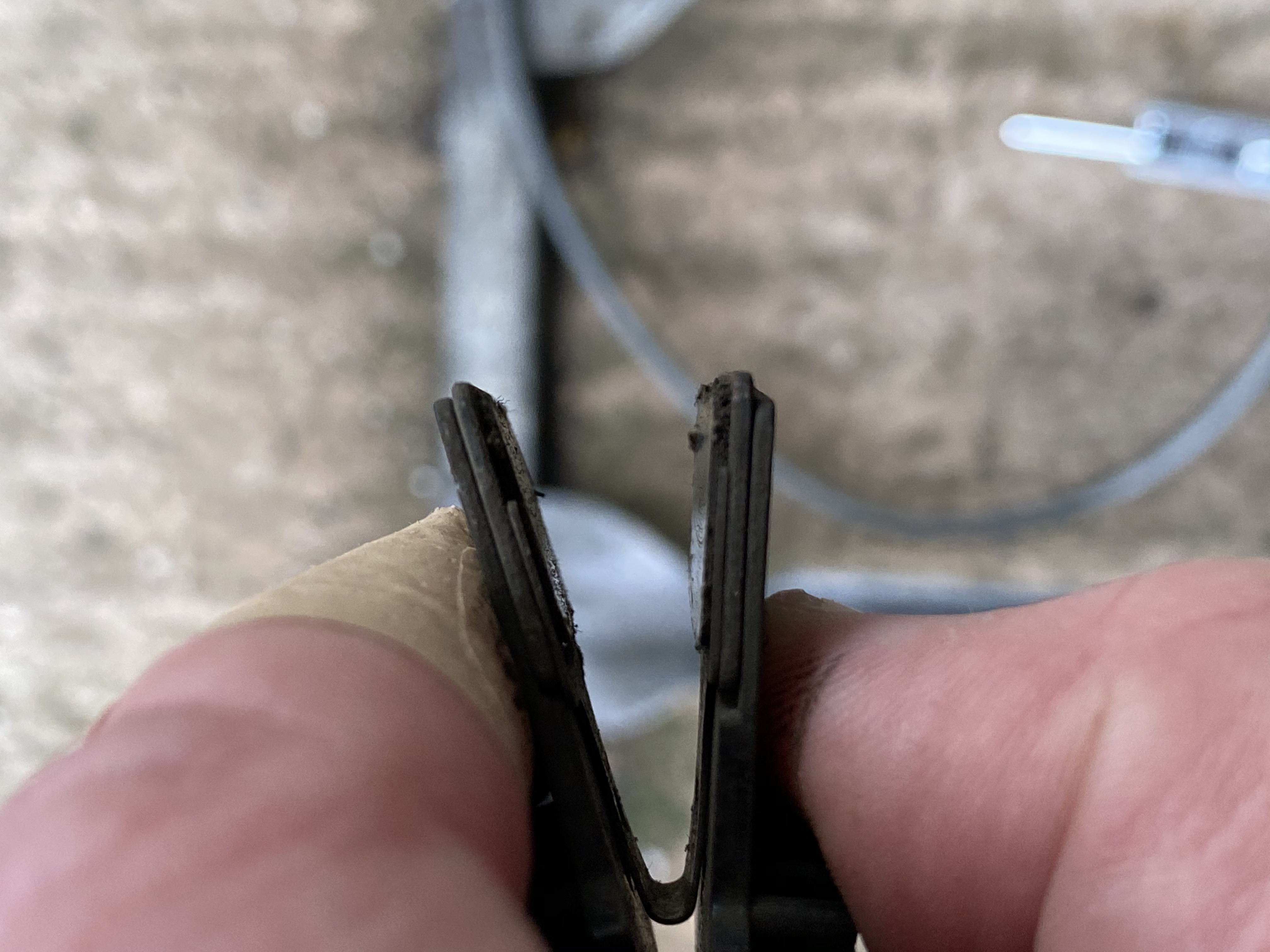
I thought the front set had taken the same dive while winding down from the Roaches the day before, becoming squeaky and losing friction, so swapped them in the workshop the next day, to find the pads had worn to the spring, and that was the wail.

I really do recommend Uberbike pads.
February 23rd – Back to brakes. This has really caught my attention, sorry.

Following the brake trouble I’ve talked about where pads suddenly lose effectiveness in my hydraulic disc brakes, I’ve decided to try alternatives to the stock Shimano pads. 

I wasn’t expecting them to be any good – I was wrong.

I’ve tried the Kool-Stop first. This company makes a very highly regarded road brake block, and I was interested to see how that translated. After initial disappointment, I’m actually quite impressed.

These resin pads are described as having a ‘rotor saving compound’, which usually means they’re soft and not too effective. My fears seemed to be confirmed on the first two or three days of use, when stopping power was poor and the brakes noisy. 

I then rode in the rain. This appeared to bed the pads in and they’re now every bit as good as manufacturer originals in use. They aren’t quite as snatchy, which is good, to be honest, but they do bite when demanded.

The question is, how long will they last? We shall see. But my initial feeling is that although they took an age to bed in, they’re great pads.

March 11th – A nasty graunching from the rear brake on the way home was severe enough to have me check it out as soon as I got home. Much to my shock, I found the stock, soft resin-organic brake pads in my rear calliper were just a bit worn.

Ahem.

The new sintered metal ones are at the rear, the ones I took out in front. That’s bad. Should have spotted it sooner – luckily I don’t seem to have damaged the disc.

Never take your eyes of those essential maintenance tasks, people!

April 9th – Whoops. The bike I’ve been riding over the past few days has been having an issue with the front brake pats just lightly touching the disc. The noise was irritating me, so before I set out today, I got down to realigning the caliber, and then noticed the pads were a bit worn. Having spares on the bench, I whipped the old ones out.

Oh dear. The bad set, for those not in the know, are on the left, the replacements on the right. The pad on the one side is so worn, it’s to the metal, and the spring is mashed, too.

I also had an issue with the piston sticking. Hopefully that’s sorted.

Hydraulic brakes wear pads quicker. I must remember that. 

October 21st – Time for a techy bit. Disc brakes are my favourite kind of bicycle brake – resilient, reliable and good in the wet, they need care if they’re to maintain performance. The brakes on the current commuting bike are hydraulic, and very powerful; they eat brake pads, especially in wet weather. In the wet, the grit from roadwash and grindings from the pads and disc combine to make an abrasive paste that makes the brakes noisy in use and causes wear to all braking surfaces. After a wet ride, wherever possible, I flush the discs in clean water to clear any residue off. If this is ignored, larger particles become embedded in the pads and score the disc surface, impeding performance and causing high-pitched noise.

I’ve also noticed with these appreciable wear on the discs. These were changed 3,000 miles ago and I can feel now feel quite a step between the surface and unworn part of the disc.

If your bike has disc brakes, look after them, and they’ll be there when you need them. It’s especially important in weather like this.