#365daysofbiking Not dead, but flowering

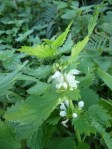
April 26th – Following my note on finding some lovely yellow archangel flowers in Footherley a few days ago, I need that it was a member of the nettle family – and to prove the similarity, the dead nettles are looking gorgeous on Clayhanger Common at the moment.

The flowers and leaves are similar – the colour is the big difference though.

These nettles – which have no sting, hence the name ‘dead nettle’ – have very sweet, tasty nectar which can be sucked from a plucked flower, but probably best to find some above dog pee height before trying it out…

This journal is moving home. Please find out more by clicking here.

from Tumblr http://bit.ly/2IXe3Vf
via IFTTT
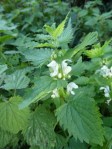
October 21st – Riding to work along the canal in Walsall in the early morning, I noticed how green parts of the towpath margins still were – the bracken hasn’t yet turned at Bentley Bridge and the dead nettles are full in flower for the second burst this year.

This has been a peculiar autumn, with many things coming into bloom a second time before dying off. The weather really has been kind to us this year, but I can’t help feeling winter is going to be a shock to the system.

June 4th – Here’s to the dull ones, this that blend in to the background, and perhaps even those that are hated.

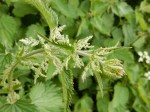
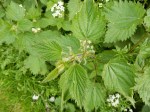
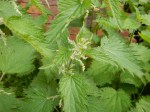
Nettles are prolific and fascinating – from the dead, non-stinging variety to those that cause sudden anguish and itching are everywhere – and they’re actually fascinating if you stop and study them.

One of the most important things they do is support the beauty of peacock butterflies whose larvae feed on these lowly-regarded weeds.

June 27th – This post was inspired by top Pelsall geezer Matt Drew, who spotted a different clump of these fellows and posted a pic on Facebook last week, inspiring me to look out for them.

These delightfully spiky caterpillars are the larvae of the beautiful peacock butterfly. They really are rather impressively hostile-looking, but cute at the same time – I spotted them in a nettle bed at the top of Shire Oak Hill, near the old quarry there.

In summer, the adult female peacock will lay between 200 and 500 eggs at the very top of a stinging nettle in direct sunlight. 10 days later they’ll hatch, and the emerging caterpillars will spin a communal web-tent out of silk (see the top picture) which they’ll live in until large enough to leave; they live and grow in clumps at the top of nettles, and as they grow, they may move from nettle to nettle in a patch together as a group, before pupating separately.

They’re easy to spot as a dark infestation at the tops of the tallest nettles in a nettle bed. 

Male peacock butterflies are very territorial, and can often be seen attempting to chase away birds that may be coming near their selected nettle patch.

I’m glad I found some – and thanks again to Matt for the inspiration to look.