May 9th – I popped into Birmingham to run a few errands and cycled in via Roman Road, Sutton Park, and then onto the North Birmingham Cycleway down past Witton Lakes. I returned via Plants Brook and Sutton, but more on that later.

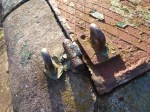
I had business up at Constitution Hill, and on the way, I remembered these odd utility blockhouses marooned in the centre of the recently rebuilt St. Chad’s Circus. These substation-like buildings are the one solid remnant of the old subterranean subway complex; overlooked by the Catholic Cathedral, they are a chilling reminder of the cold war.

They are plant and ventilation installations for Anchor Exchange, a huge, sprawling, underground nuclear blast-proof telecommunications exchange beneath the streets of Birmingham. Mostly now abandoned, Anchor only exists as cable tunnels, having been rendered obsolete by the end of the communist threat and advent of the internet.

Anchor was built at the same time as Birmingham built the inner ring road, or ‘concrete collar’; the hated gyratory system that consisted of flyovers and tunnels called queensways. Birmingham City Council have spent 20 years now destroying the concrete collar, and putting traffic on the same level as the human city, but Anchor is still ever-present.

There were several entrance points to Anchor from these tunnels, and the complex was an open secret for decades. 

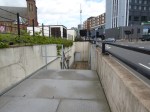
It’s telling that long after its usefulness ended, Anchor still requires maintenance and support; this closed stairwell with it’s original rails on the right and peculiar textured facing is one of the only pieces of evidence left on the surface, belying what lies beneath.
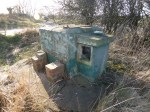
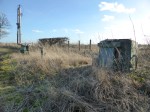
February 16th – As I passed from Elford to Harlaston, I stopped as I usually do, to check out the state of Harlaston ROC post. What I saw saddened me, as it continues to deteriorate.

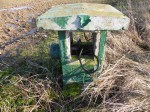
These odd green surface structures are the visible evidence of a small, 3-man nuclear fallout shelter. Intended to be staffed by a group of volunteers from the local Royal Observer Corps, they were a state secret. Should nuclear conflict have begun, the crew would man this subterranean bunker equipped with basic recording equipment, water and rations, and take measurements of radiation, weather, fallout, bomb damage and soforth. This information would be relayed – if possible – through telegraphy equipment installed within. Posts were sited all over the country, and worked in groups of 3. Others existed locally at Polesworth, Rugeley and Shenstone.

In essence, should the Cold War have begun, three people would have entered this hole in the ground, and if they didn’t perish, they would have carried out their orders whilst waiting to die of radiation sickness. It’s a sobering thought.

The posts – and the Royal Observer Corps – were stood down at the end of the Cold War in the early 1990s, and the posts mostly left to rot. Some were preserved by enthusiasts, some bought by cellphone companies – they make great basetation mounts – but the majority were abandoned, and later discovered in the internet age by urban explorers and cold war enthusiasts.

Sadly, the bunkers were left filled with all their equipment – bedding, instruments, lockers, chemical toilets and whatnot – and have mostly now be broken into, stripped and vandalised. Harlaston has been systematically destroyed. The current owner has repeatedly welded the access shaft shut, only to have it continually cut open. When I visited, there we signs of fresh cutting and the hatch was unlocked.

This is a crying shame. This is part of our collective history, destroyed and desecrated by animals with no sense of the historic and social significance.

High on a hill overlooking this northeast outpost of Staffordshire, good folk would have entered this once immaculate shelter to serve us in our time of greatest darkness. Today, it’s trashed.

Scum.