#365daysofbiking Tones of home

Sunday, September 27th 2020 – It was a lovely autumn day of sunshine, and I wanted to be out: But fate had blessed me with a bad cold (yes, it really IS a cold…) and I felt enervated and weak.

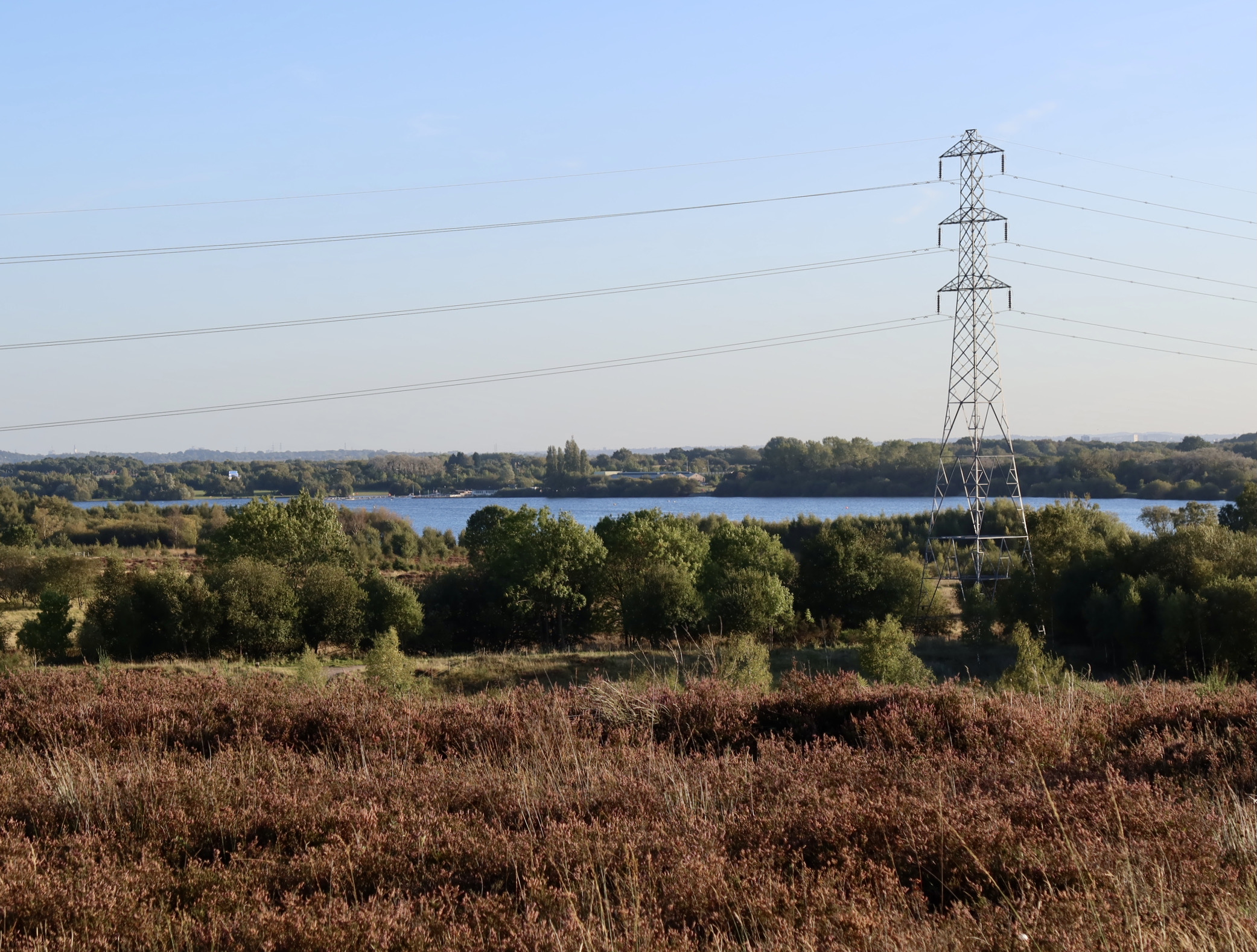
I tried, but I just managed a slow, lazy loop of Chasewater and Chasetown, and trundled home.

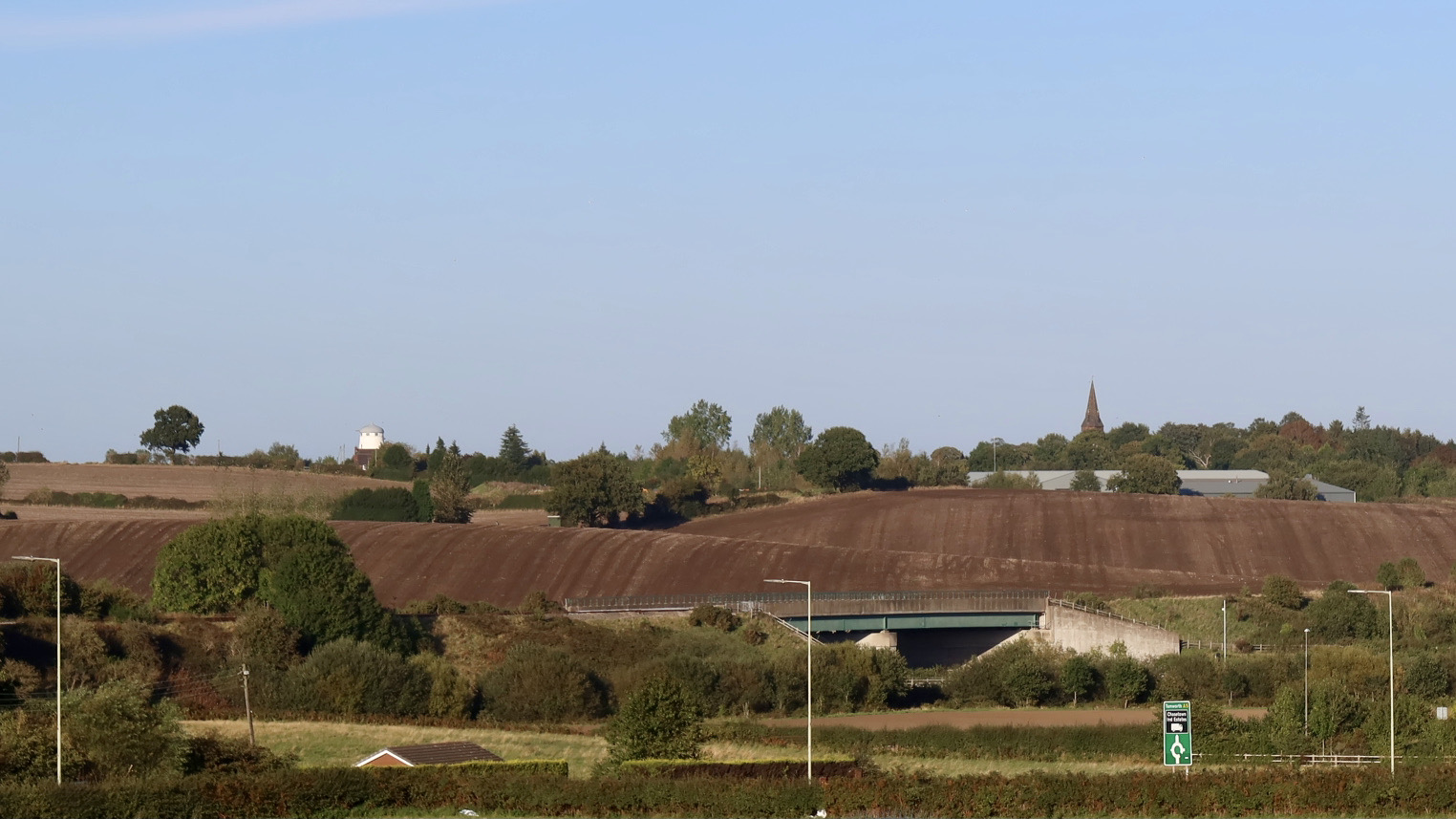
The colours of the season were gorgeous in the soft sunlight, the tonal palette of which seems to be mainly shades of dark green and brown, but also blue, too.

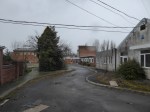
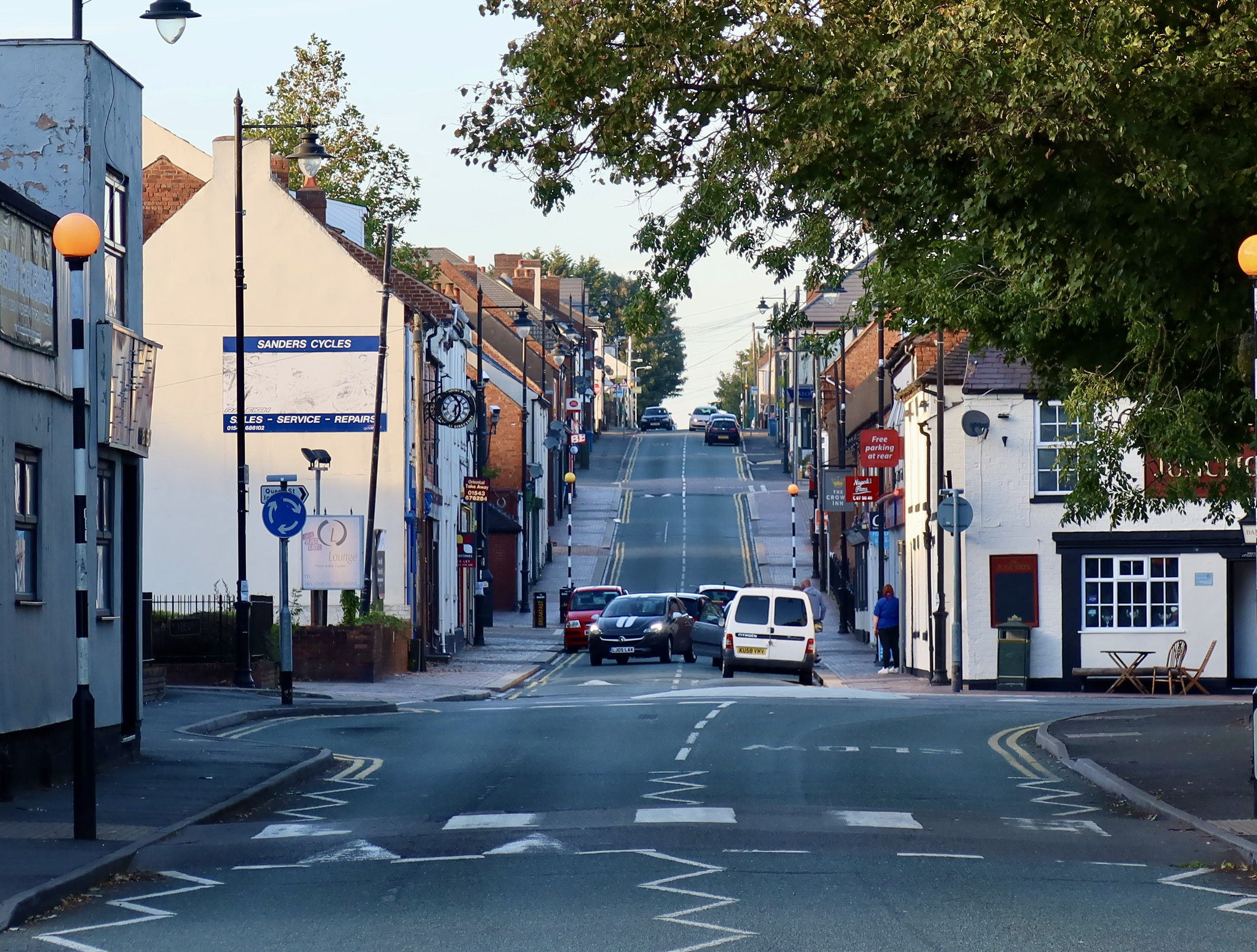
Chasetown High Street and that remarkable hill still captivate me. It manages to look frenetic and busy even when there are few cars and even less people. An impressive achievement.

Some days you go a long way, some you barely orbit home. Today was not a day for venturing far, but near home was reassuring and gave me all I needed.

from Tumblr https://ift.tt/36bOfQF
via IFTTT

#365daysofbiking Telford – a paradoxical historic new town

February 12th – Telford is a new town that’s about 50 years old: Yet it’s also a place of great history, considered by many to be the birthplace of the industrial revolution. Today, I discovered that even under the ‘new’ Telford there is a big, big past.

Riding up the cycleway to Hortonwood, I go towards Stafford Park then turn over the pedestrian bridge and go through Priorslee. At the Stafford Park/Priorslee crossroads, there is a mess of old signposts, their boards removed when the local cycle routes were redesignated. On the orphaned posts, as well as the usual mess of Sustrans guff were new stickers for The Miner’s Walk.

Intrigued, I looked up the website mentioned on the sticker, and found that it’s a local history project with a five and a half mile walk through industrially significant spots in North Telford.

There is a great website here. – go check it out. It’s superb.

I found out that only a few hundred yards from this spot, up until about 1910, there was a mine called Dark Lane Colliery. In 1862, it was host to the worst loss of life in Shropshire mining history when 9 men and 3 boys crashed to their deaths when a cage rope came free.

I had of course heard of the Dawley pits, and those of Coalbrokedale, but had no idea the history was so complex and far north.

So those little stickers led to me learning something new today. Wonderful.

I shall be investigating this further.

This journal is moving home. Please find out more by clicking here.

from Tumblr http://bit.ly/2RVaIa0
via IFTTT

#365daysofbiking Making a deposit

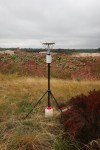
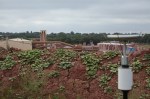
August 29th – I travelled home through Aldridge early in the afternoon after visiting the bank, and I had stuff to wait in for. On the way past the brickworks at Stubbers Green, just where the marlpit fence runs near the towpath, I noticed this curious instrument.

It’s a temporary placement, for gathering data about but deposition from the quarry and brickworks. It’s called – I kid you not – A frisbee deposition gauge, and it collects dust from the air and rain, which it collects in the vessel at the bottom of the tripod. There’s thin crosswires to stop birds landing on it, and a course foam pad to stop large debris like litter and leaves clogging it up.

Several of these instruments appear to be positioned around the site, presumably to test compliance with relevant pollution law.

It’s a fascinating area of environmental science and engineering and interesting to see it in use locally.

June19th – I must admit, I’m fascinated by the landfill at Highfields South, between Walsall Wood and Shelfield on the Lichfield Road. It looks and seems haphazard, but is being operated in an engineered manner. At the moment, the eastern side of the void is filled, now to about 6-8 metres above ground level with a marl cap on top. Gas bulkheads sit atop harvesting tubes inserted deep into the mound. As the pile sinks under it’s own weight and that of the cap, it evolves gas, which is harvested and powers a generating set, feeding energy into the National Grid.

Meanwhile, to the west of the void, the hole is being prepared for the next stack of waste. Systematic. Methodical.

The void existed due to marl quarrying for bricks, and the landscape is favourable for this type of thing. It may not be pleasant, and we should reduce our waste as a society, but the process is very interesting.

June 10th – Passing Goblins Wood (or Coppice Woods, for the hip modern kids out there), I noted how beautiful they looked. This mostly deciduous, well managed woodland is very old and suspect the only local remnant of the traditional English oak and holly copses that once dotted the area.

These woods, and the trees therein have seen many seasons, and every summer they look superb. Long may they remain (and they are protected by law now, too.)

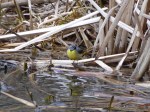
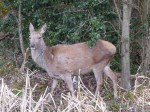
March 28th – Even on the greyest days, Brownhills has signs of life at this time of year. I set out for a short spin on a grey, showery afternoon, and was rewarded with a herd of red deer at the old clay pit, a nesting swan just by the canoe centre and watered, and a delightful grey wagtail at Anchor Bridge.

It took me a while to work out why the young stag’s coat was grey and oddly textured. He’s been rolling in clay mud. I know deer like to mud bathe, but that seems a little extreme… anyone seen this behaviour before? Is it harmful? 

I noted the deer were in moult, and wondered if the mud-rolling was a way of accelerating the shedding.

March 22nd – I’m a big fan of Middleton Lakes, the former quarry and gravel pit complex handed to the RSPB. Situated on the Tame near Kingsbury, these mixed habitat wetlands and lakes are a haven for birds of all varieties, and are now attracting bird spotters from across the country.

I remember this in the late 2000s and before, when it was an active site, with conveyors and huge machines operating; now it’s a peaceful haven. In the last couple of years though, work has been carried out installing flood defences in the form of walls and an earth dyke, which stop the Tame flowing into the adjacent canal. The work has been sensitive and well executed.

I noticed today, however, the site was a good bit more manicured than formerly; there are gravel paths snaking over the site, and the odd portacabin. What had once been almost wild seems to be being reigned back in, and I think Middleton Lakes are in danger of becoming over-managed, with little distinction between them, and Kingsbury Water Park adjacent.

This is a great place; I hope it isn’t spoiled.

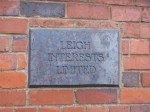
March 16th – The old Effluent Disposal/Leigh Environmental/Sarp/Veolia site in Walsall Wood, itself formerly the Walsall Wood Colliery remains empty, but secure. This once controversial plant, where huge quantities of industrial waste were poured into a former mineshaft deep under Walsall Wood, was often the seen of protest and trouble, then when dumping stopped here, it was laboratories and main offices. The plant flipped between a few companies over the years, and the last one – Veolia – moved to larger, new build premises a few years ago in Cannock.

The site is very secure, with caretakers living on site, and seems to be just quietly decaying.

There was talk of a food company buying these premises and moving production here, but I think they must have realised the former use probably wasn’t conducive to good customer feeling, and the place is still like a set from Day of the Triffids.

I would imagine this plant will be quite hard to sell.

January 23rd – on a grey, murky afternoon I cycled down the canal from Aldridge. I’d headed for the canal as I often do to escape the traffic, which seemed overly aggressive as I’d hit it during the school run.

Passing the Weinerburger Brick marl pit at Stubbers Green, I took a look into the void through the fence. It doesn’t get deeper, but it grows steadily, by gradual removal, dumper after dumper of red marl heading to the moulds and then the kilns.

That’s a lot of bricks come out of there. And what a huge scar on the landscape. But the one ever-present thing here – the familiar, warm smell of bricks being fired – is, like Burntwood’s permanent smell of vinegar – one of the ways I know I’m near home.

August 20th – In late summer, in an overcast moment, Coppice (or Goblin) Woods between Walsall Wood and Shelfield are silent, dark and beautiful.

I think this is probably the oldest oak and holly deciduous woodland for miles and miles around. This is very traditional British woodland, of which there is precious little left.

If you fancy a walk out this weekend, why not pop down and explore it?