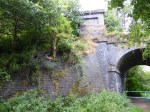
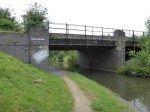

August 4th – 3 former rail bridges in Brownhills, from 3 separate railway lines, all three suffering with age and the destructive tenacity of nature. The lone arch at the top corner of Clayhanger Common is slowly being pushed apart by shrubs and weeds, and is in what must be the final stages of natural reclamation. The Slough bridge, over the canal near Coppice Side, now serves as a pedestrian and cycleway over the Wyrley and Essington for National Cycle Route 54, but the familiar blue Freakley bricks are being pried apart here too by gentle, instant hydraulic pressure.

The third bridge is arguably the most interesting. One of only two listed buildings in the town, it is considered of rare enough design to be worth preserving, although it too is suffering the ravages of lack of care. As if to compound the misery, It has recently had a new nameplate installed, which reads ‘Pelsall Old Railway Bridge’.

This isn’t Pelsall, you muppets.
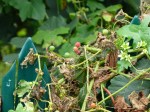
August 31st – Here’s another one I can’t identify. I noticed it today growing up along the palisade fencing along the canal access steps of Walsall Wood High Street: some kind of creeper, the leaves are almost ivy-like, yet this isn’t evergreen or leathery in appearance. The single red berries are rather odd. Can’t ever recall seeing anything like this before.

August 16th – It is time again for the annual warning: there’s a killer in the hedgerows right now. These stalks of what will become bright red berries grow in hedges, woodlands and other scrub, and grow 6-10 inches tall. Very distinctive, Lords and Ladies is very attractive, particularly to kids, but is one of the most toxic plants in the British Isles. This still ripening example is growing on the woodland water margin of the River Arrow in Redditch.
The berries of Arum Maculatum, also known as Devils and Angels, Cuckoo Pint or Wild Arum contain a poison that causes swelling of the mouth and throat and sickness. Fatality is rare, as the berries are very acid and consuming enough to kill would be a challenge, but the plant causes most admissions to A&E for plant poisoning in the UK.
It’s a gorgeous thing to look at, just don’t touch it, and keep small children away.

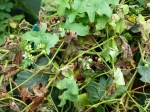
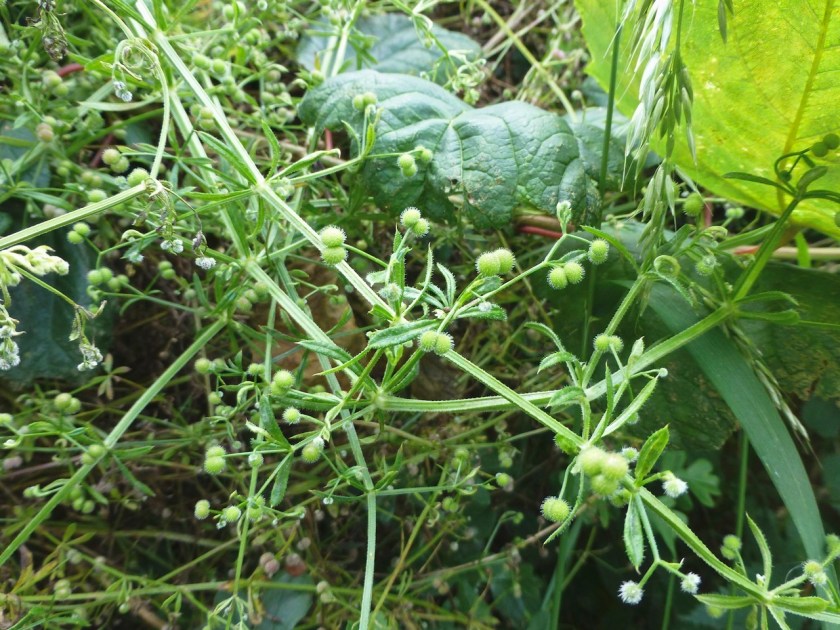
August 7th – Can’t find the proper name for this stuff – I’m sure one of you guys will know it. We call it sweethearts. Anyone who’s ever owned a cat or dog with longish hair will know these troublesome seeds. They stick like velcro to fabric and fur alike. I’ve spent hours removing them from animal’s coats. It’s a very neat seed dispersal method, and this year, the prolific weed that bears them seems to be doing really, really well. A fascinating pain in the arse.

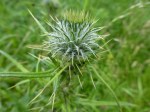
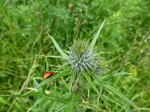
June 20th – Some plants have interesting buds, as well as the blooms themselves. Amongst this set I’d venture the thistle to be king. Prickly and prolific, they aren’t yet in flower on the verges of Stonnall, but it won’t be long now. This hardly, very British plant, beloved delicacy of donkeys, is changeless and a stalwart of the ecology of our country, yet somehow alien; what other plant maches it in the UK for sheer tactile hostility? Only the stinging nettle, I guess…

MAy 7th – I spotted this bright yellow flower at the new pond in Clayhanger. It was growing in very wet, very sandy soil right on the waterline. It was a single, lone example, and I could see none similar. The colour really shouted out in an otherwise dull environment.

Anyone any ideas? It’s rather beautiful, particularly on such a dull, loveless day.