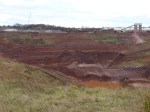
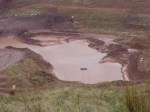
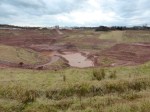
February 24th – The huge marlpit at Stubbers Green that feeds the Weinerberger brick plant with raw clay is impressive. These extraction processes are not as simple as just digging a hole. The pit is dug in a pattern decided by engineers to ensure safety and drainage. In an impervious material like marl, accumulated water from the elements and surrounding environment is an issue to contend with. Here, a floating pump on a bouyancy raft made of empty drums returns water to a surface lagoon. Roadways and access tracks crisscross the site.

Extraction didn’t seem to be in progress when I passed today, but excavators load huge trucks with the red, surprisingly dry material, which is conveyed to the plant on the far side in an endless chain. The factory was running, however, as I could smell the distinctive note of baking clay in the air.

Although ugly, and many consider it a blight, this is a factory and facility that provides much employment to the local area, and the bricks produced are good quality. I find it fascinating in scale and procedure, and could look into that void for hours.

One of the fascinating aspects is looking at the rear face, and seeing the subtle colour changes in the clay as the geology yielded its secrets.

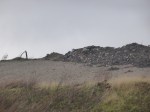
February 10th – I came home in the early afternoon, just as the rain was clearing. I’d had to call in at Aldridge, so found myself in the hinterlands between Walsall Wood, Leighswood and Stubbers Green. This is a very scarred landscape, mainly from brick marl extraction. The geology of the former quarries here is perfect for landfill, and for decades, as a site is abandoned by the brickmakers, it is adopted by the refuse industry.

Now at the capping and landscaping stage, Vigo Utopia was a massive hole in the ground when I was a child, but now stands high above the surrounding area. Bulkheads tap off the methane and pipe it to a generator plant. Eventually, this mound will be a public open space, but that’s some way off yet.

Of course, the brickworks are still busy, and there’s still marl to be extracted, and there will therefore be further space for landfill. A vicious cycle of blight and nuisance, it renders this landscape hostile, ugly and barren, particularly on a dark, wet and blustery February Monday afternoon.

October 22nd – I noted on my way to work the other day that ownership of the former Shire Oak Quarry – now a landfill for dry construction waste – has passed from Tarmac to JPE. I’m not sure why Tarmac sold it, but it was mothballed for a while after the slump in construction after 2008, to be reopened a couple of years later. 

I also noted that dust monitoring equipment has been installed, too. Wonder if that’s in response to local issues or a general requirement these days?

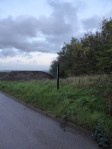
August 1st – I came home over Shire Oak Hill, and stopped at the old quarry entrance to see if there was a decent view now – recently, the southern boundary of the site has had a mound landscaped, which partially obscures one of the best views around here.

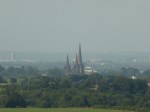
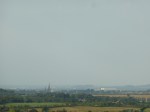
Thankfully, it was still good for a view of the distant Lichfield Cathedral. and although the day was hazy, it was still clear enough to pick out the Coors (formerly Bass) silo at Burton and the wooded hill of Swadlincote. 

This is a great view, and not many folk really seem to notice it.

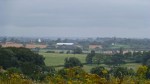
August 17th – It was very grey and spotting with rain as the heavy wind blew me back up Shire Oak Hill later in the day. Oddly, the gates to Shire Oak Landfill – the former quarry at Sandhills – had been left open, and I took the opportunity to have a play with the zoom mode on the camera. The view from this spot is always great, although hard to capture in photos, but despite the grey murk of the day, the images weren’t too bad. Springhill, Hammerwich, Wall and Lichfield were all clearly visible. 

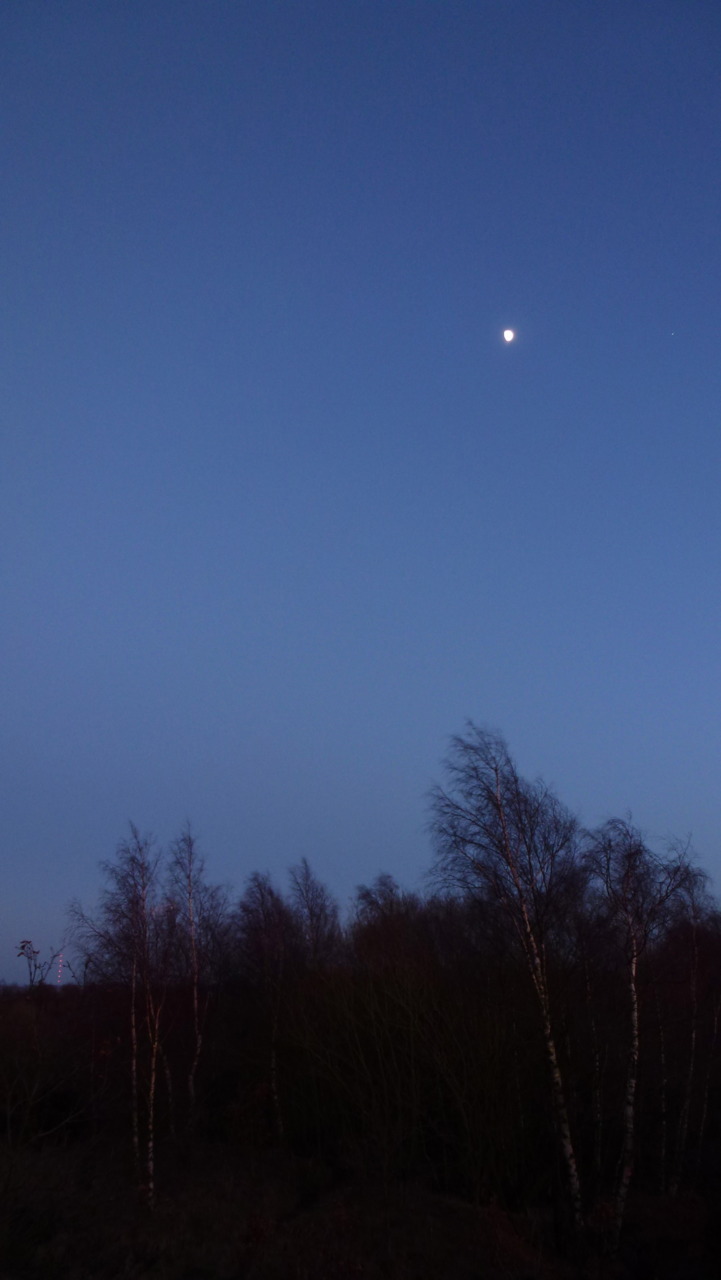
January 3rd – It was at the southern end of the park I first heard it. An insistent, solid, two-pulse, one note, regular cry. Loud, actually, but until now, lost in the traffic noise and windrush. I dropped down into the base of the park and followed the calling. It was very nearly dusk, only the odd hardy dog walker or two around, and the persistent bird call, coming, as it turned out, from the dense copse in the northern hollow. What I think was a little owl (but I’m no expert on bird calls, it was certainly an owl) was calling out for all it was worth. I was in awe. Days of feeling lower than a snake’s knees, and then to hear such a bird a short ride away. Fabulous.

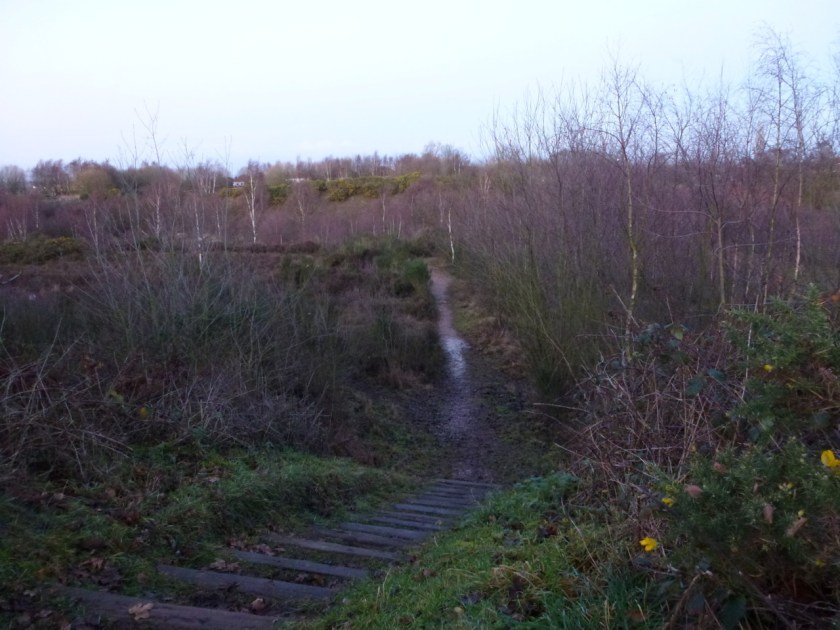
January 3rd – after a rough morning (the stomach still not giving me any respite, to be honest) I perked up in the afternoon and again braved the wind. Since my range and energy reserve were limited, I tacked round through Walsall Wood and let the wind blow me up through Holly Bank and Shire Ridge to Shire Oak Nature reserve. I hadn’t been here since spring, and the character had completely changed. Incredibly, the gorse was just passing through the far side of it’s second flowering, and the bogs and pools in the hollows of this former sand and gravel quarry had once again been enlivened by the rains. The thing that impressed me most, however, was the birdlife.

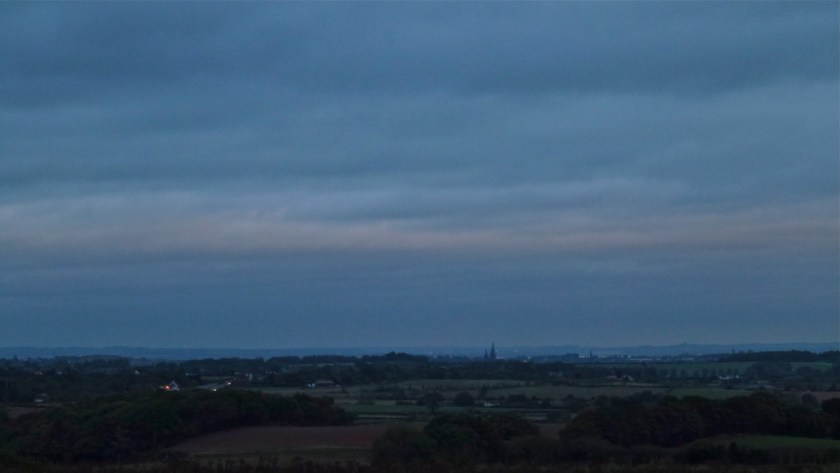
October 10th – by the time I reached the top of Shire Oak Hill, dusk had fallen and the lights were coming on. This was dismal, I loathe and detest the enforced loss of light. Yet, even so, balancing the camera on the quarry gates and taking a timed shot of the view to Lichfield made for a wistful, evocative view of the Old Lady of the Vale. I will get used to it, but for a few days at least, I will mourn the coming darkness. Was it really summer a week ago?

May 22nd – A wind that wouldn’t take no for an answer, and far too much work to do. A short evening social ride up to Shire Oak Park – a former quarry – was in order. I haven’t been here for at least 12 months. I’m always shocked at how wooded and green it now is, when I was a kid it was a barren sand-hole, long since abandoned by it’s operators. Sad to see that with the dry spring the pools have dried up.