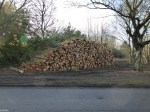
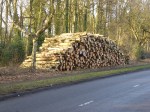
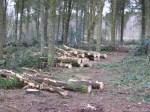
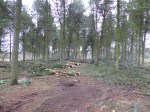
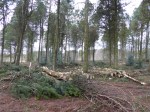
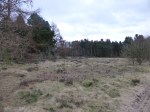
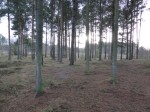
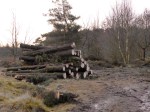
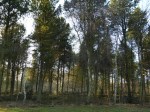
February 8th – At The Parade, as it bisects Brownhills Common, I note the thinning of the conifer plantations continues apace. Many of the invasive trees have now been removed, and light once again reaches the ground beneath them. This is essential work to restore the heath, and it seems to be being carried out professionally and with care. 

The log piles by the roadside are huge and smell beautiful, it has to be said.

January 31st – I noted as I passed in the afternoon that the conifer plantations on Brownhills Common west of The Parade are being thinned again, as part of the ongoing heathland restoration works. It’s good to see, but I must admit, I’d probably go further here. 

The conifers were planted in the postwar period, before we really understood the importance of the heathland habitat here; they have spread rapidly and grow so thickly that little lives beneath them. This harms the biodiversity, and doesn’t provide the best environment for the deer here, who like low cover.

Restoration will take years, but it’s good to see the progress, and the physical scars will soon heal. All the cut wood here is coniferous; deciduous trees are left.

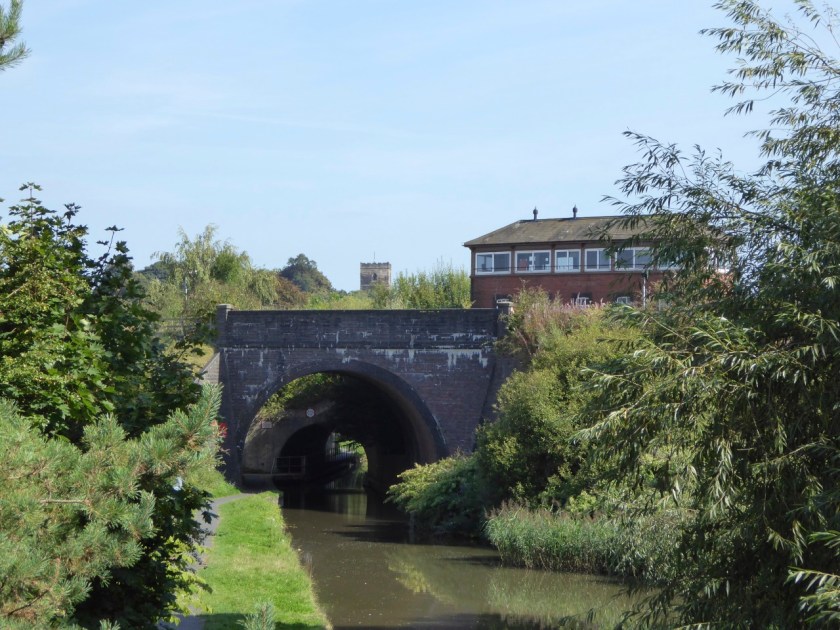
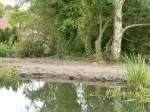
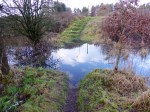
September 8th – I was in Droitwich for a meeting. I quite like the place, and it’s a nice train journey, especially on a sunny day like this. I noticed the canal as I rode up the Salwarpe Road. I believe it’s only been reopened in the last few years, and is probably worth exploring one of these days.

What a lovely view.

April 16th – Spinning up to Screwfix in Walsall Wood, I noticed that the bank  restoration works near the Black Cock Bridge were still ongoing. It seems that after the sectional piling was installed, earth has  been spread to the level of it and dropped in front.

This work has primarily been to stabilise the bank and counter erosion, and is not to do with subsidence, as some have asserted. It is interesting to note at this point, that the fall from the embankment on that side is very steep, and the consequences of a breach on that side could be severe.

I do hope they get around to stabilising the brickwork on the other side, though, it’s falling away and is still hazardous to users.

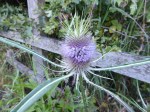
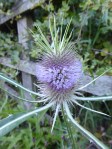
July 27th – On Clayhanger Common, there is a thriving population of teasels. A spiky, spiny, purple, prehistoric-looking plant, our ancestors used the dried seed heads to tease wool and fabric. 

Some of these plants – once a very rare sight in these parts – are six feet tall now and in rude health. A fine symbol of the biodiversity and health of the common here – which only 35 years ago was a polluted, barren and filthy refuse tip.

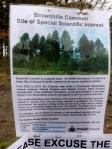
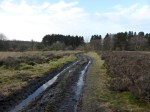
February 23rd – I was grey and very, very windy when I headed to Chasewater, but it still felt springlike as it was very warm for the time of year. Chasewater was very choppy and largely deserted, but heading back over a drying-out Brownhills Common I noted the paths and tracks were already beginning to self-heal from the felling activity here a few weeks before. I also noted some great information signs, the most interesting point on which was that the felled wood was being used locally. 

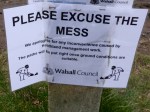
This whole project has been beset by poor communications, and had some of this information been available at the outset, much of the hysterical reaction to the works could have surely been prevented.

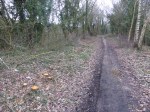
Hopping on the cycleway at Engine Lane, I noticed someone has been hard at work there, cutting down the undergrowth and overhanging bushes and opened the whole track out – nice one. 

Wonder who was responsible for that? Whoever it was, I salute them.

January 26th – Reader Jeepboy contacted me this morning, noting that the heathland restoration work had begun on Brownhills Common and things were a bit lumpy. My curiosity piqued, I took a ride over the common west of The Parade to have a look. True enough, the conditions up there are muddy and wet – take wellies if you’re walking. But it’s interesting to see the landscape open out a bit.

Nothing much grows under the conifer plantations, which have spread widely. This threatens the historic and biodiverse heath, and the wildlife that thrives upon it – everything from red deer, who munch on the sedges and lounge in the low cover to the birds that feed from the berries and seeds of the broad-leafed trees here.

Whilst the clearance looks shocking, only selected batches of coniferous woodland are being cleared, and deciduous trees left to thrive. It’s interesting to see the landscape re-emerge here. Come some decent weather, the mud will soon dry out and conditions will improve – however, it may be some time before access from the A5 drains sufficiently… it’s the closest Brownhills has had to a lido for some time.

I know this work has been and will continue to be controversial, but I honestly think it’s for the best. It’s sad that the situation was allowed to get so out of hand that dramatic steps were necessary.

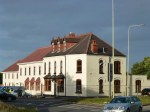
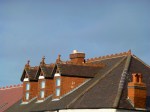
September 14th – I hauled myself up from Lichfield slowly, fully loaded with shopping, against a horrid wind and with little energy. I was feeling grim, and Muckley Corner at rush hour is no place for old men. Having traversed it, I pulled over on the far side of the junction and took a look at the old Muckley Corner Pub/Cornerhouse Hotel. It’s been beautifully converted into dwellings – it’s clear now that there will be no form of commercial afterlife for this pub. In a way, it’s all gone full circle, as originally, the building was a corner pub and associated terraced houses. 

A number of folk have pointed out the attention to detail in the reuse of the decorative coping tiles, ridge pieces and finials. They look wonderful. Shame about the chimneys, though…

August 4th – Heading back home, having avoided the promised rain all day, I stopped at Moat Bank, on the A461 near Muckley Corner, to look at the old canal bridge. This was one of the three bridges over the now disused Lichfield and Hatherton Canal between Shire Oak and Lichfield. One was at the Boat Inn, near Summerhill, and gave that pub it’s name. This was the second, and the third was a double bridge with the railway at Pipe Hill. This particular canal arm – now subject to a lengthy and sustained campaign for reopening – linked Ogley Junction, at Brownhills, with the mainline at Huddlesford, Near Whittington. It was a tortuous journey with many locks, the remnants of one can be seen here in the undergrowth.

I wish the enthusiasts working to restore the line well. It’s a huge task.