July 25th – A horrid, horrid ride home. I had to take a trip into Birmingham on my return from work, and I caught the train out. On my return from the station, it rained the sort of fine, penetrating rain that searches out every not-quite closed zip and aperture on your jacket, and just soaks you. But far, far worse than being wet were the road conditions.

The first rains after a dry spell are always bad – but if they aren’t heavy, the surface water they precipitate mixes with road grime, tyre detritus, spilled fuel and oils and makes a soapy, foamy, slimy emulsion that steals wheels from under you. I slid a couple of times. I head cars skid at junctions. It was awful.

I was glad to get home, just as the rain stopped. There hasn’t been enough rain to wash this away yet, so watch out the next time we have wet weather.

Be careful out there folks.

July 21st – It’s true that I am one of those characters that amasses a huge amount of trivia and mental flotsam as I go about daily life, and this is one of those things, but in my defence, I was actually asked about this a month or so ago so here you go…

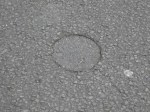
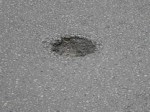
People who study the road surface (and there are a few of us, mainly on 2 wheels) may notice perfectly circular cutouts, punch-throughs or holes in the endless asphalt. Sometimes they’re filled with tar, or white lining paint. Often, they have the material that came out of them put back in like a tarmac divot. Sometimes, they open into potholes, particularly if badly sealed. But what are they?

These odd features are the signature of the road surveyor, and a road near the end of it’s life. When a road is resurfaced, the tarmac is literally planed off by a large cutting machine. The planings are then taken away, recycled back into asphalt, and relaid. How deep that planing operation goes is critical, as is knowing the depth of the road surface, and what it’s like beneath the blacktop ‘crust’.

When a road is considered for resurfacing, a surveyor will take cores with a drill and round cutter at about 100-125mm diameter, and extract them like a cheese taster sampling a cheddar. They are photographed, measured and replaced (or filled). From this a plan of work can be formulated.

Sometimes cores are taken in pairs, close together; others they are equally spaced along the length or a road, on either side. These, spotted around Walsal today, are in various states of becoming potholes themselves and adding to the problem they were created in the process of alleviating.

I’m convinced that every time I learn rubbish like this, it pushes something useful out of the back of my brain.

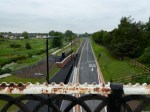
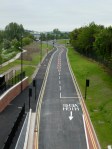
June 1st – A grey morning crossing the still inexplicably closed Bentley Mill Way viewed from the aqueduct on the Walsall/Darlaston border. The roads has, over many months been lowered beneath the bridge to allow taller vehicles, and new signals added. In such a wet area, I hope the drainage pumps are capable and reliable, otherwise we could be in for fun. 

The road has been complete for about a month now, and remained closed as some brickwork was pointed on the bridge, but now seems closed with no activity ongoing. Considering this whole show was due to open ‘Autumn 2015′, it’s all a bit of a puzzle.

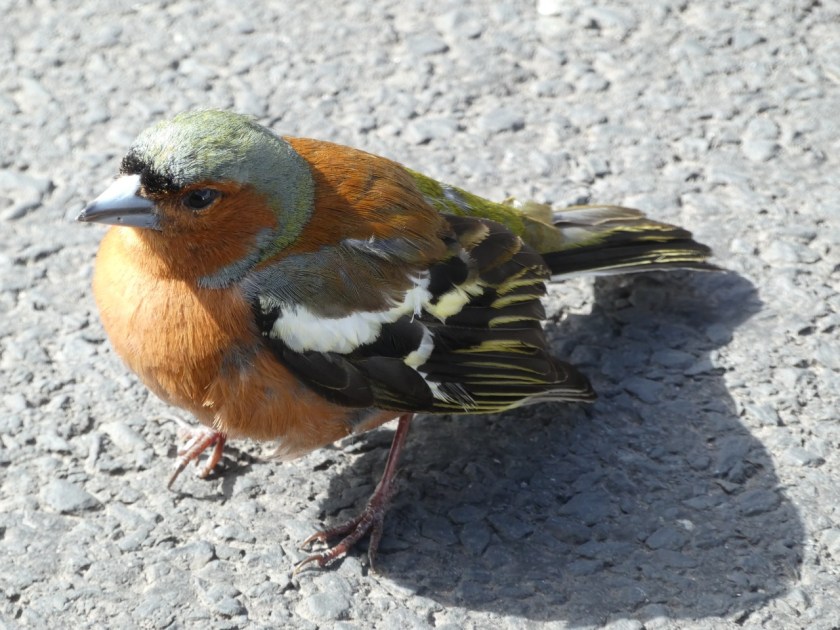
April 20th – I was rolling down a back street in Birchills, Walsall when I spotted this fellow in the road. Outwardly in rude health, but clearly dazed, I think he’d had glancing contact with a vehicle and was stunned. I took his photo – chaffinches a re glorious, beautiful wee birds – then gently picked him up, checked him over and popped him in a nearby hedge to hopefully recover.

Wonderful to get so close to such a beautiful bird, but sad the circumstances in which it occurred. Hope he was OK. I think I probably saved him from being squished if nothing else.

April 14th – Another sign of spring is the roadsalt-loving Danish scurvy grass in bloom. This odd little plant has moved onto highway fringes normally burned and hostile due to winter gritting – but this wee plant loves the salt, and thrives.

This gives a lovely white fringe to roads, motorways and dual carriageways throughout the country at this time of year.

No matter how hostile an environment, nature always finds a way to exploit it.

March 15th – Passing through Pleck on an evening commute at sunset, mashing into the wind. Not a pleasant ride, but stopping to wipe my eyes, I noticed what a lovely effect the light was having on the wonderful row of terraces on the Walsall Road.

Such fine chimneys, and remarkable symmetry. Even the sun over the canal – from what normally could barely be described as good view – was gorgeous.

I love these spring and autumn sunset commutes. Shame Walsall doesn’t have many good places to catch them from.

March 6th – On roads across Cannock Chase, an experiment is underway. These wooden staves with white bags on top are a trial to see if they reduce vehicle-deer road collisions in the area.

It was discovered accidentally in the US that deer were apparently deterred by the sight of a white bag on a post, although nobody knows why, deer experts who’ve tried this have found it appears to work – it will be very interesting to see if the tactic works here, too.

My overriding feeling is the deer will probably get used to it, and they have to cross the roads somewhere, so I can’t see much long term benefit, but it’s a very interesting experiment and I salute the rangers for trying it out.

March 1st – Another grey day, but it felt warmer. At dinner time, I had to venture back into Walsall from Darlaston and took the canal, which was a mistake: the works to relay the towpath have made sections not impassible but hard going.

Passing over the Bentley Mill Way Aqueduct, I looked down at the works below. Running three months late, the road has been closed and totally relaid – but the main bottleneck that is the narrowness of  the bridge I’m standing on – has not been touched. I’m at a loss here to understand how anything other than the footpath and possibly drainage has been improved.

Sometimes it’s hard to see the benefit in road schemes until they operate in practice. I hope that’s the case here.

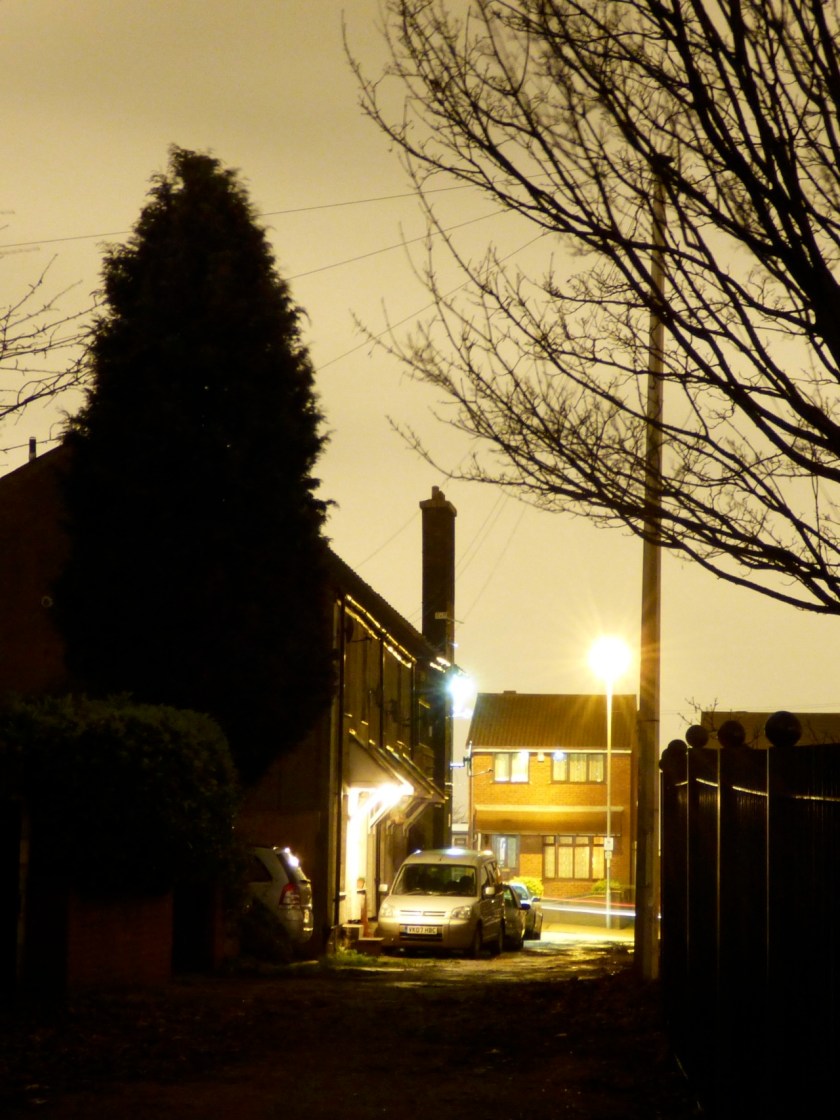
December 14th – There’s a small stub of driveway or track off Old Park Road in Kings Hill called Kings Hill Field. I think once, it went right across the park to the Darlaston Road, and I suspect it’s the remnant of an old right of way, now curtailed by the lovely Kings Hill Park. There’s a small row of terraces, and the gates to the park; and in the right light, by chance, it looks beautiful.

This is why I love this place.

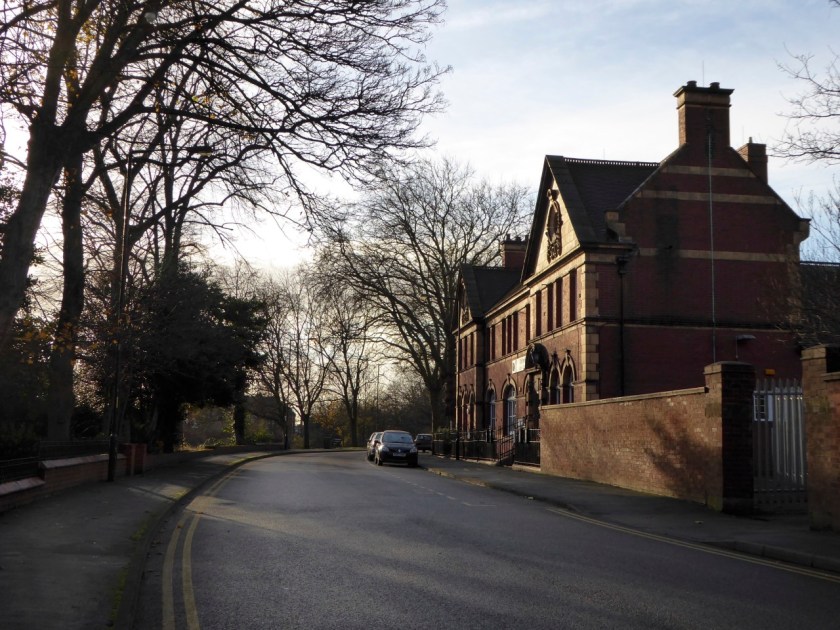
December 9th – In Darlaston itself, a reminder of the great architecture present in this underrated town. Darlaston Police Station is a beautiful building, more ornate than any police station I’ve seen. It scans foursquare in a quiet, tree-lined side street overlooking Victoria Park.

On this chill winter morning, the low sun through the trees make me stop and take a good look.

If you’ve never visited Darlaston, please do. It’s a wonderful, unassuming place, full of gems like this.