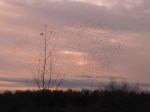
December 7th – The distraction was a murmuration of Starlings. They were hypnotic, and none of my images were properly in focus or did it justice. 

I’ve heard there have been such murmurations here for a couple of weeks. What happens is starlings flock together in large, mesmeric formations. These started as two groups, and merged atop the electricity pylon by Jeffrey’s Swag. Up there, they rested a while, then gradually took flight in a tight pack, swirling like a maelstrom. For 25 minutes or so they circled the Swag, taking sharp spirals, about turns, each time they came close the sound of their wingbeats disturbed the quiet. Eventually, they spotted a place they liked and descended into the poolside scrub to roost.

I’ve only ever seen this a few times in my life, and never so close. The noise, the Moire visuals as they banked, the sheer bird count were all astounding, as was the manner of their disappearance into the roost.

Glad I was out to see that.

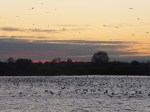
November 23rd – I hit Chasewater for the sunset, which looked to be pretty decent, but sadly, wasn’t as great as I’d hoped. The light was good though, the park pretty much deserted. The gull roost – despite the last few boats only just leaving the water – was absolutely huge, with what must have been thousands of birds bobbing on the lake. I even saw an angler – the first I’ve seen on the main body of water since the reservoir refilled. It’s still a wonderful place to be, more so now the park has recovered.

The street light through that footbridge still fascinates me. It’s like a portal.

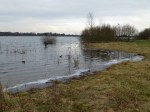
February 23rd – Also at Chasewater, there’s some pollution happening.

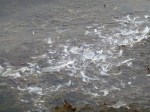
This is good pollution, however. A casual observer might stand on the waterline of the now-full lake and wonder what the froth and scum is, gently lapping the shore. It’s the side effects of Chasewater once again being host to massive numbers of Gulls, who come here to roost on the water at twilight. 

Yes, tens of thousands of birds frequent this reservoir in the evening, where they rest, loaf and bob gently in the wind. Whilst they do this, they preen. The scum is actually bird feathers, plucked during preening.

Biodegradable, they will rot away, or be gathered by other birds for nesting material. Recycled, naturally.