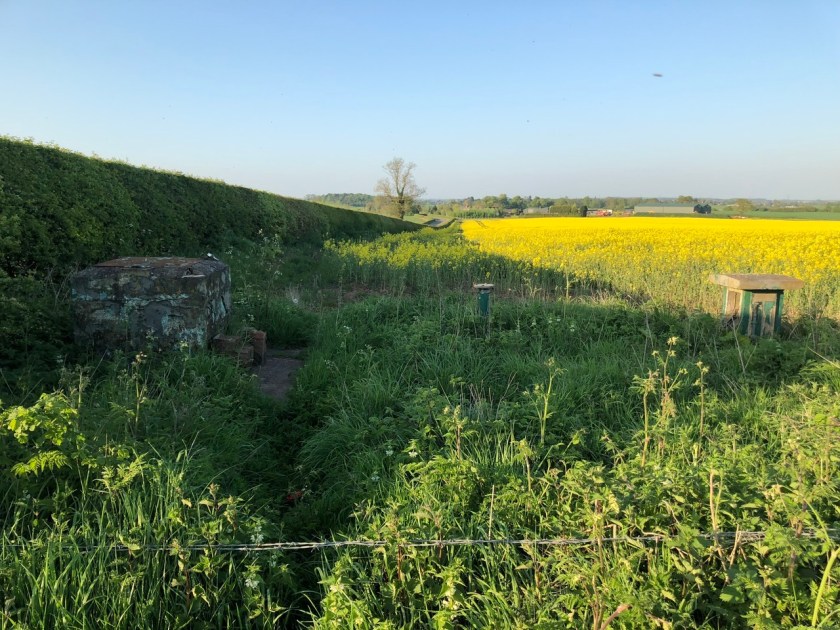
May 6th – Riding back through Haunton to Whittington via Elford, I passed the derelict Royal Observer Corps bunker post at the top of Willow Bottom Lane, just in the corner of the field.

Someone has made a half-hearted attempt to lock it again: It won’t stay locked for long, it never does.

This underground nuclear bunker was intended to house 3 volunteers in the event of nuclear war; they would monitor damage after a blast, and report back on conditions if possible. Their monitoring was on a crude ‘If we survive’ basis, and this bit of Cold War history is obscure and grim.

Since being stood down in the early 90s, these posts – hundreds over the whole country – have been discovered, raided, trashed, demolished and sold; few survive intact and this one itself has been burned out.

But it remains, a grim memorial to a very paranoid time.
You can read more about ROC posts here.

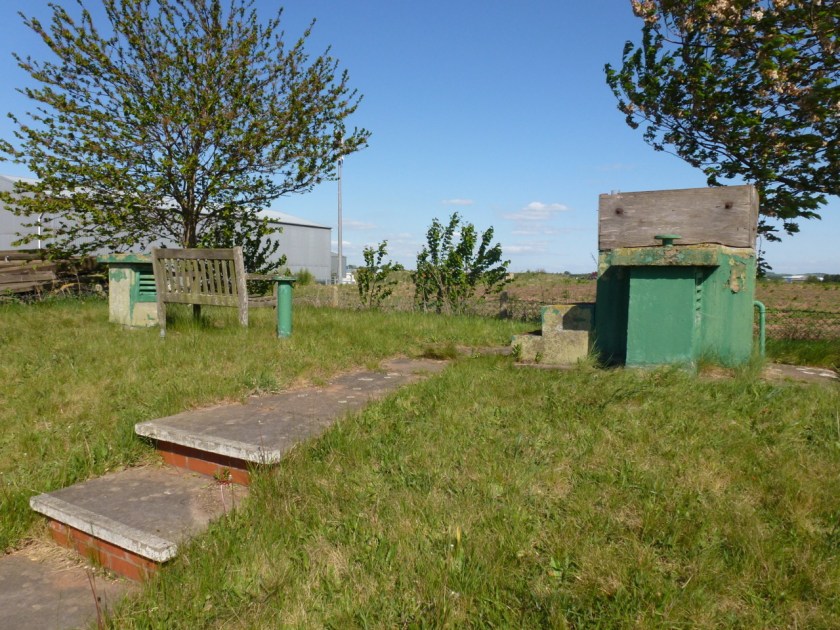
May 2nd – Following on from yesterday’s pillbox, I thought I’d visit a military relic of an altogether different stripe today. Shenstone ROC post is a small, self contained nuclear bunker, designed to hold three operators during a nuclear strike. Their duty would have been to take measurements of radioactivity, blast pressure, weather and air conditions after an attack, record them and report back to central control if possible. The people who trained for this quasi-military role were volunteers, usually ex-servicemen. In a nuclear attack, these men would retreat into this hole, and effectively wait to die of either radiation sickness or starvation.

The British countryside is peppered with these little-known facilities, now derelict after the disbanding of The Royal Observer Corps at the end of the cold war – there are posts locally at Harlaston, Rugeley and Queslett. This one is sealed with a concrete block after fears that it would be occupied by anti-motorway protestors during the construction of the M6 toll.

For more information, bang the term ‘Subterranea Britannica ROC’ into google. A fascinating, very british history.