#365daysofbiking Pondlife

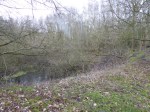
March 2nd – Over between Clayhanger Village and the canal, behind the big house the new pond – created by the removal of Walsall Wood Colliery’s spoil heap in the 1980s – is enjoying its annual but brief period of visibility.

In spring, before the leaves come, once can see the pond, and it looks healthy and full of life.

As the leaves grow, it will become impossible to see – but it will frequently be heard when the roosting waterfowl that love it so will squabble and bicker.

The fact that nature is thriving on this once very polluted, barren place fills me with joy.

This journal is moving home. Find out more by clicking here

from Tumblr https://ift.tt/2Ua4I05
via IFTTT

October 13th – On the canal bank just above the new pond in Clayhanger, two large, flat stone blocks lay in the grass, as if they’ve just landed randomly. I bet few folk ever notice these, or wonder what they are, but they are the last physical evidence of the industrial past of this peaceful place.

The path that runs from here to the west of Clayhanger follows the line of an old mineral railway, serving Walsall Wood Colliery which used to be just the other side of the canal. The line crossed the cut here via an over bridge, all trace of which has gone.

Except for these capstones, which stood at either end of the bridge parapets. 

A third is in the new pond, placed there as a stepping stone when the pool was created following the removal of the spoil heap that stood here for a few decades after the colliery closed. Like some post-industrial Brigaddon, it emerges in dry summers. 

I’ve never found the missing fourth one, but I bet it’s around, somewhere.

They are all that remains, and how many ever realise the history they belie?

February 1st – Just on the rough side of Brownhills Common, a handful of yards from Coppice Lane, there’s a deep void in the land through the trees It may be the remnant of early surface mining, or the later evidence of hamfisted mineral exploration (the coal here was evident on the surface, so it was said; the grey clay also highly prized by potters), but it’s been here for decades; the spoil is piled up around it in mounds with fairly mature trees growing from them, which must date from around 1977, as the year previously, the whole of this side of the common had been flatted by a grassfire.

Every landscape tells a story This one tells of an industrial, blighted past, which we now sort of revere.

Brownhills holds some of it’s oldest secrets closest, but in plain sight.

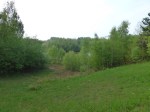
May 20th – On my way home tonight, I hopped onto the canal towpath to enjoy the pleasant evening and see if we had any cygnets yet. Sadly, the swans still seem to be sitting, but I did notice how green and lovely the new pond was looking at Clayhanger. It was wearing it’s summer jacket gloriously well.

This site used to be a spoil heap from Walsall Wood Colliery, consisting mainly of grey clay, coal washings, slack and assorted rock detritus. In the early 1980s, it was excavated and used to cap the former refuse tip on the other side of Clayhanger Lane. The void left behind was landscaped, and lined with red marl and sand. It’s very hard to see any hint of the industrial  history at all.

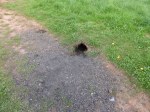
Today, that grubby history was evidenced near the canal bank. At the top of the slope, a digging animal – most likely a fox – has started to burrow, and abandoned the hole after a short dig. Just a few inches below the red clay surface, a whole spread of coal tailings has been brought out. 

Must have been a hard dig, that. History makes itself evident in the oddest of ways, sometimes.