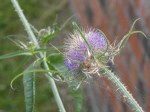
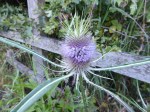
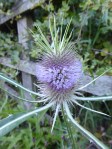
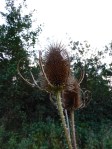
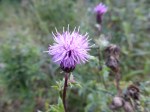
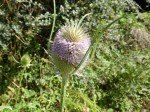
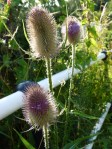
August 19th – One of the more startling recolonisations of recent years has been the teasel. This dramatic, prehistoric looking plant grows a familiar, spiny seedhead beloved of small songbirds, particularly finches, but the name teasel comes from its industrial use as a comb for ‘teasing’ wool into thread.

When I was young these were a rarity around here, and I never saw one of these tall plants until adulthood. Now, thankfully, they are profuse and in lots of wayside hedges, scrubs, meadows and field-margins – which is helping the bird population.
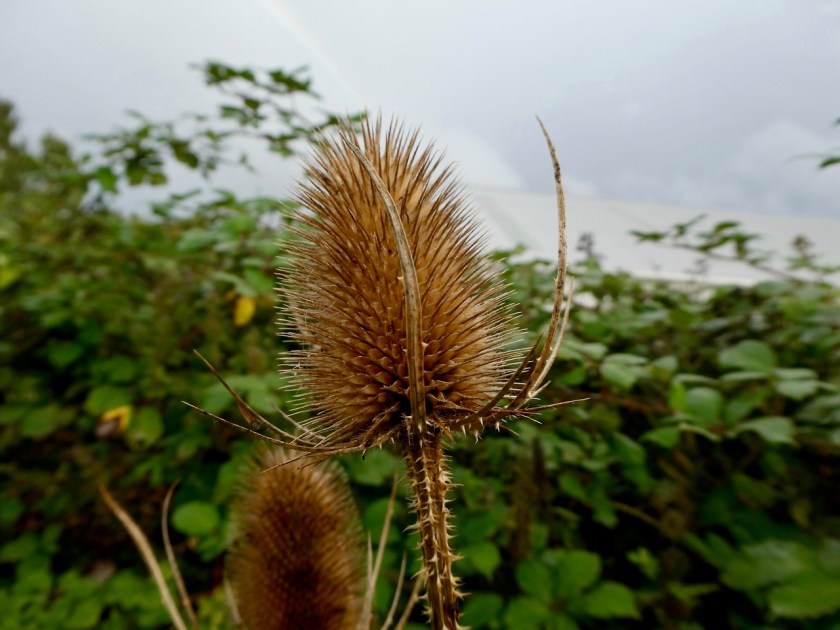
September 18th – It was grey and just after heavy rain when I returned to Brownhills. There traffic had been bad I I hit the canal through Central Brownhills. 

On the old cement works bridge, teases grow well every year, and this year there are a fine crop, looking as prehistoric and alien as ever.

These wonderful weeds go largely unnoticed, but they are fascinating. Taking their name from their utility for teasing out cloth and yarn, they now provide winter food for songbirds, particularly goldfinches.

August 11th – I think this is an interesting submission for seven days of wildlife. The teasel currently sprouting from Catshill junction Bridge in Brownhills is flowering, and clearly attracting the bees. 

Anything that helps the fellows in stripy jumpers is great by me – and I’d never studied before how intricate these almost prehistoric-looking blooms are.

An interesting find on an otherwise dull day.

July 27th – On Clayhanger Common, there is a thriving population of teasels. A spiky, spiny, purple, prehistoric-looking plant, our ancestors used the dried seed heads to tease wool and fabric. 

Some of these plants – once a very rare sight in these parts – are six feet tall now and in rude health. A fine symbol of the biodiversity and health of the common here – which only 35 years ago was a polluted, barren and filthy refuse tip.

September 26th – Winging back along the canal to Brownhills, I took another scout along the fringes of Clayhanger Common. Locals will know that 40 years ago, the was a benighted site of contaminated land used as a refuse tip. Careful and brave reclamation in the early 1980s saw the lad reclaimed and planted, and this is the result. Even with autumn on their heels, still the thistle, bindweed and meadow cranesbill are flowering strongly, teasels stand tall and ripe, and the shiny black gloss of elderberries hang heavy on the boughs. This is such a long way from how this land was, and something everyone in Brownhills should cherish and be proud of.

August 12th – The teasel, or dipsacus – is a great plant. Alien-looking, spiky, provider of food for finches and small birds, it grows in meadows, scrubs and hedgerows. Once used for teasing out cloth (hence the name), it’s now spread as a wildflower. These examples have matured beautifully on the wild embankment at South Wigston station, and were, unusually, the only colour there today to speak of, yet by the look of the rosebushes, we’re due an excellent crop of hips in all their red-orange glory.

August 9th – Teasels are a relatively new addition to the flora of Brownhills, I never used to see them as a kid. I think when Clayhanger Common was seeded after landscaping, teasels – in this case common or Fuller’s – spread from there to the immediate commons. Here at the old cement works bridge, over the Wyrley & Essington canal at The Slough, they’re growing on the trail edges of the former railway line in abundance. They derive their name from their use – as a comb in fabric processing, used to tease or raise the nap or fluffiness of materials like felt and wool.

They’re a lovely, fascinating wildflower. It’s good to see them spread.