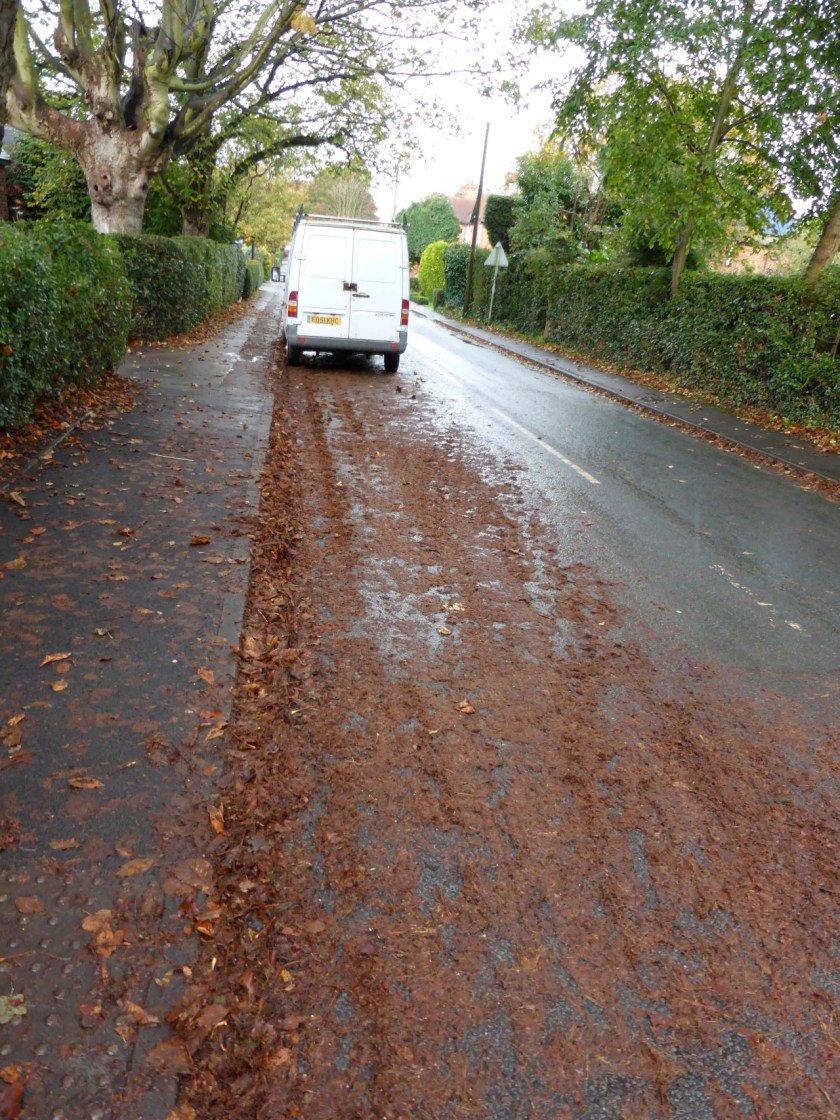
November 5th – In Shenstone, a timely reminder of the season. The roads were thick with leaf pulp, caused by the action of traffic on fallen leaves. It looks muddy, but it’s also soapy and greasy. Hitting this goop on road tyres can be a sobering experience as it’s apt to steal your wheels from under you; the balsam and sap mix to form a lubricant that remains, even after the debris is removed, so take care anywhere where there are overhanging trees – from up on the Chase, to residential suburbia. 

October 27th – I’m not one for religiously washing bikes, preferring the patina of grime that shows a bike is well used, and also makes it less attractive to thieves. However, the mud gathered on my bike over the past couple of days is loaded with pine needles and grit. These, over time, will get into moving parts and for a sticky, resinous paste that will accelerate wear and attack paint and metal. As soon as the weather clears it’ll be out with the Muc Off spray and a hosepipe. 

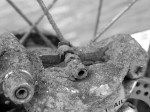
October 21st – Time for a techy bit. Disc brakes are my favourite kind of bicycle brake – resilient, reliable and good in the wet, they need care if they’re to maintain performance. The brakes on the current commuting bike are hydraulic, and very powerful; they eat brake pads, especially in wet weather. In the wet, the grit from roadwash and grindings from the pads and disc combine to make an abrasive paste that makes the brakes noisy in use and causes wear to all braking surfaces. After a wet ride, wherever possible, I flush the discs in clean water to clear any residue off. If this is ignored, larger particles become embedded in the pads and score the disc surface, impeding performance and causing high-pitched noise.

I’ve also noticed with these appreciable wear on the discs. These were changed 3,000 miles ago and I can feel now feel quite a step between the surface and unworn part of the disc.

If your bike has disc brakes, look after them, and they’ll be there when you need them. It’s especially important in weather like this. 

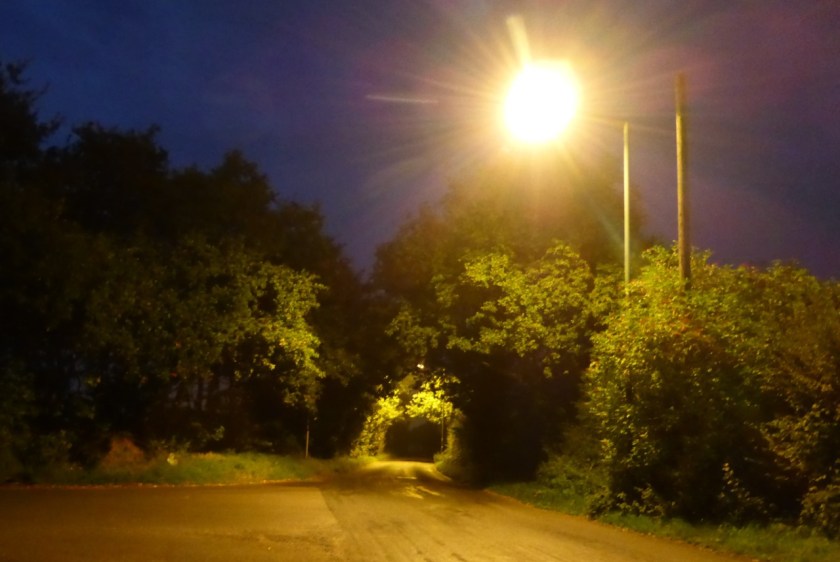
Septemebr 24th – I came home after a late finish at work full of cold. Still struck low with the weekend’s bug, the going was hard. The dusk fell during the commute, and I became painfully aware that we’re now in the few weeks where drivers seem to be re-learning to drive in the dark. I don’t understand the psychology at all, but up until about the end of November, driving standards at dusk will be very poor. Left hooks, getting pulled out on, overtaking into oncoming traffic. All tonight. I had bright lights and a generally decent road position. There must be a reason for this, I see it every autumn.

Be careful out there, folks. You never know what’s lurking at a bad junction or beyond the oncoming headlights.

September 1st – Seasonal warning. Yes, it’s the hedge cutting season again, when our farming brethren flail the hawthorn hedges, in turn leaving the roads stewn with thorns made of some material that just glides into tyres. If you’re not rocking puncture proofs, avoid Gravelly Lane in Stonnall right now. It’s also quite grim up in Footherley too.

I don’t know why they don’t make weapons out of the same stuff hawthorn spines are made of. They’d never go blunt and pierce absolutely anything.

Like the Murphy’s, I’m not bitter…

July 28th – Cycling after flash rains at the end of a dry spell is dangerous. The torrent washes down sand, stones and detritus that lurk in bends, hollows and adverse cambers waiting to steal your wheels from under you. The stones are the worst – they’re like cycling on black ice.

This patch lies at the junction of Cranebrook Lane and Boat Lane near Hilton, north of Stonnall.

Take care, take it steady, and Look out. 

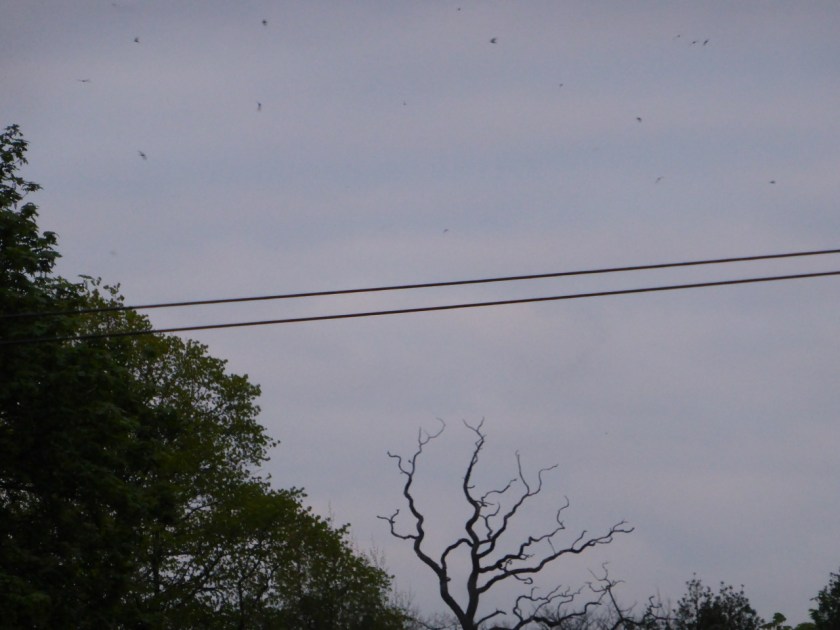
May 18th – A late evening run to the supermarket, and one of the (very few) downsides of the summer was very, very evident; riding over Chasewater Dam the air was thick with midges and other bugs, which can be seen if you click on the image above. Glasses are essential to prevent them getting in the eyes, and they get everywhere – in you shirt, ears etc. Over the next few months my protein intake will crank up by a fair percentage.

Annoying, but one of the hazards of the season.

April 8th – It’s that time of year again. Following the big freeze, potholes and fissures open up in the roads. This is a normal process caused by wear, and the hydraulic shearing action of water under vehicle tyres. I notice many main roads have suffered this year – maybe worse than the side routes. Here at Lichfield Road, Sandhills, ice seems to have lifted and crazes the tarmac, which has broken down to grit – itself dangerous to the incautious cyclist.

Report anything like this directly to the appropriate council using http://www.fixmystreet.com – it’s free and surprisingly effective.

April 4th – Time for my usual post-snow warning. The roads are murder at the moment, especially ones where snowploughs have been used. What’s happening is that melting snow that collected grit, marbles and detritus from the road, is concentrating the horrid payload and depositing it on the surface where many cyclists ride.

Hitting the polished gravel – known as marbles to motorcyclists – that gathers over junctions, on cambers and in gutters can be like hitting black ice. Silt and mud can conceal deep potholes and steal your wheels from under you. Debris like sticks, branches and littler can jam your wheels. Until the wind, rain and local authorities have done their cleansing thing, be careful out there.

January 18th – Cycling in the snow presents its own unique pitfalls, hazards and skills, and over the years, I’ve learned the best tricks I can. For cyclists out there considering cycling in the snow, there’s some stuff to watch out for. Beware speed humps, potholes and the edges of roads, which hide beneath the snow and take you by surprise. Watch out for the large lumps of compacted snow and ice that litter the busier roads; they drop off vehicles, and look soft and slushy, yet are usually rock hard. Try and ride in the centre of lanes where possible, and note that virgin snow is often easier to cycle through than mobile compacted ice in vehicle tracks. Beware of large chunks of solid ice that sweep from HGVs and vans – vehicles with tarpaulins are a particular hazard for that. Keep changing gear frequently, to prevent your cable from seizing, and use brakes as little as possible. Relax, and go where the bike takes you.

Since urine contains urea, a natural deicer, peeing on a gear mechanism or brake can free it and get you home.

Take it easy. Ice doesn’t forgive speed.

Riding in this weather is fun, but take care, and it’ll be really enjoyable.