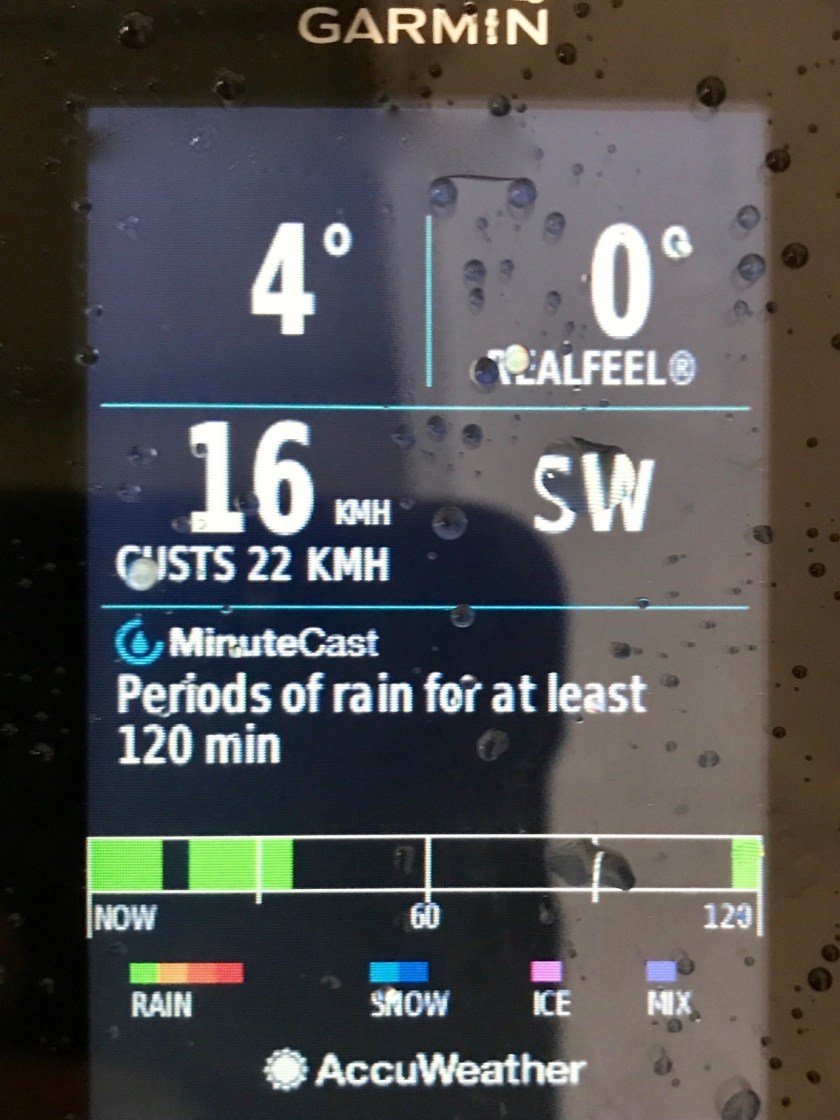
February 28th – After some grim weather over the last few days, I thought I’d seek out a weather app for the Edge, the Garmin GPS based bike computer I use. I’ve tried Accuweather, and it’s really rather good.

Accuweather loads via the Garmin IQ App Store, and uses a paired iPhone or similar to access internet weather data; it then gives what I’ve found to be fairly accurate predictions of wind and precipitin for the next two hours. It’s in an easy to read format, and if free of charge.

Being a widget, it’s accessed by swiping sideways from the pull down status screen, which had me fooled for a bit. It only loads data when accessed, so it’s power and phone plan friendly to boot.

It accurately predicted the rain that dappled the screen…

February 23rd – Back to brakes. This has really caught my attention, sorry.

Following the brake trouble I’ve talked about where pads suddenly lose effectiveness in my hydraulic disc brakes, I’ve decided to try alternatives to the stock Shimano pads. 

I wasn’t expecting them to be any good – I was wrong.

I’ve tried the Kool-Stop first. This company makes a very highly regarded road brake block, and I was interested to see how that translated. After initial disappointment, I’m actually quite impressed.

These resin pads are described as having a ‘rotor saving compound’, which usually means they’re soft and not too effective. My fears seemed to be confirmed on the first two or three days of use, when stopping power was poor and the brakes noisy. 

I then rode in the rain. This appeared to bed the pads in and they’re now every bit as good as manufacturer originals in use. They aren’t quite as snatchy, which is good, to be honest, but they do bite when demanded.

The question is, how long will they last? We shall see. But my initial feeling is that although they took an age to bed in, they’re great pads.

February 18th – Brakes. Can’t keep stopping like this…

Thanks for all the suggestions for answers to the sudden loss of braking power issue. The disc is not greasy, the pads are dry and the disc is only 0.06mm down from new thickness – although that one really did make me think, so cheers for the suggestion.

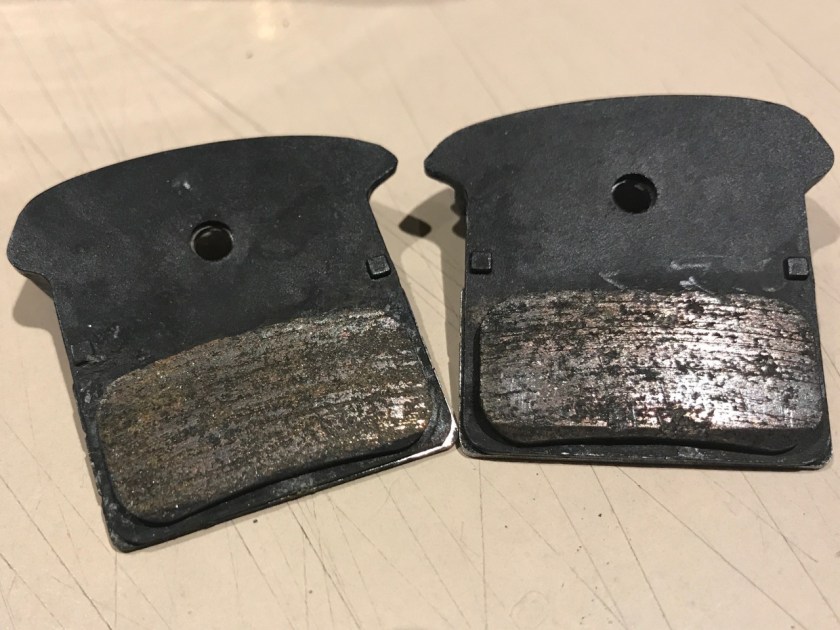
I put in a set of Shimano pads. They worked fine once bedded in, without cleaning the disc. The old ones look glazed, and seems to be a grumble in online bike forums. 

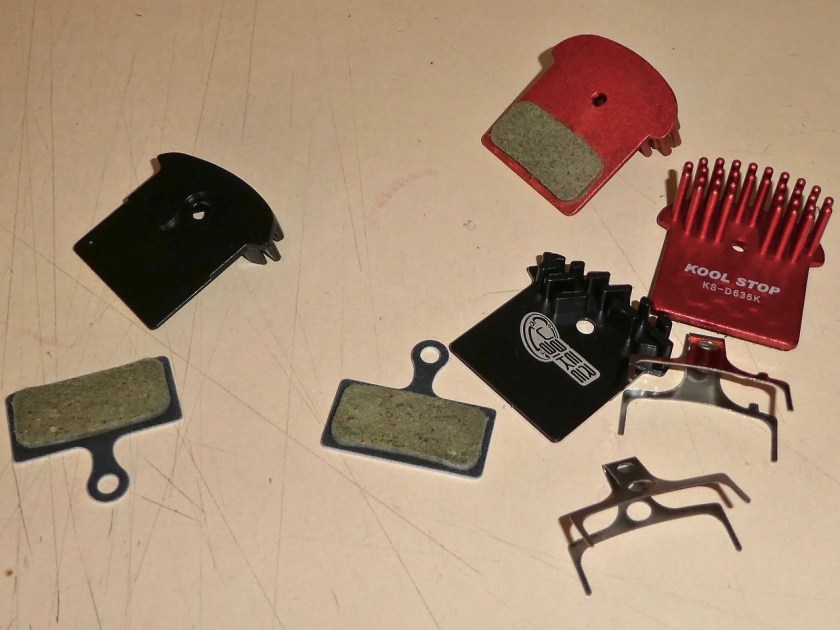
I’ve decided to trial some aftermarket alternative pads to see how they fare in comparison – the red ones are Kool Stop, who are famed for old-style brake blocks, and the other set, with separate heatsinks are from Uberbike. The Kool Stops are at the pricey end of the market, the others, cheap. The interesting thing about the Uberbike ones is they come in synthetic, metal and semi-metal flavours, and you can buy the pad separate to the sink, so they’re cheaper.

Got the Kool Stops in for now. I’ll report back. Again, thanks for all the advice.

February 9th – A puzzle, for sure. Shimano metal sintered disc brake pads for hydraulic brakes: what happens to them that renders them useless beyond recovery?

Usually the rear set, all of a sudden they loose stopping power,  and often become screechy. They are not contaminated with oil, although it feels like it. Deep cleaning in the dishwasher doesn’t work. Ultrasonic cleaner with solvent doesn’t, either. Neither does surface grinding as much as .75mm off the surface.

It’s like they just glaze, and some structural or metallurgical change takes place, and that’s it. Only thing to recover stopping power is new pads. Or using them in the rain; when wet, and only then, do they stop better.

At £20 a set, this is not fun. Anyone any ideas please?

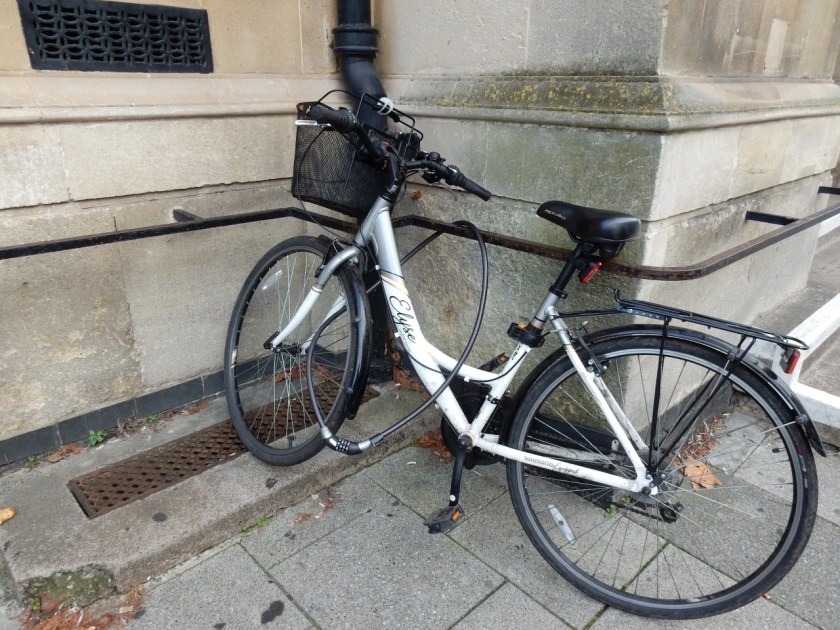
February 3rd – Also on the square, the tell-tale sign of a secondhand steed.

This road bike – a Carrera (Halfords own band) low end job – has been clearly bought by someone who’s a wee bit too big for it. The saddle is so high as to make the geometry look unsettlingly wrong, and the steerer – the fork tube the stem and handlebars mount from has been extended by a ‘suicide’ riser. This is a device to increase the height of the bars relying on clamps to keep it secure. 

Often the clamps slip or come loose, hence the nickname.

Finally, the flat bars are far from original.

People, buy a bike that fits, even secondhand. It’s a lot safer and comfier in the long run.

January 25th – It perhaps hasn’t become apparent yet to most folk, but to cyclists and those bound to the outdoors, this has been quite a grim winter. 

We’ve had far more frosts this year than last, and consequently, there’s been a lot more salt on the roads. The damp but not terribly rainy conditions have led to a corrosive, goopy, sticky road grime that coats the bike and is taking a steady toll, particularly on the wheels and brakes. 

Investigating a rub tonight, I noticed the corrosion on the disc pads, and the badly grooved disc. Aluminium parts are developing a familiar white bloom. There is surface rust on the exposed bare steel surfaces of pedals and bottom bracket.

When the weather clears, all this will need attending to. 

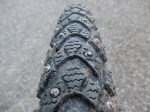
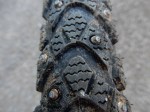
November 29th – It’s time. The winter tyres, with tungsten carbide studs in the tread are back on the bike to hopefully prevent further spills this winter. Pumped up hard in normal conditions, Schwalbe Winter roll easily and quietly; let a little air out when icy and they grip beautifully, and run with a satisfying buzz.

Like many cyclists, studded tyres keep me rolling through the winter.

November 25th – A wee cycling tip for the road cyclists out there. I’ve recently had to replace my bike-mounted pump (I smashed the previous one when I came off on the ice a couple of weeks ago). One problem with frame mounted pumps is they accrue crud, so that when you come to use them, often they’re munged up.

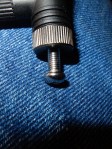
One tip I pickled up off an old touring cyclist (if you use Presta or Woods valves) was the M5 screw in the pump head. Just take a 5mm metric screw, preferably stainless, and with the pump head relaxed open, it should be a comfortable push fit in the open port. 

This stops water getting into the pump body and corroding it, and also stops mud getting in where it has to be removed and stands a change of buggering up the tyre valve. Easy to remove with a nail, blade or Allen key, this tip makes those uncomfortable roadside repairs a bit more bearable.

Cycling wisdom, right there. 

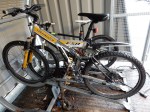
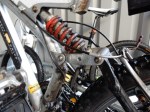
November 23rd – Spotted in a customer’s bike shed, this venerable, full suspension Specialized bike. In the day, I think this would have been a fairly expensive bike and it’s interesting to see the complexity of the rear linkages, which seem heavy and very intricate. Particularly noticeable is the pivot ahead of the dropouts, just on the chain stays.

Obviously well ridden as commuter, it looks like a hard bike to ride on road, particularly with those tyres – but I also note the old school leather shoe straps and general patina of road grime.

Other people’s bikes are endlessly fascinating.