February 6th – I’m also getting used to the regular pebble-dashings from gritting trucks, spreading salt as a de-icer on the roads. As a cyclist, I’m generally quite slow moving, and because I ravel at particular times of day, my journeys often coincide with the council salt runs. On cold days they’ll be out in force, plodding down the roads of the borough, making the surfaces crunchy to ride on.

Many people have a mental block with grit: they expect it to be magic, like fairy dust, and when they find roads still icy, they’ll tell you the trucks never came, or that the council is useless. In reality, spreading rocksalt is not an exact science, and is only to improve conditions, not complete ameliorate them.

Driving skill we still be required after the glitter has gone.

I often feel for the crews, who work long hours on a generally thankless task. So I don’t mind the evening coating of grit.

Up the council gritter!
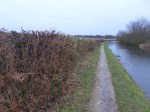
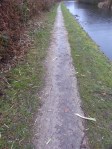
January 12th – Just a warning to local cyclists that today, the hedge alongside the canal towpath at Catshill, next to Lanes Farm, was flailed. On the plus side, visibility is now great again over the hedge – this is important, necessary work that has to be done now before birds start nesting.

On the negative site, the towpath is now unavoidably strewn with that sharp enemy of cyclists across northern Europe – hawthorn spines.

I’ve often thought they should make planes out of the same stuff these thorns are made of – it can work it’s way through some very tough tyres, and causes about 80% of the flats I get.

If you’re not rocking puncture proof tyres (or even if you are) this stretch of towpath is probably best avoided for a week or two.

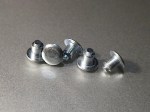
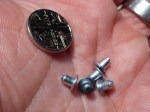
January 5th – A fiddly maintenance job this evening. Studded ice tyres currently fitted to my bike have small, very hard carbide studs in them to grip black ice. They sit in pockets in the tyre tread, and on the back in particular, if you skid on tarmac or brake very hard, they rip out.

Once I’ve lost ten or so, I delve into the spares box and whip out a small bag containing replacement studs, supplied by Schwalbe, the tyre manufacturer. 

By deflating the tyre and pinching the cavity, with pliers one can pop fresh studs in, using a drop of washing up liquid as a lubricant. Fiddly at first, once you’ve got the hang, it’s easy to do.

It may sound overzealous, but for the want of a couple of studs, you could slide. A stitch in time, and all that…

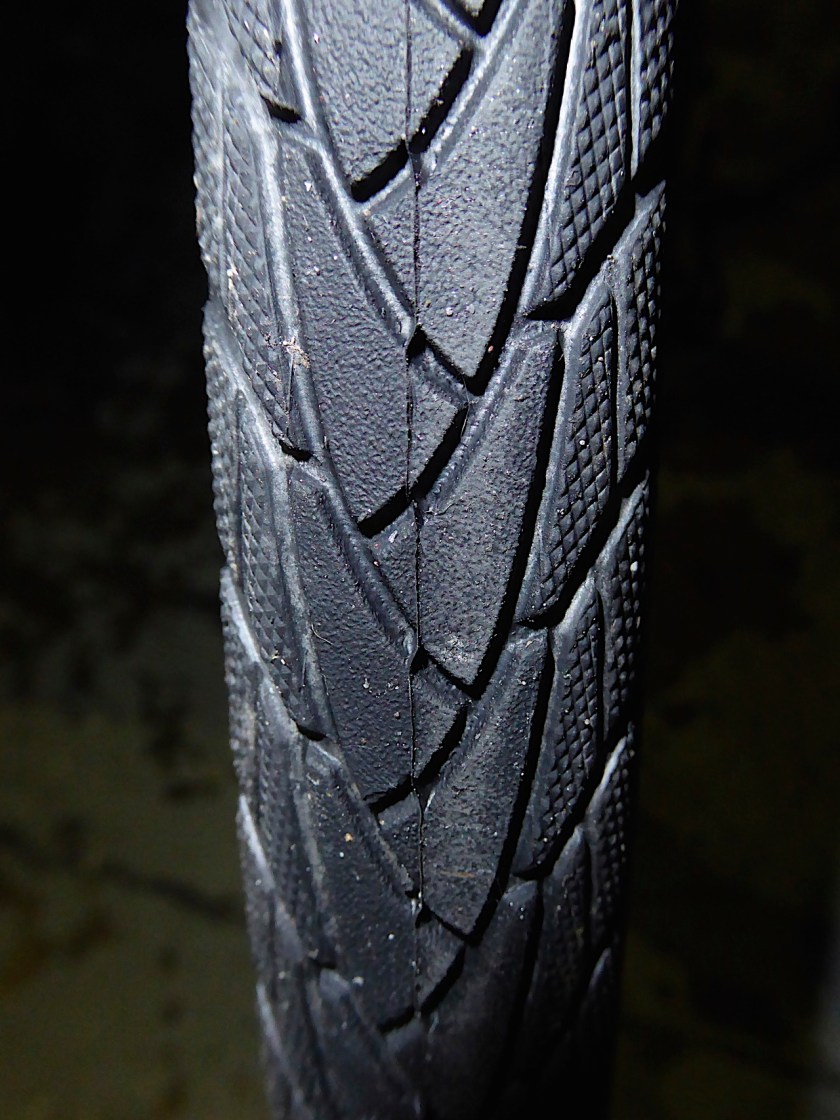
December 28th – The winter boots are on. These Schwalbe Marathon Plus Winter are on their third season now. A 38mm 700c tyre with grippy central rubber tread, flanked by twin rows of proud, carbide studs, they grip well on black ice and make short work of snow. They’re not infallible but give me confidence when cornering and feel sure-footed and secure when the chips are down.

They are, however, noisy in use and not terribly fast; but they’re home for the next few weeks at least.

If you’re out on the roads over the cold spell, here are my tips for safe cycling, even if you don’t have winter tyres…

  • Stick to main routes where possible. Avoid backlanes and canal towpaths.
  • Ride on the road, out of the gutter where standing water freezes.
  • Take it steady, and ease off on the speed – particularly downhill.
  • Use your momentum and judge it – avoid braking where possible.
  • Turn gently without braking.
  • Use your back brake rather than your front, and pulse it don’t clamp it on. Just light touches.
  • Move with the bike. Go with it if it slides, don’t fight it.
  • If you lose the back, you can pull out of it with care. Lose the front and you’re gone. Bear that in mind in a slide.
  • Give other roadusers more space, and consider the consequences if they slide. 
  • Let a little air out of your tyres to increase contact area.

Take it easy, folks.

December 3rd – It was very late when I came home through Brownhills. There was a frost, and the roads, despite having gritted, were glistening in that menacing way winter cyclists know and are wary of.

I’m still rocking he new Schwalbe Marathon Plus tyres I fitted a few weeks ago; these revised rubbers are vastly superior so far to there older incarnation, and they’ve been excellent on wet, greasy roads. I wondered what they would be like on ice, so took them for a run up the canal towpath.

They seemed to hold the track well. Only time will tell, but so far I’m very impressed.

Watch out for the black ice folks, it’s a killer.

November 11th – A word about rubber for the cyclists out there, if I may.

After the spoke failure of last week, I looked at the tyres and decided I’d replace them at the same time as they were wearing out. On that bike I’ve always used Schwalbe Marathon Plus tyres, for wear and flat resistance – a really good tyre. 

When I came to order new one, I find the range has changed, and the Marathon Plus has had a redesign with a new tread design, and what feels like a different rubber mix. 

Been riding these for two days now in mucky, greasy and wet conditions and I must say, they’re a vast, vast improvement. They roll much better, and feel less ‘sticky’ than of old; at 100psi they’re hard but grippy, and feel much more sure footed. 

So far, I’m very, very impressed – but time will tell how they wear and if the flat protection is as good – it certainly seems as thick.

November 7th – This is annoying. Just about every bike wheel has spokes of some sort, and their job is critical and load-bearing. As you ride, the spokes on the bottom of the wheel are in compression, and the ones at the top in tension, and as the wheel spins, the spokes are alternately pushed and pulled.

The do a lot of work considering they’re just 2mm diameter bits of stainless steel wire.

I carry lots of weight on my commuting bike – anything up to 20 kilos, and together with my resplendent girth, the wheels come under some stress, particularly on the pothole-strewn backroads of Walsall.

On Thursday, the bike felt odd on the back end. An inspection showed me that three spokes had broken, which need to be replaced. That’s a pig of a job, especially as they have broken at the rim end, which means removing the tyre and rim tape and replacing the nipples.

Today, I procured replacements and hoped to do the job when I got in – but it was far too wet and miserable.

I don’t know why the spokes failed; probably just excess weight and fatigue. But I’ve now lost trust in that wheel and wonder what else it has in store for me…

November 4th – The darkness hasn’t seemed to affect me as much this year as it normally does, or indeed, as badly as I expected. It normally makes me weary, depressed and listless. Maybe because we’ve had such a fine autumn and summer, I don’t feel it this year at all.

Of course, it makes for a change to habits. The days of casually throwing a jacket into the bag are over, as are the days of fingerless gloves. Warm hats, thermals and scarves will soon be on the agenda. 

Lights are clean and fully operational, and at certain times, the hi-viz is on (although one has to consider that in low sun or bright days it’s worse than dark clothing for visibility).

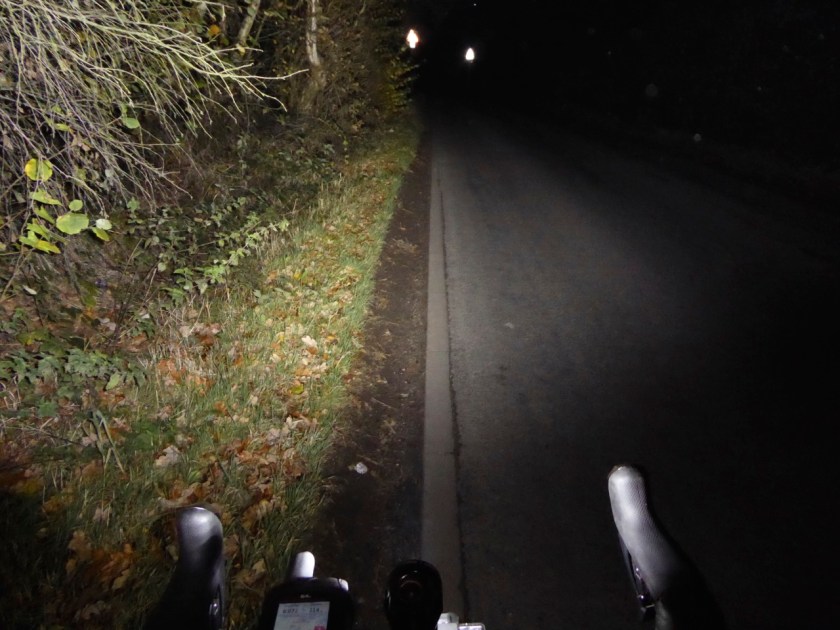
Here at Green lane in pitch dark, the advantage and necessity of good ligts is clear. This image taken without a flash.

That’s a Hope R4 on low, by the way.

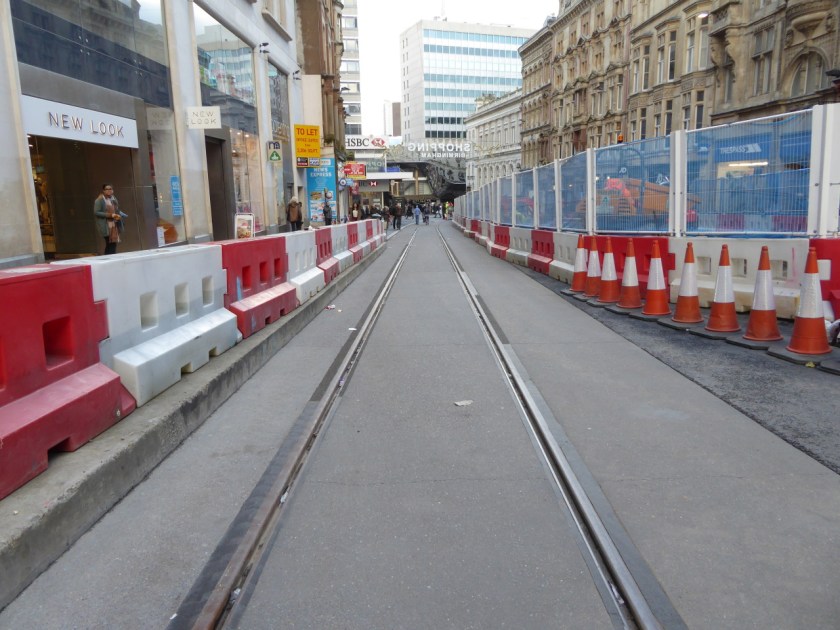
November 3rd – Just around the corner in Corporation Street, a new hazard to urban cyclists in Brum; tram tracks. With a groove just the right dimensions to swallow and lock my wheels, I rode between the parallel lines with care, remembering the northern European practice of crossing them at oblique angles. 

The new tram line is sure to catch a few incautious cyclists though, so beware people. I do like the Metro and support it’s expansion, but this one hadn’t crossed my mind until today.

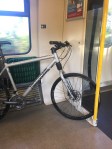
October 1st – Spotted this bike on the train today. It’s a Cannondale, a brand I’m not keen on, mainly for their curious approach to design and resolute defiance of industry standards.

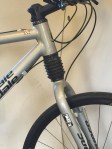
I snatched these images on the phone, as the owner was clearly happy with his new steed. The bike has an interesting feature – ‘Headshok’ suspension. Rather than conventional front systems, where both fork legs travel together and work in tandem,  this system is at the fork crown, and much of the mechanism – dampers etc. – is in the head-tube and between crown and fork.

Initially appealing, it means all the load in work is on one member, rather than two; the system is utterly proprietary, and requires frequent, expensive, short milage interval services. Finally, you only have to look at them funny and they stop working.

There are avid Cannondale fans out there, and many love Headshok. My experience was that it was a whole bag of hurt.

I wish my fellow cyclist all the best of luck with his new bike. I think he’ll need it.