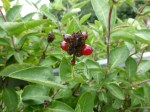
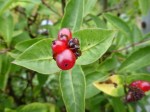
August 13th – Honeysuckle berries are unpleasant, and in most varieties of the plant, slightly toxic to humans. The berries of the most common hedgerow species I see are crimson and sticky, and beloved of birds and bugs. If you can catch them before they’re devoured, they’re beautiful, like jewels, almost. These are growing near the cycleway in Pelsall, where it crosses Mill Road. Note the airborne grime stuck to the surface of the fruit – this is why foraged stuff should always, always be washed.

But don’t forage these, they’ll make you ill…

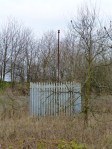
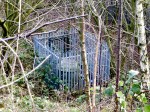
February 23rd – Evidence of subterranean systems of an altogether more sinister nature can be found dotted around the borderlands of Walsall Wood, Shelfield and Aldridge. These odd enclosures – one in the fall towards the marl pit by the Brickyard Road canal bridge at Stubbers Green, and the other, on scrub near the end of Dumblederry Lane in Aldridge, are grim reminders of what lies beneath. They are access boreholes to the mine workings beneath, filled with millions and millions of gallons of toxic waste, dumped there after the mines closed. The dumping, over the course of a couple of decades, was freeform and barely regulated. The current operators of the site from which this dump is accessed manage it carefully. The boreholes, of which there are a number, are fenced and secured for obvious reasons. The one at Dumblederry lane has a breather valve fitted, to vent gas safely into the atmosphere.

August 16th – It is time again for the annual warning: there’s a killer in the hedgerows right now. These stalks of what will become bright red berries grow in hedges, woodlands and other scrub, and grow 6-10 inches tall. Very distinctive, Lords and Ladies is very attractive, particularly to kids, but is one of the most toxic plants in the British Isles. This still ripening example is growing on the woodland water margin of the River Arrow in Redditch.
The berries of Arum Maculatum, also known as Devils and Angels, Cuckoo Pint or Wild Arum contain a poison that causes swelling of the mouth and throat and sickness. Fatality is rare, as the berries are very acid and consuming enough to kill would be a challenge, but the plant causes most admissions to A&E for plant poisoning in the UK.
It’s a gorgeous thing to look at, just don’t touch it, and keep small children away.

June 20th – Readers seem to be enjoying the wildflower theme of late, so today I decided to continue with it. Ragwort gets a bad press, somewhat unfairly. A member of the daisy family, it’s host to a number of butterfly, moth and insect species. Yes, it’s toxic to horses, but both have co-exesited for many centuries, and modern scares about horse deaths appear to be wildly overstated. Ragwort is a very hardy, tough plant with beautiful yellow flowers, The buds are particular works of organic engineering, too. Sadly, all too often overlooked for less common specimens, it brings a dash of colour to field, scrub and verge throughout summer. These lovely examples were growing on a patch of scrub by the M54 embankment in Telford.

June 13th – Foxglove is one of those odd flowers steeped in half-truth and folklore. I spotted this lone one this evening as I winched myself up Shire Oak Hill near Sandhills.Poisonous? Yes, very. Deadly? Can be, particularly the young leaves. Beautiful? Certainly. I adore foxgloves. They should never be picked, and children should be taught to avoid them, but they have great medicinal use, as well as having the more sinister reputation that once christened them ‘dead mans bells’. Digitalis produces medically active compounds that can be made into cardiac drugs, and also a steroid used in the detection of DNA and RNA. Truly a remarkable plant.