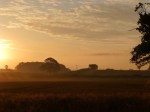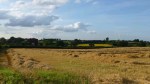
August 15th – Meanwhile, back at Springhill, near Stonnall, the harvest continues apace. Two days ago, this field behind the pumping station was a ripe crop of wheat. Now, all traces of grain have been stripped by the remarkable efficiency of modern grain harvesting machines. All that remains are the neat rows of straw, waiting for baling.
Straw in this state is described as being ‘in swath’ and is often auctioned for the buyer to come and bale it themselves. Straw has near zero nutritional content, and is mainly used as bedding, and therefore carries a low commercial value.

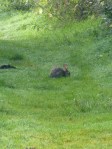
August 14th -The rabbit population, after being recently ravaged by myxomatosis, seems to be in recovery. EverywhereI go now I see lots of the cute little fellows: this delightful lady was grazing on the bridle way in Arrow Valley Park. Right in the centre of Redditch. There are factories and a main road clanking away not more than 100 yards from here.

August 13th – The proliferation of beans planted as a crop on local farms this year is intriguing me. I’m interested in how they’re harvested, what they’re used for and why, for instance, this field at Lynn, near Stonnall, is being allowed to die and blacken. I know that growing legumes is a valid and effective crop rotation technique to nitrogenate the soil, but letting the crop die is surely a waste, unless they’re used black. An interesting thing, for sure…

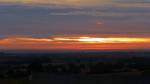
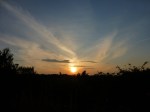
August 13th – Out at sunrise and off to Redditch for the first time in a while. Coasting the top of Shire Oak Hill, I noticed the sunrise was looking good from the landfill entrance on the Chester Road. This time of year, the sunrises are usually excellent. Shame the same can’t be said for the weather at the moment – after a few days of warm, welcome summer, it’s back to overcast skies and drizzle. The day turned grey and wet by lunchtime…

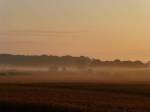
August 12th – Computer bother kept me busy all day. I’m a mac user,and one of the really great things about Apple macs is that they don’t often let you down, but when they do, it’s a major pain. I spent the day recovering from backups and generally being stressed. At sunset, I ventured out for a ride to let off steam. I took a look around Clayhanger Common and the pond at Clayhanger in a gorgeous, misty golden hour. There was a partial temperature inversion, and a peculiarly concentrated mist hung over the meadow near the old railway embankment. A very ethereal evening indeed.

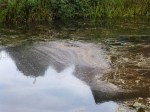
August 11th – An afternoon recovery ride around Chasewater and Lichfield to keep my legs moving. At the canal by Catshill, there appears to be a film on the water. It always concerns me when I see this, as folk tend to think it’s pollution: it is, and it isn’t. It’s perfectly natural, and not man-made. The film is fibrous seed matter from thistles, willowherbs and other wind-seeding plants. 

An odd phenomena that soon passes.

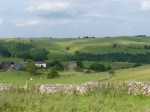
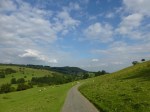
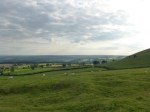
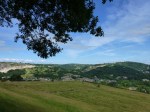
August 10th – The Weaver Hills are one of my favourite bits of Staffordshire. From the floor of the Manifold Valley at Steeplehouse, to the ruins of Throwley Hall; from the picturesque, weathered beauty of Calton Village to the solitude and fine views of The Walk, they are a fine, pagan place. Hell to climb up from either side, but a heavenly descent. This is Staffordshire, the county I adore, at it’s finest. 

August 10th – I did a century, up to Cromford. Starting early, I cycled up the incline and onto the High Peak Trail, and on to Parsley Hay. Back down the Tissington, tea in the village, then off to Dovedale, climbing up to Throwley and on to Calton in the Weaver Hills. I love the Peak District, and as is often said, some of the best bits of Derbyshire are in Staffordshire; the Weavers are, and so is Ilam. It was a gorgeous, sunny, warm day. I had power in my legs, and the sun on my back. It doesn’t get much better than this.

Find out more on my main blog.

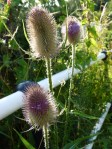
August 9th – Teasels are a relatively new addition to the flora of Brownhills, I never used to see them as a kid. I think when Clayhanger Common was seeded after landscaping, teasels – in this case common or Fuller’s – spread from there to the immediate commons. Here at the old cement works bridge, over the Wyrley & Essington canal at The Slough, they’re growing on the trail edges of the former railway line in abundance. They derive their name from their use – as a comb in fabric processing, used to tease or raise the nap or fluffiness of materials like felt and wool.

They’re a lovely, fascinating wildflower. It’s good to see them spread.