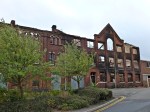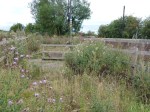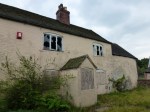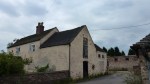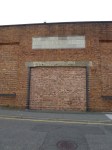
August 18th – It’s arguable that the most powerful economic force in the development of modern Darlastion was GKN, or Guest, Keene & Nettlefolds, a fastener manufacturing company that, until the 1980’s, loomed large in the Black Country industrial psyche. GKN had massive factories in Eastern Darlaston along Station Street, and companies that supplied them and competed were attracted nearby by the availability of skilled labour – Companies like Charles Richards, Kinnings Marlow and Deltight. GKN, of course, are still a massive powerhouse in British engineering, yet in the 1981, decided to end fastener production in the UK. Tens of thousands in Darlaston and Smethwick were made redundant. These were not just factories, but communities, that had their own doctors, carpenters and decorators on site. The National Blood Service used to come here for days on end, and blood donation was seen as an easy break by many of the workers who donated blood.

Here at Station Street, the GKN buildings remain, now housing ZF Lemforder and Caparo, both shadows of the manufacturer that abandoned Darlaston to the Wolves. GKN’s footprints are all over this town, and ingrained into the social history of this proud place.

August 17th – The architecture of Darlaston – as I mentioned a couple of posts ago – is surprising and beautiful. There are some really grand, ambitious, but dignified buildings in the centre of town, yet who outside of Darlaston knows? Have you ever seen such a lovely post office or cop shop? Welcome to the real Black Country. It has a habit of taking your breath away.

August 16th – When I made my predictions last month for the next historically significant Walsall building to die tragically in a fire, I forgot about the former Jabez Cliff works. A beautiful victorian building, left to decay with lax security. It had become a magnet for vagrants and junkies, so I guess it was only a matter of time. Yesterday, it was pretty much gutted in a very large fire, the extent of which was clear as I passed this morning. By my return this evening, the beautiful frontage had been demolished. Still, it’ll be much easier to build new stuff on the site now that the troublesome old pile is gone… and with it, yet more of our precious heritage.

Why does nobody in power at Walsall care enough to stop this happening?

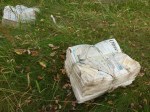
August 14th –  If you’re the publisher of the Sutton Coldfield Observer, it looks like one of your delivery agents has been ripping you off. Several bundles of your paper – unopened, and fresh from the print works – have been dumped on a grass verge near the M6 Toll bridge at Camp Road, Canwell. They date from April, and one can only assume that the person who was paid to distribute them dumped them and pocketed the cash.

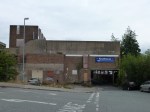
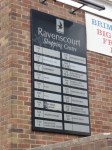
August 12th – Ravens Court – named after Ravenseft, the developers – is the derelict, decaying shopping precinct that forms the focal point of Brownhills High Street. Now almost empty, we’re stuck with it until at least late 2012, when Tesco might, if they get round to it, demolish it and build a new superstore behind. Rather than integrate with the town centre, they plan to build a couple of shop units in the gap, effectively closing the High Street off to the new store. 

Meanwhile, the old precinct – once a hive of business and activity – gently decays, a memorial to lost commercial horizons.

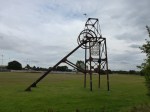
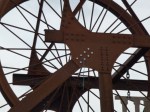
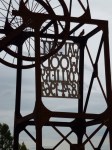
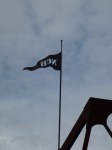
August 10th – My dislike of the Walsall Wood pithead sculpture is well known and somewhat controversial. I actually think that it’s not only aesthetically dreadful, but badly engineered and ill thought out. In the construction, there’s a random mix of stainless steel fasteners and normal ones, which stands out; looking at the frame there are multiple sets of holes that appear to have been redrilled, but this may be intentional. The sign commemorating the pit seems to face the wrong way, and cannot be read from the road, whilst the construction is topped by a pennant bearing the initials NCB, for the National Coal Board. The NCB never actually operated the pit, but oversaw it’s closure, which shows a particular ignorance of history.

August 8th – This annoys the hell out of me. Well-to-do house in Little Aston Lane, Little Aston. One presumes that the owners have left two old video recorders on the pavement for the tatters and scrap men to collect. Lots of people do this – I often see washing machines, fridges and household items left out in this way. After all, they take your rubbish, and make a few bob… What could possibly be wrong with that?

Most scrapyards pay less for contaminated metal loads – those containing plastic and other material – or will not accept them at all. Thus, the plastic parts of these devices will be smashed off. The metal will indeed end up in some tat yard, but the plastic? Look in lay-bys, wastelands and other spots for the flytipped remains of consumer whitegoods and junk like this. 

By leaving stuff out, people are contributing to the flytipping and metal theft plague we’re currently enduring. Tatters are competing for junk to the extent that I’ve seen them pulling metalwork out of the canal, so will take anything. Leaving stuff for them just encourages more of their nuisance. It’s also illegal to give waste to a non-licensed carrier – if this stuff is traced back, you can be prosecuted as well as the carrier.

All because the owner couldn’t be arsed to use the local refuse facility.

August 7th – The renovation of the Hussey Arms continues apace, and the results so far are looking really, really good. After being empty and boarded up for a long time, Greene King are turning this nice-looking building into a family pub under their ‘Hungry Horse’ brand. Intrigued to note they still haven’t sorted that wonky chimney yet…

August 4th – Heading back home, having avoided the promised rain all day, I stopped at Moat Bank, on the A461 near Muckley Corner, to look at the old canal bridge. This was one of the three bridges over the now disused Lichfield and Hatherton Canal between Shire Oak and Lichfield. One was at the Boat Inn, near Summerhill, and gave that pub it’s name. This was the second, and the third was a double bridge with the railway at Pipe Hill. This particular canal arm – now subject to a lengthy and sustained campaign for reopening – linked Ogley Junction, at Brownhills, with the mainline at Huddlesford, Near Whittington. It was a tortuous journey with many locks, the remnants of one can be seen here in the undergrowth.

I wish the enthusiasts working to restore the line well. It’s a huge task.

July 31st – Darnford Bridge Farm sits in the middle of a short, unnamed, decaying, unadopted cut through between the A51 Tamworth Road and Darnford Lane, just on the eastern side of Lichfield. Wedged in between a golf driving range and Lichfield Rugby Club, the farm has been derelict and abandoned for some time. I have no idea who owns it, or why it lies decaying as it so sadly does. The fabric of the farmhouse and building still seems quite good, and efforts have been taken to ensure security. Wonder what the story is?