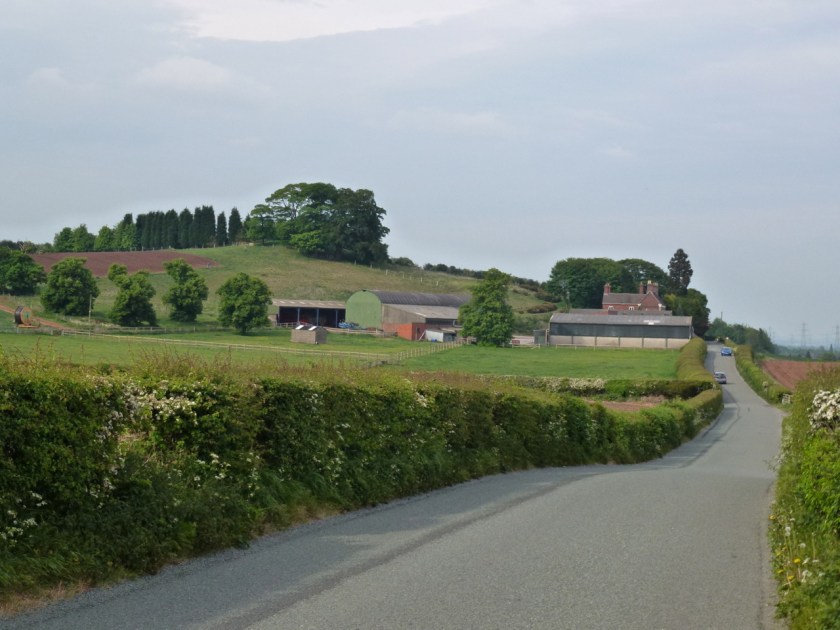
May 7th – I don’t know much about Knowle Hill, near Lichfield. Perhaps this is one for the Lichfield Lore blog, but I suspect it to be some kind of tumulus. Standing on the ridge at the side of the railway, the farm at it’s foot overlooks flat plains to the southeast.

This odd outcrop is a familiar sight to anyone who regularly catches trains on the Cross City Line to or from Lichfield, which passes nearby.

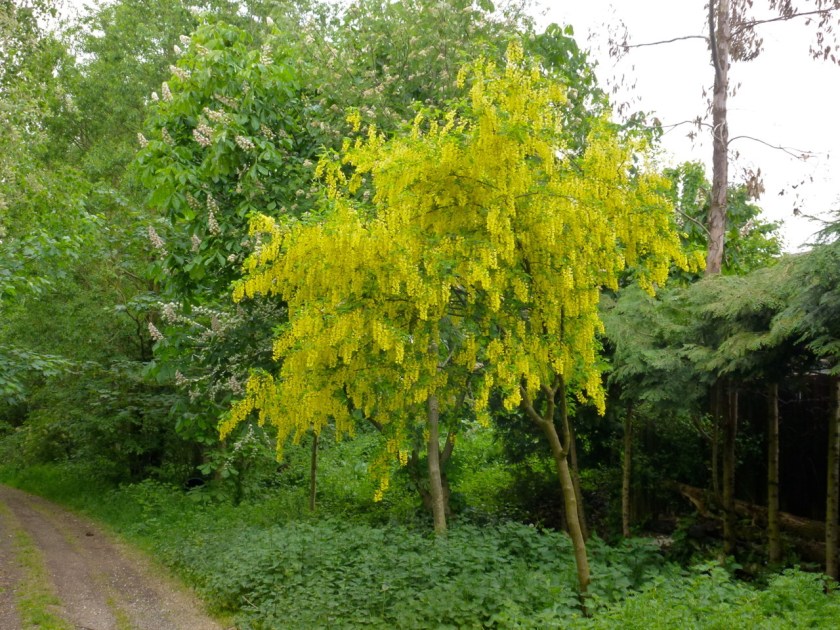
May 7th – A spin up the former railway off Engine Lane, Brownhills, took me under the A5 and heading for Albutts Road, I spotted this fine Laburnum in full bloom at the rear of the Wilkin Estate.Sadly, these beautiful ornamental trees are becoming a rare sight due to their highly poisonous seeds, which children have been known to eat.

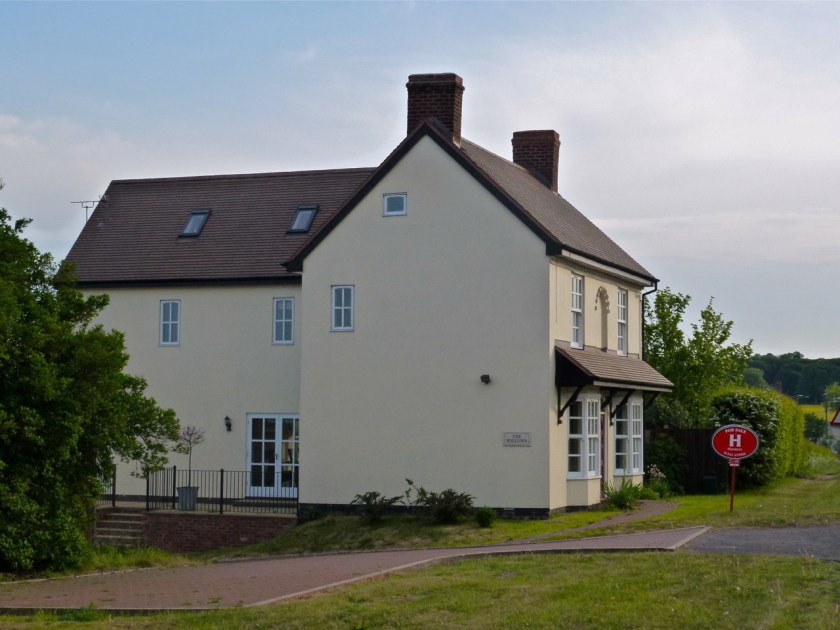
May 6th – conversely, this handsome house has recently been beautifully renovated. Standing at the other end of Springhill, at the very crest itself, The Willows has a surprising and proud history.

This sensitively restored building was once The Red, White and Blue pub, and latterly a plant nursery. It’s a bit sad that the current name doesn’t hint at the extensive history of a lovely building.

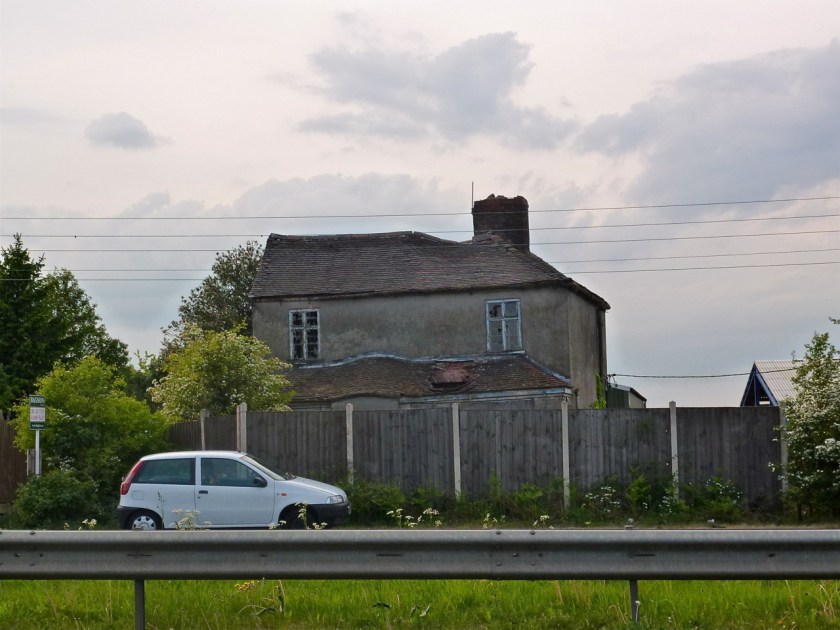
May 6th – A late trundle into Lichfield to get some shopping done. At the northern edge of Springhill, on the A461 Lichfield Road, Ivy House Farm lies semi-derelict.

The tumbledown farmhouse, seemingly already partially truncated at some point in it’s life, is currently up for auction, presumably marked as ’…some renovation required’. There is a second derelict cottage over the fields near the tollroad behind. A interesting mystery. 

May 5th – first wild garlic nasal attack of the season. I love the scent of this woodland plant. Preferring wet, shady areas, this white-flowered relative of the more familiar cultivated variety grows in profusion on the banks of the River Arrow in Redditch. Stopping to investigate this delicious aroma, I came upon a veritable carpet of white blooms. A delightful assault on the senses.

May 4th – Wordsley House, grade II listed building, sits on Main Street, Stonnall, as it has done since at least the late seventeenth century; one roof purlin was found to be inscribed ’S.I.E. 1677’. It has an interesting history as the former Welsh Harp Inn. 

Julian Ward-Davies, in his excellent Stonnall Mysteries thesis, notes the following:

As we continue down Old Chester Road, we pass by Wordsley House on the left, which embodies our next mystery. This is now a private residence, but once it had a very different function. This house was once nationally famous as the now almost legendary Welsh Harp.

Now we may ask, how it was that an inn in the English Midlands took such a name. The explanation is, as I see it, the same as it is for the naming of the Irish Harp at Chester Road, Mill Green near Little Aston. As we have already noted, Chester Road was a major route between London and North Wales. Thus many of the people en route were not only Welsh, but there was also a very high proportion of travellers who were Irish people on their way to and from Holyhead, where there has always been a major connection to Ireland. Thus the Welsh Harp and the irish Harp provided, supposedly, a home-from-home ambience for the straightforward commercial purpose of attracting more customers.

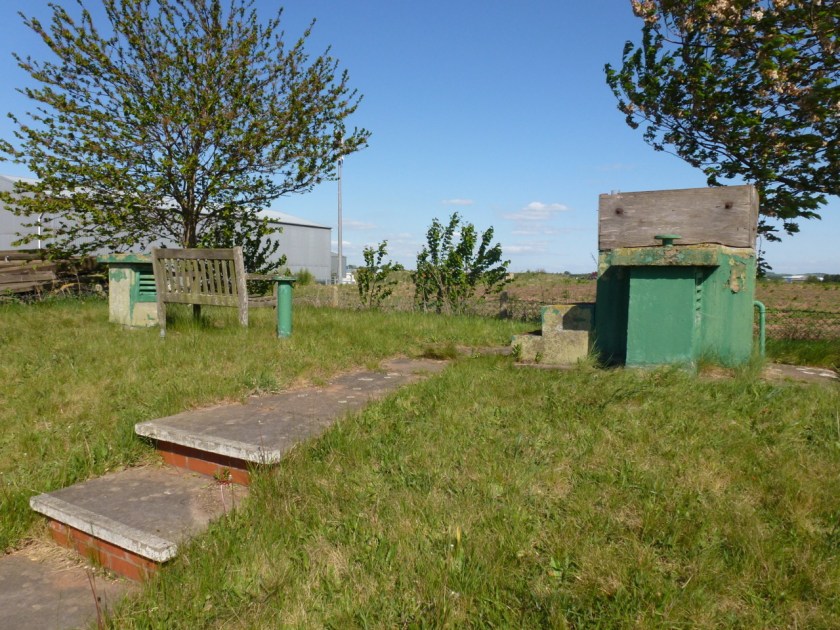
May 2nd – Following on from yesterday’s pillbox, I thought I’d visit a military relic of an altogether different stripe today. Shenstone ROC post is a small, self contained nuclear bunker, designed to hold three operators during a nuclear strike. Their duty would have been to take measurements of radioactivity, blast pressure, weather and air conditions after an attack, record them and report back to central control if possible. The people who trained for this quasi-military role were volunteers, usually ex-servicemen. In a nuclear attack, these men would retreat into this hole, and effectively wait to die of either radiation sickness or starvation.

The British countryside is peppered with these little-known facilities, now derelict after the disbanding of The Royal Observer Corps at the end of the cold war – there are posts locally at Harlaston, Rugeley and Queslett. This one is sealed with a concrete block after fears that it would be occupied by anti-motorway protestors during the construction of the M6 toll.

For more information, bang the term ‘Subterranea Britannica ROC’ into google. A fascinating, very british history.
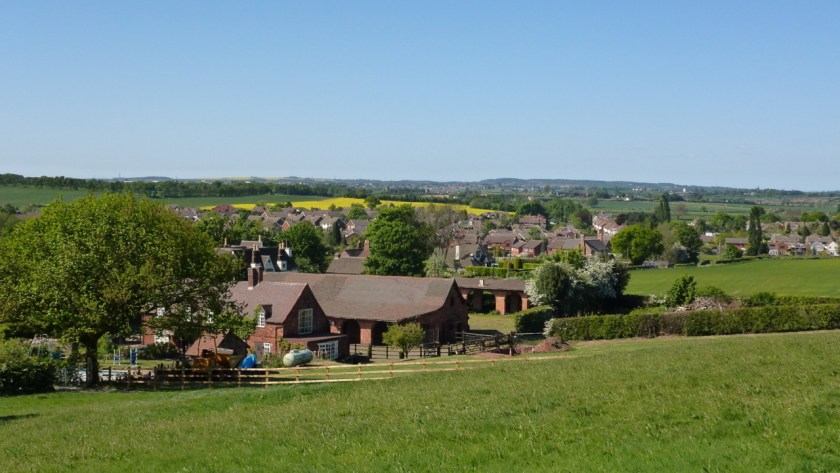
May 2nd – another beautiful day made difficult by a rapacious wind. A ride out through Stonnall and Shenstone to Canwell, Hints and Hopwas was very hard going indeed. I found plenty of opportunities to stop, for when I did, it was the only time that the sun’s warmth could be felt. This unusual view of Stonnall was taken from the corner of Stonnall churchyard, an available vista I’d not spotted previously.

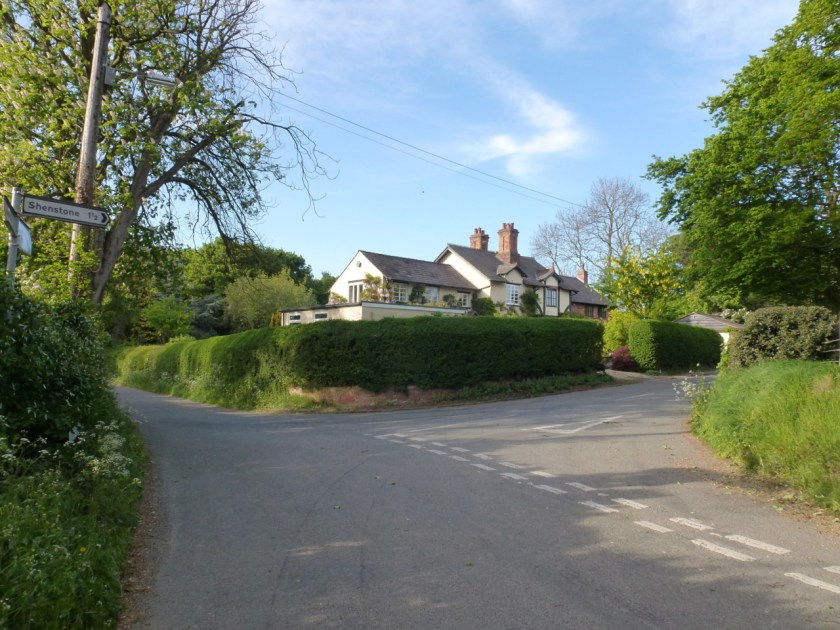
May 1st – This house, on the corner of Hollyhill Lane and Footherley Lane near Shenstone has always captivated me. I love the gables and chimneys, and the general air of rural seclusion it conveys. When I was a kid, one would often see a real fire in the hearth on winter days through the french windows at the front. It always looked so warm and cosy.