
November 35th – I passed through Chasewater in a splendid, cold golden hour, hoping maybe to catch some red deer. Sadly, the deer were elsewhere as there was a rugby match on over at the club, so they’d probably wandered to more peaceful environs until the shouting and cheering was over.

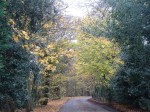
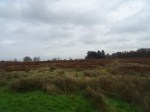
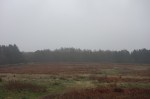
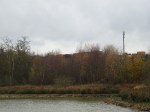
What I did find, however, was a beautiful north heath which, as Ian Anderson would have put it was ‘Glowing in the evening cool’ – and the view of the Paviours Road footbridge in low, golden sun was gorgeous.

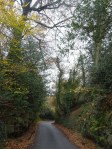
Not a bad ride at all today – but bitterly cold and still with the treacherous, slippery conditions.

I have a feeling we’re in for a sharp winter this year.

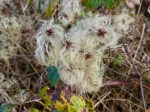
November 25th – On a bright, cold winter day, near the M6 Toll in Great Wyrley, clematis seed heads looking very alien in a forgotten, edge-land thicket.

These fascinate me, as no two have quite the same texture or appearance. I bet these were an absolute riot when they were in flower. I must come here next summer and see.

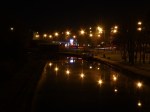
November 24th – Taking a shortcut up Pier Street, I noticed that the boiler in the OAP club was running, and the plume of water vapour generated was drifting into the night illuminated by the sodium floodlight above.

At long exposure, it looked ghostly, but probably looked better in the shorter shot. 

I watched it for a while, the patterns and colour were oddly mesmerising.

November 24th – Returning to Brownhills after a long day at work, ice was forming on the towpath puddles and it felt like the hard, dry cold of winter was setting in. But it was very clear and there was a lovely moon to boot. 

I had a saddlebag full of fish and chips for tea for me and those at home, and it felt, despite the cold, like a decent night.

First time I’ve had me tail up for weeks, as my father might have said.

November 23rd – I mentioned this earlier in the week, but it’s deadly at the moment, so bears mentioning again – watch the paths and cycleways at the moment. They’re more slippery than a grease deal dipped in baby oil.

Algea, leaf mulch and general damp slime are combining to make the less well used paths treacherous. I nearly lost the bike twice today. The main reason is.a few days of light drizzle, but not enough rain to actually cleanse anything. 

Although the routes in Telford are beautiful, they are to be ridden very, very carefully – and they’ll be in the same state everywhere.

November 23rd – telford, early. After a stressful train journey that involved missing my usual bacon roll, I diverted from my usual route to visit a cafe for a pause and something unhealthy to fill my belly.

It was a sunny, cold, bright morning, and in a factory yard hedge, by a seldom-walked main road, a beautiful display of what seems to be some kind of rose.

I have no idea, but it pulled me up short with the unexpected beauty.

dry-valleys:

Sybil of months, and worshipper of winds,
I love thee, rude and boisterous as thou art;
And scraps of joy my wandering ever finds
Mid thy uproarious madness – John Clare.

Leaving Lichfield along the wonderful Abnalls Lane and onto Cannock Chase along the Heart of England Way, routes I hadn’t crossed since June 2016 and was delighted to return to. 

The route took me up and up until I reached Castle Ring, built more than 2000 years ago by the Cornovii tribe to guard the frontier of their lands, which were centred around the Wrekin. Sentries could espy the land for miles around, (sadly now largely obscured by conifers), and the unfolding plain of the River Trent where Rugeley Power Station now lies.

Cannock Chase has a long and varied history which I’ll return to in the next post, but I was most interested here to note its life after World War 1- in which it played a leading role.

After 1919 the landscape was planted with conifers and as you can see (9,10) it is still very much a work site still, as well as a place of nature and leisure. After its designation as an Area of Outstanding Natural Beauty in 1958 efforts were made to sensitively restore the area with heathland and deciduous forest breaking into the monoculture of conifers, and I hope you can see from this series of posts that this has been a great success.

So I give the last word to local poet Nancy Foster, commemorated in the museum, who died in 1933 at the tragically young age of 20.

O’er hill and dale, through brake and heather
In August sun or April weather

Yes, Beauty and Industry both dwell here 
On Cannock Chase, in Staffordshire…

dry-valleys:

“This clearing by the old Roman road will do,
dusk is falling on the silver birch, purple heather
here’s a place, I’ll come back soon” Simon Fletcher.

Back on Cannock Chase, a medieval hunting ground whose oak forests, never planted with crops due to poor soil, were progressively cut down by charcoal burners, until the bare ground that was left was turned over by the Earl of Lichfield- whose seat lay at Shugborough, my next destinationon the outbreak of war in 1914.

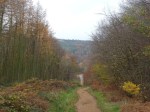
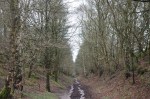
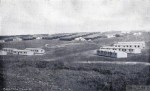
The heath was then used to hold military training camps– (4) is an image from 1917- and trained soldiers such as a certain JRR Tolkien. It was scarred by the camp and by a railway, remnants of which I saw (3) during the Two Saints Way.

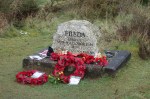
Various regiments were stationed here including the New Zealand Rifle Brigade, whose beloved pet Freda was killed in 1918 and is commemorated in (5). Many are also staying here until the Reveille at the end of the world; there are several cemetaries on Cannock Chase including the Cannock Chase War Cemetary (8) and the German Cemetary, where men are united now in defeat by the common enemy.

Also here is the Katyn memorial, commemorating the atrocities of April and May 1940, especially relevant at a time of renewed Russian attacks on Europe.

In memory of 25,000 Polish prisoners of war and professional classes who were murdered on Stalin’s orders by the Soviet Secret Police in 1940 at Katyn Forest, Kharkov, Miednoye, Kozielsk, Starobielsk, Ostaszkov and elsewhere.

Finally admitted in 1990 by the USSR after 50 years of shameful denial of the truth.

Although it was a bit depressing to think Russia admitting things has gone out of fashion… I was cheered by the new growth in the forest (10) and headed for the museum in a thoughtful frame of mind.

Today and (2) June 2016, (4) 1917, (3,8) during the Two Saints Way in March 2016.

Za naszą i waszą wolność (for your freedom and ours).

A fighter plane buzzard wheels overhead
A woodpecker mocks the hammer of guns
The sound of a cuckoo signals peace at last.

Claire Howland.

November 22nd – Coming through New Street Station at night, rush hour on a foul blustery evening when all the trains are messed up.

I’d rather be anywhere else than here.

Nothing sums up the deadzone, the suck, this awful time of year: no end to the advancing darkness, travel worsening daily, weather closing in.

And yet, there’s something awfully optimistic about it. You know that in a few short weeks, it’ll be over, and we’ll be opening out again.

Patience. Patience.

November 21st – In a familiar bike shed at a client’s premises, a neat illustration that the common or garden bicycle, whilst being a marvel of engineering in many ways, is still riddled with design conflicts and the whiff of mechanical compromise.

Here, a well-used and muddy mountain bike, not a cheap one by any stretch. The lack of mud and water shielding means and mud and detritus carried on the back tyre ends up not just as a skunk-stripe on the rider’s back, but also on the front gear mechanism and transmission.

In areas of hard grit like the Peak District, this continual spray works like grinding paste, gradually eating your wearing surfaces.

All for the want of some shielding.

Still, if you were a designer today, and proposed the derailleur system of gears – relying on forcing a flimsy roller chain between gears using side play as a conformal drag factor – you’d be laughed out of industry.

Except there’s nothing much better.