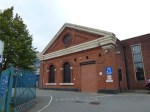
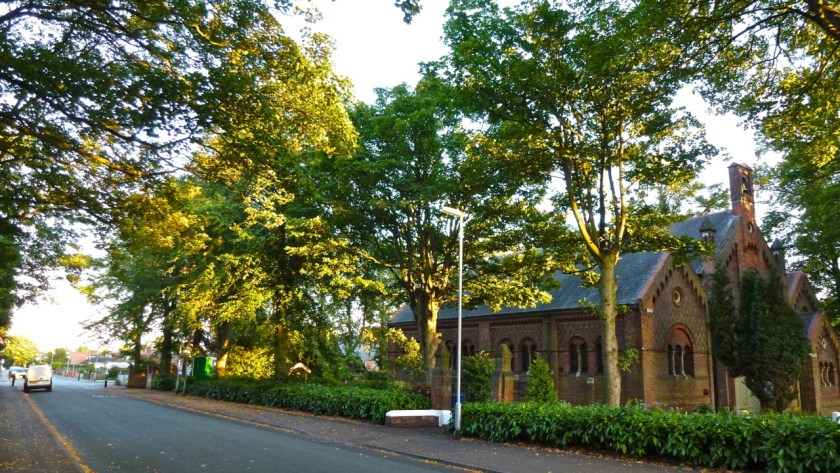
August 21st – Saint Anne’s Church in Chasetown – hidden down a quiet dead end, unassuming in it’s grace and simple elegance, hides a surprising history: it was the first church in England to have electric lighting. Supplied from the pit at the bottom of the hill, the benevolence of the local mine owner led to this unique installation. Great walker, Staffordshire lover and fellow Panoramian Pedro Cutler pointed this out in his photo gallery. It just goes to show, to a nosey and inquisitive cyclist, remarkable history is all around.

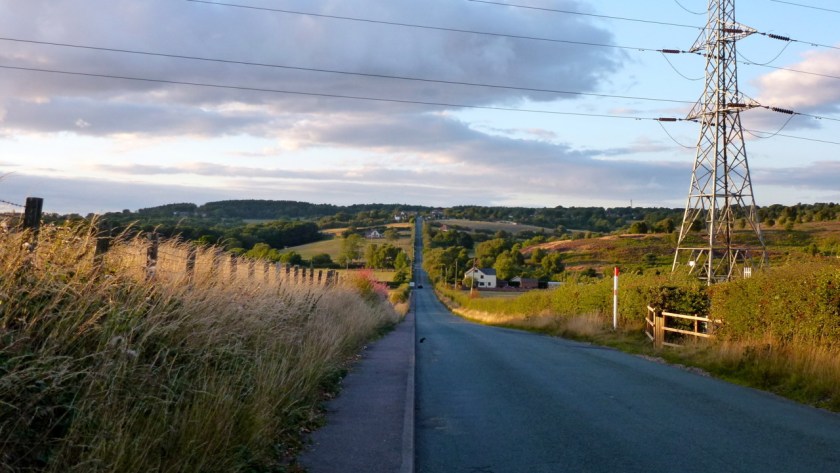
August 21st – Rugeley Road fades into Hayfield Hill in the big dip between Chase Terrace and Cannock Wood, near Castle Ring. This is a great hill to climb, and a very fast downhill run. During this most gorgeous golden hour, Gentleshaw Common glowed in the evening cool. This is a lovely view, of which I never tire.

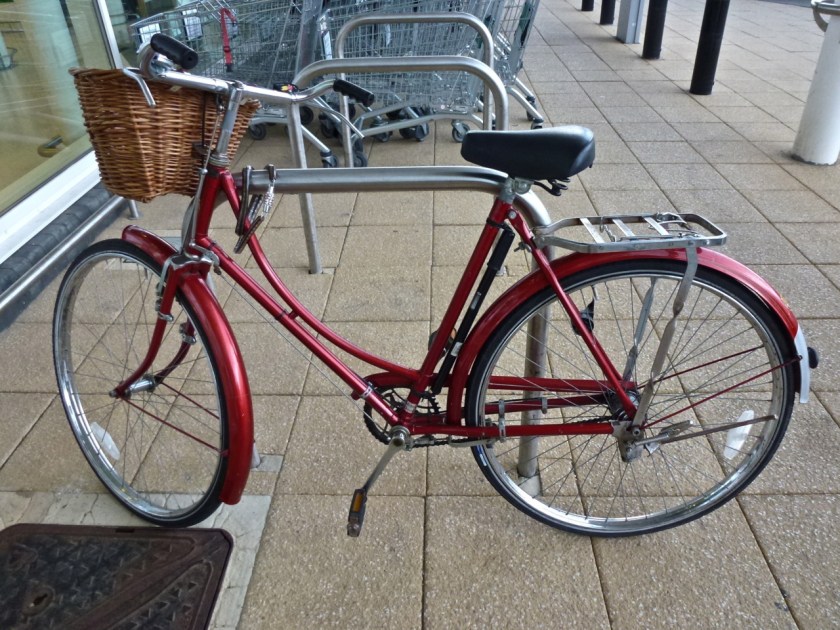
August 20th – I keep seeing interesting bikes parked at Waitrose. This again, is the steed of a lady of a certain maturity, and frankly, I find it a bit baffling. It’s either a refurbed Raleigh 3 speed of the classic variety, or a modern copy. Authenticity is good, and that’s a real Sturmey Archer hub gear. Note the rod brakes and steel rims. I can’t for the life of me think why anyone would choose to ride a bike with such a crap braking system in this day and age. The carrier is also rather heavily engineered. It’s a nice thing, to be sure, but I’m not sure I’d fancy riding it.

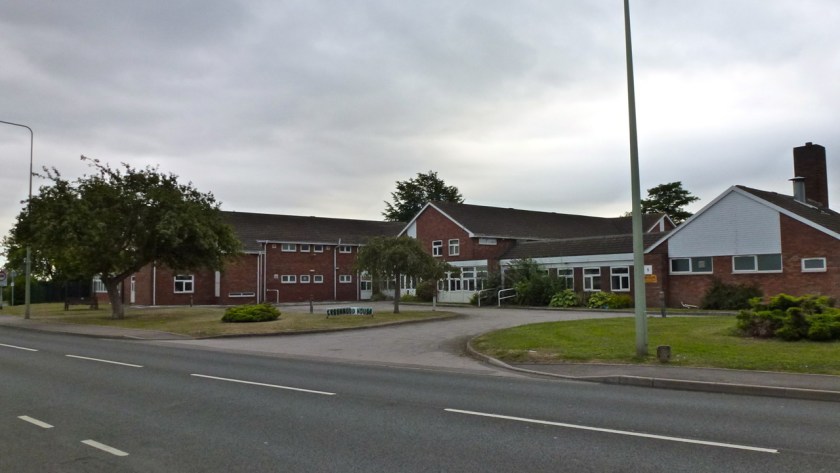
August 20th – A late afternoon ride to keep the legs moving after a tiring morning at work. I spun around Chasewater, then headed down through Burntwood to get some stuff from Waitrose in Lichfield. On the way, I passed the former old people’s home Greenwood House, near Swan Island. Empty and decaying, this modern, well loved facility was closed by Lichfield Council as part of their hated ‘Changing Lives’ project, created solely to farm social responsibility onto the third sector and offload all those expensive vulnerable people into the community. This building has been empty for over two years now. An utter waste. Welcome to the social state in the UK in 2011. Utterly bankrupt, both financially and morally.

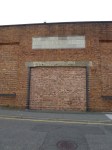
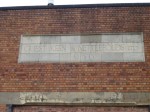
August 19th – This building, now a ‘Two Ticks’ alcohol warehouse on the Walsall Road, Pleck, has a previous history. I’m not sure what exactly, but the frontage says ‘South Staffordshire Tramways Electric Generating Station 1892’. I didn’t even realise the trams came up this road. Must look into the history here….

August 18th – coming back home through Darlaston again, I found myself behind a car that clearly was in no condition to pass an emissions test. I’m seeing (and breathing!) more and more of this – does anyone have the power to nick the drivers for such bad exhaust output? It’s blinding to cycle through.

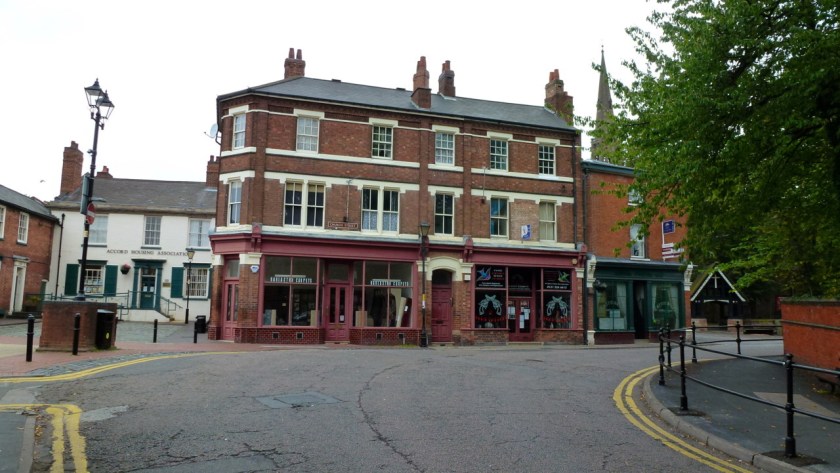
August 18th – Continuing this week’s Darlaton exploration (I’m working near here), I’m determined to show that this is a beautiful, complex and historic place. It’s easy to dismiss the Black Country as grimy, dirty and without aesthetic or cultural merit. That is wrong, very wrong. This is the top end of town, near the church and the beautiful and haunting war memorial. If you showed anyone from outside our area this picture, they’d never guess where it was taken. We don’t appreciate our area enough.

August 18th – It’s arguable that the most powerful economic force in the development of modern Darlastion was GKN, or Guest, Keene & Nettlefolds, a fastener manufacturing company that, until the 1980’s, loomed large in the Black Country industrial psyche. GKN had massive factories in Eastern Darlaston along Station Street, and companies that supplied them and competed were attracted nearby by the availability of skilled labour – Companies like Charles Richards, Kinnings Marlow and Deltight. GKN, of course, are still a massive powerhouse in British engineering, yet in the 1981, decided to end fastener production in the UK. Tens of thousands in Darlaston and Smethwick were made redundant. These were not just factories, but communities, that had their own doctors, carpenters and decorators on site. The National Blood Service used to come here for days on end, and blood donation was seen as an easy break by many of the workers who donated blood.

Here at Station Street, the GKN buildings remain, now housing ZF Lemforder and Caparo, both shadows of the manufacturer that abandoned Darlaston to the Wolves. GKN’s footprints are all over this town, and ingrained into the social history of this proud place.
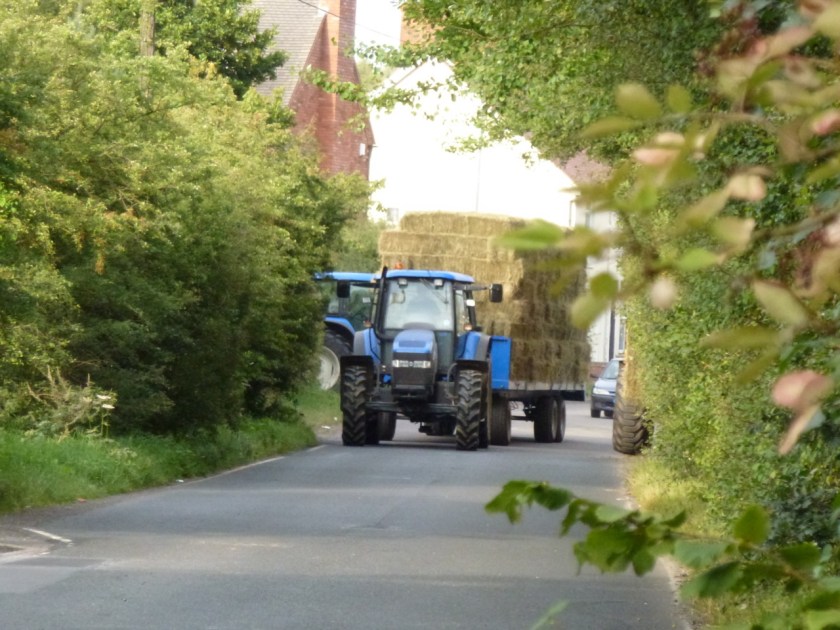
August 17th – as I returned home that evening, I noticed that Green Lane in Walsall Wood was blocked by the farmer moving large trailers of fresh, sweet-scented bales of hay. This activity must have been going on here at this time of year for several centuries, only the automation and vehicles have changed. It reminded me of the advancing of the season, and of the fact that although I live in an urban area, I’m never far from the countryside.