July 14th – Gorse bushes line the canal banks and cover the heaths and commons of Brownhills in abundance. For a while in May they are a riot of yellow and deep, deep green, and then, late July into August the seed pods ripen, blacken and dry in the sun. When ready, the seed casings pop open in the heat, with a characteristic cracking sound that will be familiar to any local who grew up amongst the grasslands of the area. As the Gorse slowly ripens, the rattling of the fruit is almost musical. It’s always fascinated me. This fine example was on the sandbank at Wharf Lane.
Author: BrownhillsBob
I told the truth - but told it bent.
Wandering around bemused and ranty since 2007.
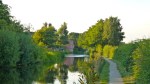


July 14th – Sneaking out late evening, I headed for Chasewater. There was a delightfully liquid golden hour afoot, and the light was honey, heavy and ever-changing. The view along the canal over Lanes Farm and Hammerwich was awe-inspiring. Wake up people, this is Brownhills…

July 13th – one of the unexpected hazards of a warm summer day is the crop jet positioned close to a roadside hedge. This one at Chesterfield, near Shenstone is quite powerful and could drench you thoroughly in passing. On a hot summer day in shorts and tee shirt this would be a delight; returning from work in jeans and with a laptop on the back not so much. Timing the passage is oddly difficult, as the mechanism will randomly jump about 100 degrees for no apparent reason. I think they’re designed to do that specifically to drench the unwitting.
It certainly adds an unexpected terror to rural rides. Bet Cobbet never had this problem.
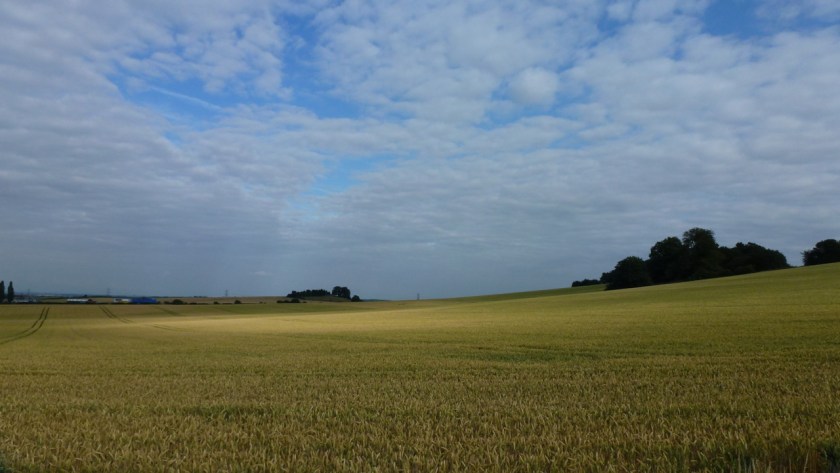
July 13th – As Summer’s clock mechanism whirs away, inexorably ticking the days away until autumn, little markers fall in place like the escapement of a precision mechanism. Flowers bloom and fade, trees blossom and fruit, animals breed and fledge. Today’s marker is this very nearly ripe field of wheat at Harehurst Hill, between Wall and Lichfield. Almost overnight it has transformed from a fresh green to a warm gold. Soon, it will be harvested, another marker in time’s passage.

July 13th – Spotted from a traffic queue on the Knighton Road in Leicester. Is this perhaps rhyming slang for the initiated? Why aren’t our local press this inventive? So many questions, such a short line at the junction.
July 12th – Red light jumpers really annoy me, whatever type of roaduser they are. On the same morning commute, two classic examples, 15 minutes apart. The first turns left toward Lichfield at the Shire Oak Junction in a car. The second, a cyclist, drifts off the pavement and into lane at the Church Street junction in Lichfield, only to drift back again and cruise through the junction illegally. Both are idiots, and there’s no need for it.

July 12th – Any cyclist runs on his stomach. I’m not a little chap and like many cyclists, need a lot of food to keep me going. Grazing a lot, one soon learns the foods that survive life in a saddlebag or pocket best, and offer most bang for the buck. Flapjacks of all kinds are a favourite with cyclists the world over. Oaty, full of energy, they’re dense, small and tasty. The best ones in my opinion are made by Blackfriars in Leiscester. I pass their factory often, and it always smells different; today the air was filled with the scent of raisins.
Flapjacks of the world, this cyclist salutes you…
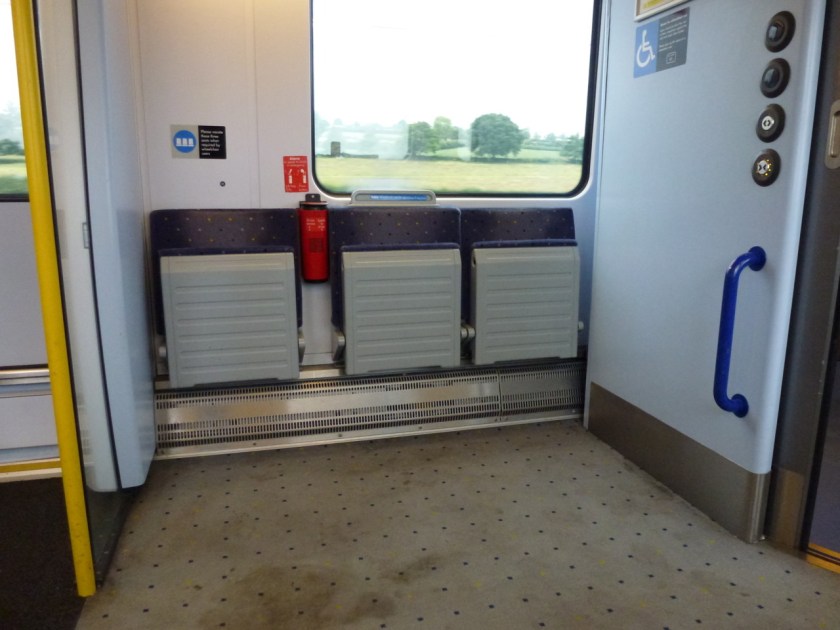
July 12th – first of a couple of days in Leicester. I hop up to Lichfield Trent Valley and heft my bike on the train – a short change in Nuneaton gets me to where I need to be quite quickly. The London Midland Euston bound stopping trains recently introduced on the West Coast Main Line – Siemens Desiro 350’s – are much better for cyclists and wheelchair users with plenty of space, little fold out tables and wide internal clearances. So much easier than the older, cramped 170’s Arriva Cross Country use on the Leicester line. Shame they aren’t looked after more carefully. Would a decent cleaning regime really go amiss?

June 11th – Near national cycle route 5, as it leaves north Walsall at the former level crossing in Station Street, there is a second kissing gate near the pedestrian crossing. If one takes a short walk through the trees here, there’s a very unusual feature of hydrological engineering. The Ford Brook – rising in Clayhanger – meanders down the Goscote Valley being bulked by various water reclamation works and land drains on the way. Here, the main stream does an elaborate, snaking dance with a tributary source and they actually cross. This man-made bridge is also an overflow; in years past the upper deck rarely overflowed into the lower channel, but it does so constantly now. Many people think this is a weir, but if you study closely it’s double sided and the lower channel flows right underneath. I’d love to know why this exists and who built it.
A real curiosity. Am I the only person who puzzles over these things?
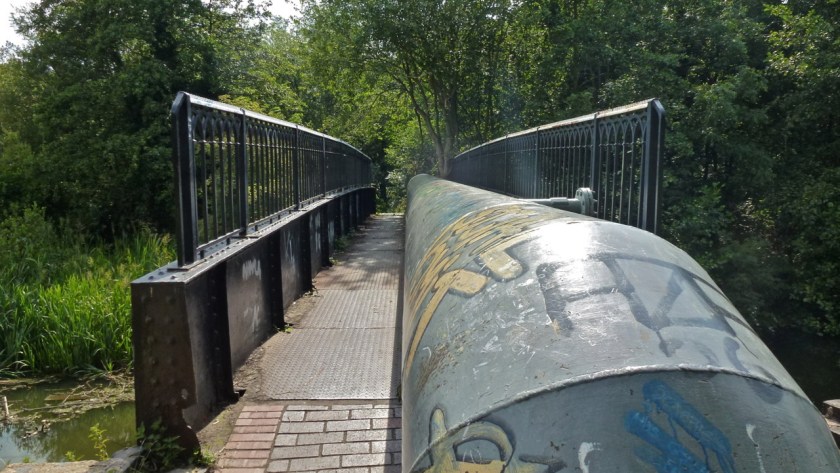
June 11th – Returning home from a day at work in the Black Country, I hopped onto the canal at Great Bridge and headed north through Darlaston and on to Walsall. I’ve passed this bridge at Moxley for years, but never actually studied it before. Is the bridge there for the pipe, or did the pipeline engineers just take advantage of it? Quite the most bizarre pipeline crossing I’ve ever seen… and the tree at the far end seems determined to cause a parting of the ways. Most odd.
 BrownhillsBob's #365daysofbiking