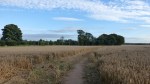
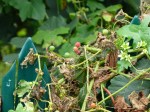
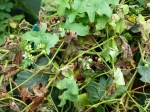
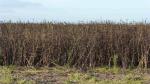
September 5th – The Beans that have fascinated me in the field in Lynn, near Shenstone, are just being harvested. They are as dry as old bones, both plant and pod, and something has cropped the whole plant at about six inches from ground level. There’s no residue left other than stubble. I didn’t see it happen, and so far, just the perimeter ofthe field has been harvested, so I’m none the wiser…

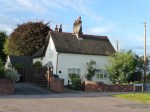
September 4th – The house with the remarkable chimneys in Stonnall, at the junction of Main Street and Wallheath Lane, has an unsuspected history. When I was a lad, the house was a petrol filling station, and the house that now stands on the left was built on it’s forecourt. I remember the garage well; it had a samll shop area through a wood and glass door and I often bought drinks and sweets there on my explorations as a youngster.

I was glad to see it so beautifully preserved, but I do miss the garage. A symbol of changing times.

September 4th – I know I keep banging on about the harvest, but this year really has been highly unusual. It’s now early September, and crops that should have been in barns a month ago are still languishing in the fields; many possibly ruined.

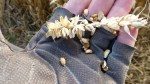
Ziksby replied to my recent post about the harvest around Stonnall and Shenstone mostly being over, by pointing out that it was still ongoing around Aldridge and northeast Walsall: indeed, I was over-optimistc and it was still ongoing around south Staffordshire today. I noted one particular crop of wheat, still stood in the field between the railway and Hollyhill lane at Shenstone, that seems to be ruined. The grain is blackening, shrivelled and small. 

Despite this, the recent good weather has prompted an agricultural machinery invasion, with harvesters working around the clock. A truly remarkable season.

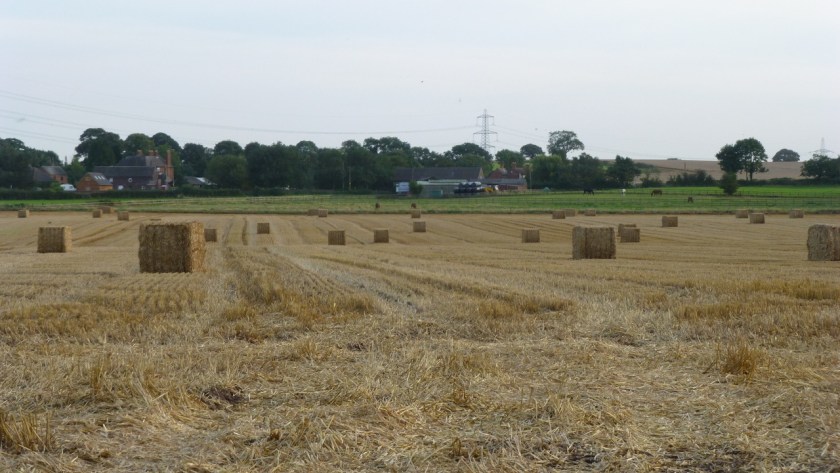
Setember 3rd – I noticed on my return that the grain harvest was now nearly over. Apart from a few fields by the railway, the wheat was finally all cut. Bales – square and cylindrical – dot the Stonnall and Shenstone landscape. This has been a very difficult, poor harvest, and is weeks late. I don’t think I’ve ever known it so bad. Please let there be an Indian summer…

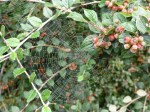
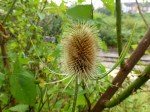
September 3rd – Beauty is often found in unexpected places, and unexpected circumstances. Like a bad penny today, I pitched up again in South Wigston. This station – no more than a suburban halt, really – has always been a station I’d hated. No information system, little shelter, grim and fore bidding in the dark. And very, very cold in winter. Yet, this year, something strange happened. I discovered beauty here. I started to study the patch of scrub between the ramp and platform on the northbound side way back in spring, when it started to show a remarkable diversity of flowers. Untended, it seems to have been subject to some form of guerrilla planting. As the seasons have advanced, I’d spotted more stuff going on in this patch of scrub, which I feel sure I’m the only person ever to have noticed. It’s enchanting.
Today I found myself studying it again, at 8:45 on a misty, yet hazily sunny autumn morning. The fruiting has started in earnest. Haws, Hips, and catoniaster (the blackbirds go nuts for those bright orange berries) mingled with teasels, snails and cobwebs to make an autumnal tableaux that astounded and transfixed me.
Sometimes, I think I must be the only person in the world who gets excited about this stuff.

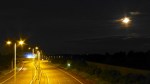
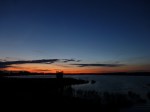
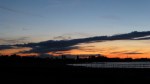
September 2nd – I just knew all day it was going to be a good sunset. I had no idea why; sometimes you can just tell. At teatime, that cold, damp chill descended, of the kind you only get in autumn and spring, and the sky started to turn pink. I knew it was game on. I took my time and headed to Chasewater, which has to be the best place to catch a sunset in these parts. I was surprised and delighted by what I found: not just a great sunset, but a yellow moon rising the east, geese honked and chattered in the dusk as they came in to roost. Bats skittered about my head, and moths became iridescent in my bike lights. Behind this was the most delightful susurration – the continual lapping of water in the darkness. I realised how long it was since I’d heard that at Chasewater. A fine thing. It’s been grim times, old girl, but it’s nice to feel your recovery at last.

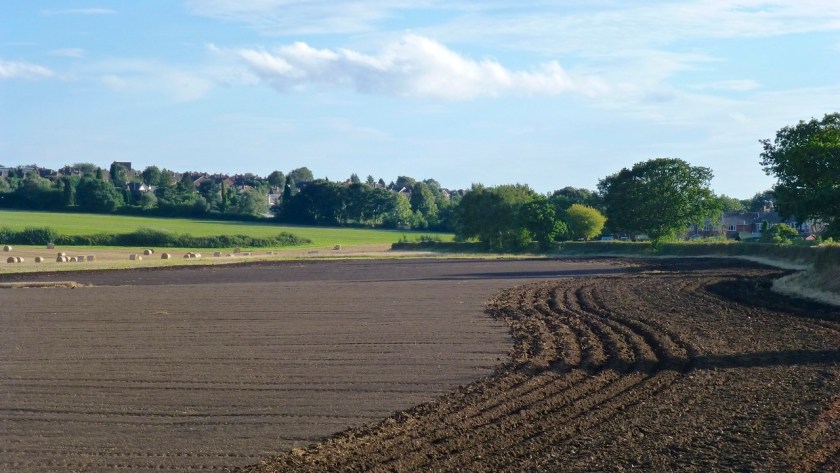
September 1st – At home farm, I smelt the fresh earth before I saw it; I’d now that scent anywhere. The farmer has wasted now time, and ploughing and harrowing was in full swing. Presumably, there’s another crop to go in here now – maybe potatoes or a vegetable of some sort. The golden hues of late summer will soon all be fresh and brown like this, part of time’s passage. Lovely, but sad at the same time.

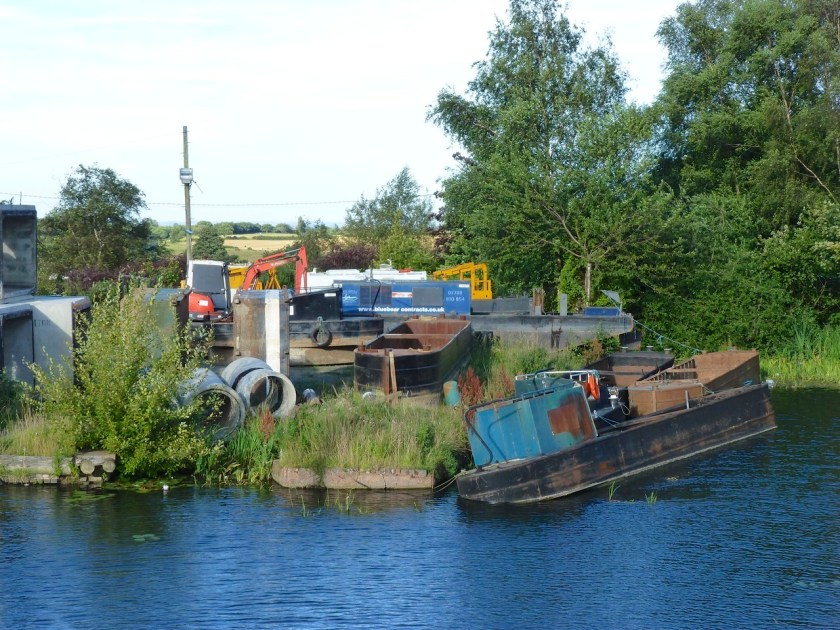
September 1st – I guess it really is coming on to autumn now. I spun out around five o’clock and noticed the sun was already low in the sky. That was really sobering. I slipped up to Chasewater for a quick nose around, and then over to Walsall Wood along the canal. On the way back down the canal, I noted the basin at Ogley Junction was still host to the buttes and stricken dredger that had sunk during operations at Anglesey Basin earlier in the year. Somebody must own this equipment, and it’s been stuck here for months now. I can’t be cheap to buy this stuff, so I’m wondering what the deal is. You can’t just forget about such plant, can you?
Having said that, if you look closely, behind the blue dredger is a white one, just visible. It’s been there, in dry dock, brand new and unused for pushing 3 years now. It’s called ‘Hamster’, and British Waterways – now a charitable trust called the Canal & River Trust – seem to have completely forgotten it exists, too. Mystifying, and it says much about the shambles that is waterway management in the UK. 

August 31st – Here’s another one I can’t identify. I noticed it today growing up along the palisade fencing along the canal access steps of Walsall Wood High Street: some kind of creeper, the leaves are almost ivy-like, yet this isn’t evergreen or leathery in appearance. The single red berries are rather odd. Can’t ever recall seeing anything like this before.

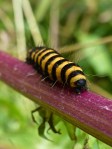
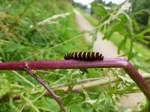
August 31st – I know bugger all about Lepidoptera. That’s not to say that caterpillars, butterflies and moths don’t fascinate me, because they do, but I never found time to read much about them. They’re very curious things. Take this fellow, for instance. 30mm long, clearly a Wolves fan, I spotted him whilst travelling at some speed down a canal towpath in Aldridge. I pulled the bike to a halt, and went back to examinee what I thought I saw crawling along a himalayan balsam stalk. How does that even work? I spotted him really easily, presumably so can his predators. How does that work on an evolutionary level? He’s certainly striking, hairy and caprivating. Anyone recognise what it is?

Edit: he appears to be a future cinnabar moth. Wonderful, black and red moths… and also rather late, it seems.