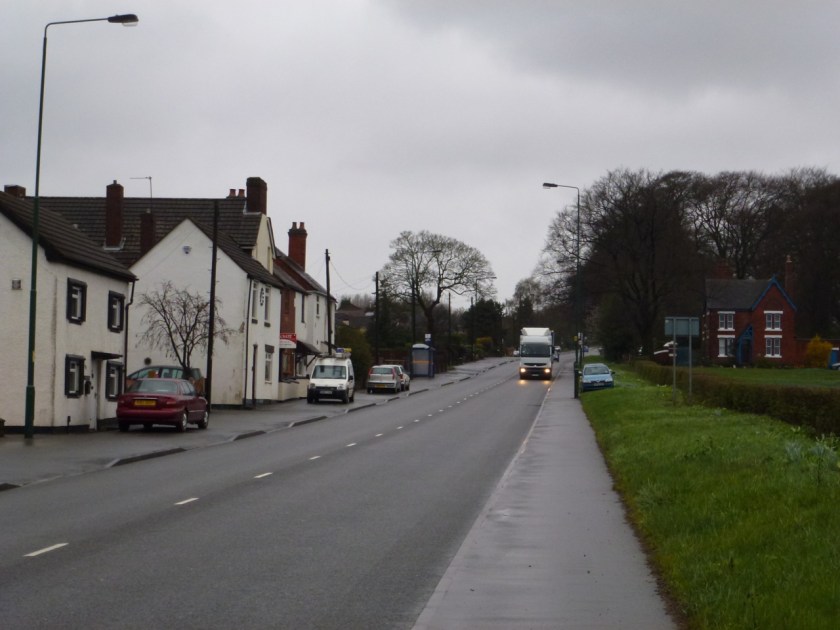
April 8th – It’s all about the cows, lately. Cattle have been introduced to the heaths at Chasewater for a few years now. They were brought in to manage the heathland – cows hooves churn up the soft earth, and their grazing and cow pats stifle the bracken and more voracious plants , giving the heather and more delicate specimens a chance to grow. The brown an white Chasewater animals – five in total – are supplied by a local farmer, and the young beasts look in fine condition, and don’t seem to mind the public too much. 

Today, I also noticed someone was keeping a small herd of black cows in the field on the common behind the derelict Rising Sun pub. This is a new development, and I haven’t seen cows here for years. Wonder whose they are?
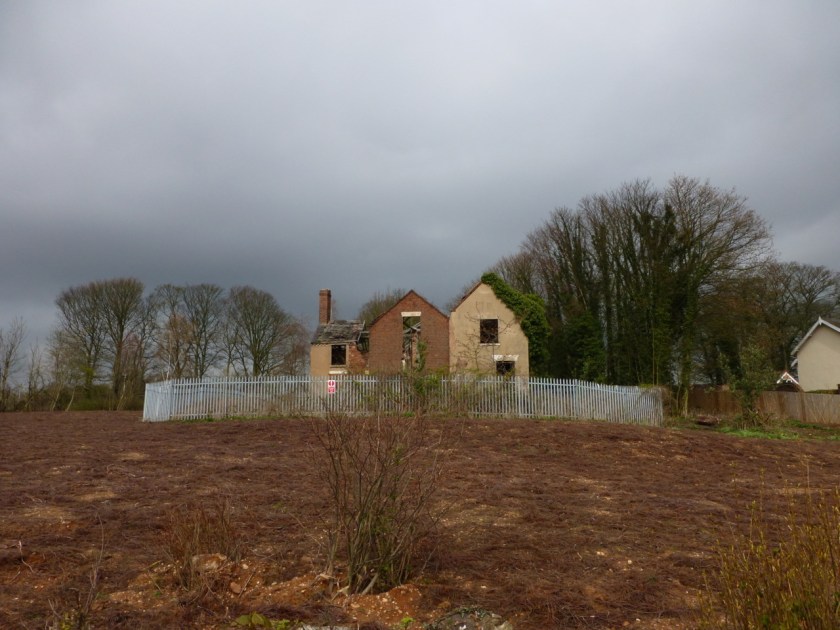
April 7th – Since the day was grey and overcast, I went with the flow. The weather gradually cleared, and I explored the completed dam works at Chasewater. One of the greater sadnesses of the place is the tumbledown cottage at the north end of the dam. Slowly falling into itself, I have no idea who owns it, or how it came to be in this condition. It’s neighbour – a near identical home – is in beautiful condition and very much still inhabited and looked after. I know the cottages to have been built to serve the mine, but other than that, I’m aware of little of their history.

April 7th – As is customary when you buy a new camera, one of two things happens. It’s either dull and overcast for days afterwards, rendering all your handiwork and testing grey and horrid, or you take hundreds of pics not having spotted the packaging fluff on the lens wrecking every image. I think this time, we’re settling for the ‘dull’ option. I set out yesterday lunchtime with a heavy heart; it was drizzling steadily and Brownhills looked dark and moody. 

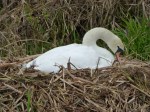
I was cheered, however, by Mrs. Swan, who was still sitting intently in her impressive nest at the canal bank at the rear of Saddler Road. She’s had a couple of dry runs in previous years, but I think this could be her first clutch. She seems to be shuffling a lot, and quite concerned for what’s beneath her. In previous years, pairs of swans here have had broods as great as ten. I feel unusually gripped by this… it’ll be interesting to see how the couple do this year. At least the nest this time is well out of reach of foxes and rats.

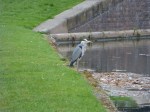
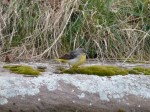
April 6th – Back on the canal at Rushall Junction, going up the Rushall Extension through Park Hall, the wildlife seems to be about again. I think this is my first heron photo this year, and he was a bit jumpy, to be frank. There don’t seem to be many of these about on the canals right now. The other little chap is the deceptively named Grey Wagtail, who seemed to be engaged in courting behaviour. A charming little bird, he bobbed about for a while utterly unconcerned by the cyclist looking on, fascinated.

April 6th – I came out of Birmingham on cycle route 5, up the canal to Smethwick’s Galton Bridge, then up through the Sandwell Valley to Rushall Junction on the canal. Galton bridge is a historic, very high bridge over the mainline canal. Built in 1829 by Thomas Telford, it’s a classic of its kind and the views from it are fantastic. The canal here is lovely to cycle, and steeped in industrial history. Well worth a wander if you get chance. Travel writer and culvert crawler Nick Crane came this way in his book ‘Two Degrees West’ and pointed out that the arrangement of canals (2, side by side at different levels), Railways (2 different lines at different levels) and road bridges made the physical geography here so complex that he had to draw it out on paper. He’s right.

6th April – New camera day. I’ve been using Panasonic cameras for a while now – built like brick shithouses, they offer a good feature set, remarkable zoom range and good picture quality, all in a package small enough to pop into a pocket and always carry with you. I’d been eyeing up the TZ30 for a while – I’d had a TZ20, and liked it, but there were a few extra features in the new model – 20x optical zoom, sweep panorama, better low-light performance and so on – that I quite fancied. Able to hand down the old one, I found a camera store in Birmingham had stock and a decent offer, so I cycled into town and picked one up.

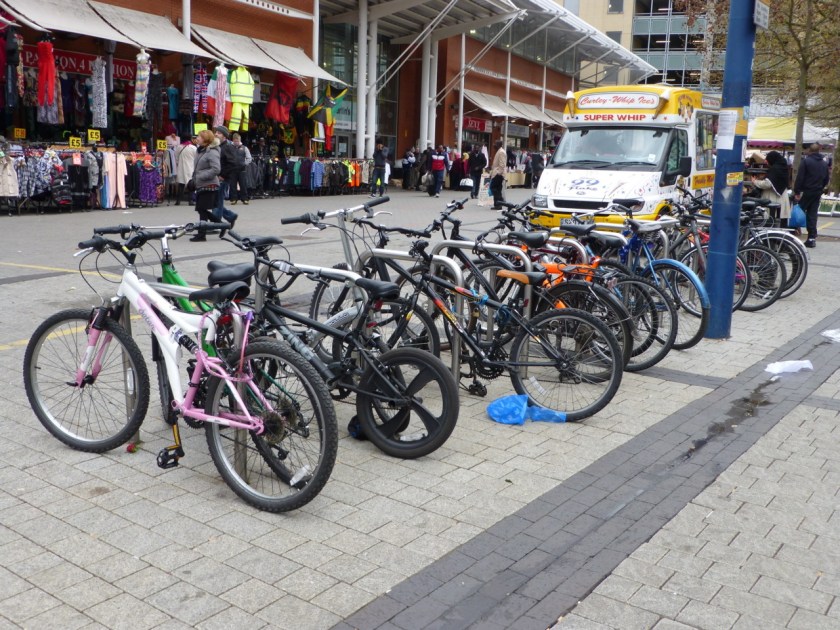
I always love a ride round Brum, and took advantage of the opportunity. Near Edgbaston Street, I realised how far Birmingham had come as a cycling city: the bike racks were full. This is in spite of, rather than because of anything the council have done. Birmingham City Council’s support for cyclists is legendarily awful, yet Brum is developing an engaging, active cycling community.

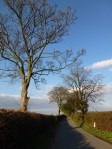
April 5th – It was a long short week in Telford. Work has been heavy going the last couple of weeks, and I’m glad that today was my last working day of the week. Again returning from Shenstone for the tailwind, the day was gorgeous when I emerged from the train at about 6pm. I opted for the back lanes through Footherley in order to catch the evening sun, which after the snow of yesterday, was warm on my back. The lanes looked beautiful, and I stopped on the hump bridge one the Footherley Brook to study the inscriptions. Generations have carved their marks in the soft sandstone capstones, the oldest I think being the inscription from D Rushbrook, apparently from 1931. I’ve searched locally for the name to no avail, and I often wondered what became of him, or if Billy and Trace, who declared their love in stone on the 20th April 1983 are still an item, 29 years later. I do hope so.

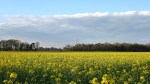
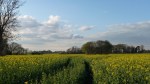
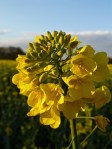
April 5th – There seems to be an awful lot of early-flowering oilseedrape about at the moment. The normal varieties seen in the fields around Shenstone, Stonnall and the outskirts of Brownhills flower around mid-May, but I’ve noticed in the last twelve months late and early strains, like this field near Footherly. It’s a gorgeous plant, I love the colour, the scent and the the bug life it attracts. This oil-rich brassica (that’s right: it’s a member of the cabbage family) must earn a lot for farmers, and seems to be quick and easy to grow. It often receives a bad press, with people blaming the plant for hayfever outbreaks, yet it’s pollen – evolved for insect and contact rather than wind pollination – is far too heavy and sticky to be wind borne.

April 4th – Today was not a photogenic day. My journey to the station at Telford – about three miles – was against the wind and in a steady rain, felt much how I imagine being shotblasted to feel. It was the kind of rain that made your forehead hurt.

At the other end of my commute, I chose my return station with care. I could have come from Walsall or Shenstone, but the latter offered the choice with the favourable wind. Positively blown home, there was nothing that inspired me to get the camera out until I tackled Shire Oak Hill at Sandhills. The weather had been dire, yet I was coasting up a really quite nasty hill without thinking. I reflected on the nature of this hill over history – this small group of old houses would have been the Sandhills of old, one being the Leopard pub – closed at the turn of the 1900’s, but with a two-century history. What would it have been like to climb this hill in say, 1850? 1800? 1750? 

An old route through an old hamlet. Never really noticed  before.